November 5, 2026
What a 6.3% operating margin reveals about how MercadoLibre is buying its future.
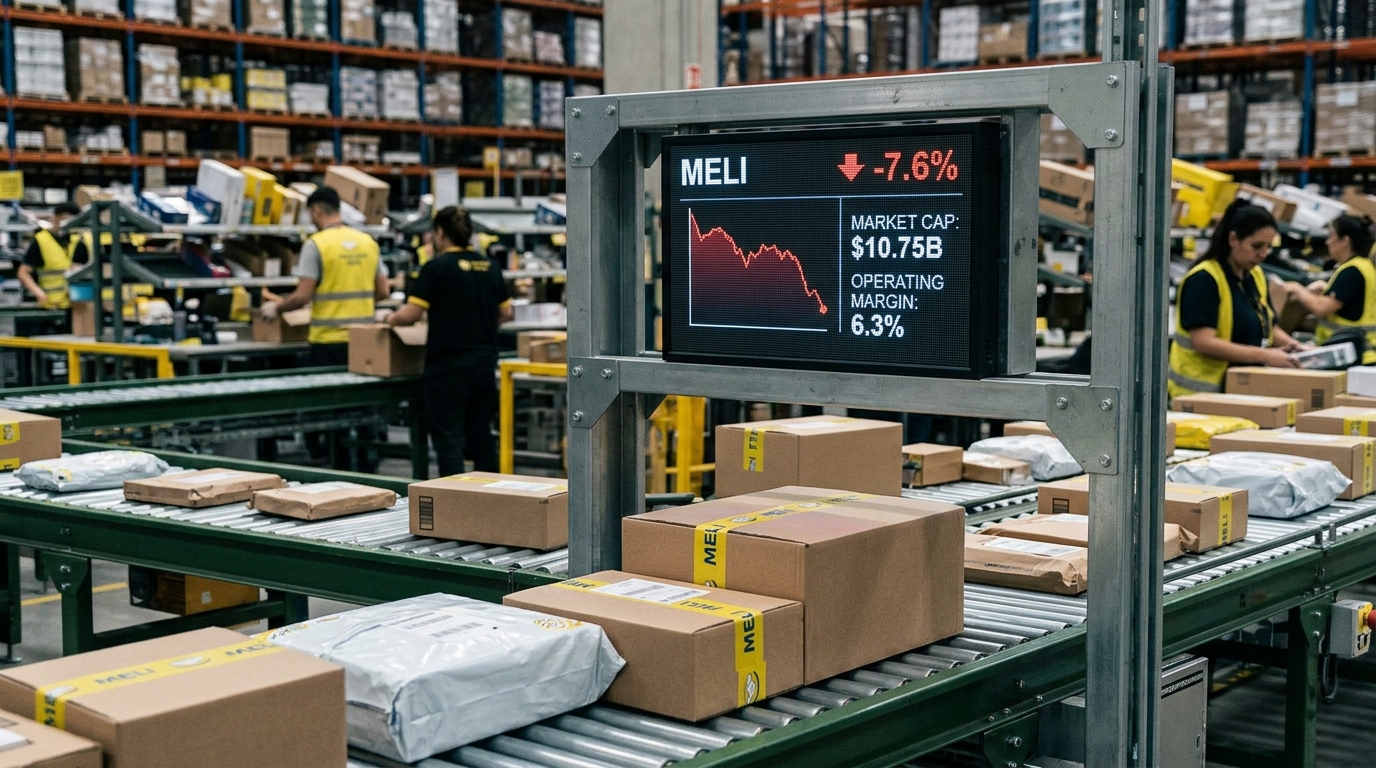
Most U.S. investors do not own MercadoLibre. That gap in the typical portfolio became more visible Wednesday night, when MercadoLibre reported third-quarter results that missed earnings expectations, sending shares down about 7.6% in after-hours trading as investors reacted to the profit shortfall and declining operating margins. The selloff is understandable as a reflex. It is harder to justify as a considered judgment.
Oil Surge Predicted…But Are You Ready?
Do you own oil and gas stocks? Or are you thinking about buying some?
If so, you need to see my #1 oil play for 2026 But it’s NOT oil stocks, futures, or anything you’ve likely heard about.
Rather, it’s an unusual way to potentially bank monthly income from the oil and gas markets.
Net revenue and financial income grew 45% year over year to $10.75 billion, while operating margin came in at 6.3% as the company continued investing in customer engagement and long-term growth. Adjusted earnings per share of $8.83 missed the analyst consensus estimate of $9.34 by $0.51. That is what triggered the decline. But the EPS miss is almost entirely a margin story, and the margin story is one management is writing on purpose.
What 6.3% Is Actually Telling You
The operating margin fell year over year, and for the first half of 2026 the operating margin was 6.8% versus 12.5% a year earlier, with management pointing to higher shipping costs and a growing credit card portfolio that lifted the provision for doubtful accounts. Read that plainly: MercadoLibre is spending its own margins to lower the cost of buying things and borrowing money for roughly 700 million people who have historically had neither option cheaply.
Income from operations reached $676 million, with the 6.3% margin reflecting investments in its value proposition, including free shipping, shipping costs, and higher marketing spend in Brazil tied to its affiliate and creator programs. In Brazil, items per buyer grew 16% year over year in Q3, even as the company fully lapped the lower free-shipping threshold it introduced earlier. That is what bought margin buys: compounding engagement.
The Silver Mine Elon Needs
365 million ounces. That’s how much silver one American mine has produced since 1884.
And a permitted refinery sits 1 mile away.
Starting January 1st, Washington squeezes Chinese suppliers out of America’s solar factories. American silver becomes the prize.
The company trades on the NYSE. And Elon’s factories haven’t started buying yet.
The Business Underneath the Quarter
Commerce revenue grew 47% in dollar terms to $6.1 billion, and Mercado Pago fintech revenue grew 42% to $4.6 billion. Three separate verticals, each growing faster than almost any U.S. large-cap in its category. Users who shop and bank with MercadoLibre generate about 70% more gross merchandise volume than marketplace-only users, and almost 90% more total payment volume than fintech-only users. That cross-sell dynamic is precisely what Amazon built in the U.S. over two decades. MELI is building it across Brazil, Mexico, and Argentina simultaneously, in markets where e-commerce penetration is still early.
The Amazon comparison is not rhetorical. Amazon’s own advertising and AWS flywheel took years to be priced correctly, even as the underlying commerce and payments businesses compounded quietly.
Latin America remains one of the faster-growing e-commerce regions globally, with forecasts calling for double-digit growth in retail e-commerce sales. MercadoLibre is not a speculative bet on that trend; it is the dominant infrastructure through which it flows.
Not the Same Old List of Top Stocks
Lately every top stock list has started looking the same.
And while there’s nothing wrong with Nvidia, Tesla or SpaceX…
We believe there are many other top-quality opportunities out there for investors who dig into the details.
That’s why our MarketBeat analysts took a deep dive into the numbers and came up with an all-new list of the 5 Best Stocks to Buy Now.
Valuation and Risks
MELI’s trailing twelve-month P/E ratio is in the mid-40s as of early November 2026, which is well below its longer-run median on several widely followed valuation services. A compressed multiple on a business compressing its own margins deliberately is worth examining twice before selling.
The risks are real. Currency volatility across Brazil, Mexico, and Argentina can erode dollar-reported results regardless of local momentum. Credit expansion at scale always carries the risk that nonperforming loans rise faster than management expects. And the company did not provide quarterly financial guidance, which leaves analysts guessing and markets nervous.
The lesson from Wednesday’s selloff is not that MercadoLibre is broken. It is that the market is pricing the current margin rather than the destination margin. The company itself framed the trade-off plainly in recent shareholder communications: it is prioritizing long-term value creation over short-term profitability as it invests to deepen engagement across its ecosystem. Investors who understand that cycle, and can tolerate the quarters when it looks expensive, are the ones historically rewarded when the investment phase ends.