November 5, 2026
Bonus Content: Duke Energy’s Dividend Depends on Data Centers
Dear Reader,
$60 trillion.
That’s how much new wealth could pour into U.S. stocks between now and 2029.
It’s a number so huge… it’s hard to imagine.
If you split it up evenly?
Every household in America would get more than $400,000.
It’s enough money to make 60 million people millionaires. That’s more than double the number of millionaires in America today.
But America’s Economist, Dr. Mark Skousen, says – what happens next could be even stranger than that.
Recently, he laid out his thoughts in a new broadcast.
For the time being, you can watch it free, right here.
Good investing,
Rachel Gearhart
Publisher, The Oxford Club
P.S. The last time Skousen was this excited… it was 2009. That’s when he told anyone who would listen to buy stocks with both fists. Those who listened could have turned every $10,000 into more than $77,000 in the years since. And now, the same signal is triggering once again.
Duke Energy’s Dividend Depends on Data Centers
Duke Energy posted third-quarter results before the open this morning, with Wall Street penciling in $1.88 per share on roughly $8.91 billion of revenue. The Zacks consensus estimate for earnings stood at $1.87 per share, implying 3.3% year-over-year growth. For income investors, however, the number on the page matters less than what the company says about the pipeline behind it.
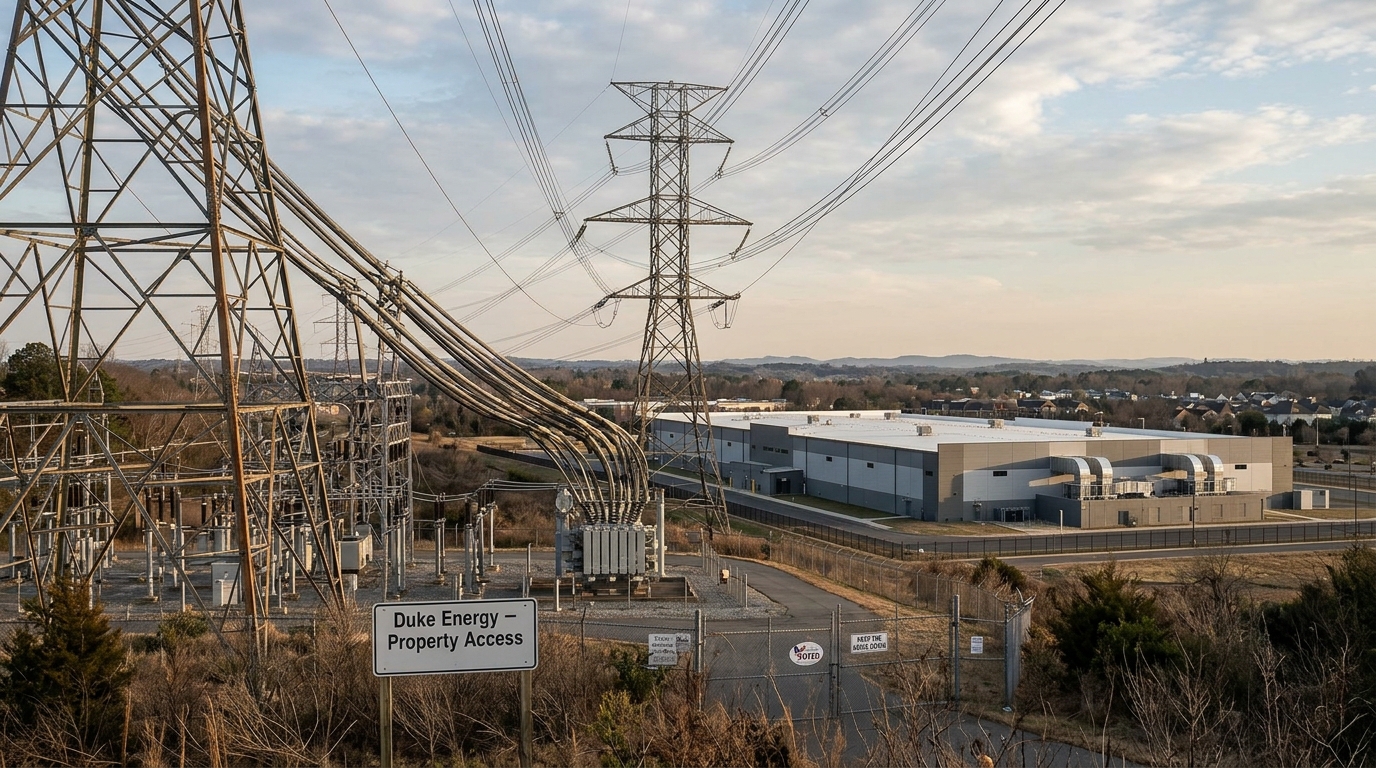
Analysts note Duke has a 15.4-gigawatt large-load pipeline, with 7.8 GW of capacity already signed and 5.2 GW under construction. That is the machinery driving the company’s investment case. Capital expenditures are projected to rise materially through 2030 from 2025 levels, driven by grid modernization and generation additions to serve data centers and other large loads. A bigger rate base means more regulated earnings, and more regulated earnings is what gives Duke room to keep raising its dividend.
That room is not unlimited. Duke’s quarterly dividend rose from $1.005 to $1.025 in 2023, then to $1.045 in 2024, $1.065 in 2025 and $1.085 in 2026, a two-cents-per-year cadence that feels deliberately modest against a $103 billion capital plan. NextEra Energy has grown its dividend faster than Duke in recent years, while Southern Company continues to emphasize a decades-long record of paying dividends. The bear case on DUK has always been that the dividend grows slowly because the capex program consumes cash. The bull case is that it grows reliably, and that the data-center wave could eventually push EPS growth toward the top of the company’s 5-to-7% guidance band.
What Tuesday Changed
Timing could not be more awkward. Voters considered dozens of local ballot measures tied to data center development across 10 states on November 3, 2026, and most of the restrictive measures passed by wide margins. The selloff that followed hit Duke’s peers far harder than it hit Duke itself. Data-center power and build-out names fell hard, with GE Vernova down 9.30%, Vistra down 13.83%, and Comfort Systems down 15.08%. VST has dropped about 25% year-to-date, and CEG has dropped about 31%.
Duke escaped that carnage for a simple reason: its pipeline runs through regulated territories in the Carolinas and Florida, where interconnection agreements go through state utility commissions rather than local ballot measures. The political wave that torched merchant generators like Vistra and Constellation does not automatically reach Duke’s service territory. But it is not irrelevant either.
Southern Company faces a version of the same dynamic in an adjacent regulated territory. Georgia Power struck a deal shifting nuclear uprate costs directly onto Google rather than ratepayers — a model that could reframe how regulators across the Southeast think about cost recovery.
Consumer advocacy groups and local officials have reported a surge in complaints and public utility commission filings as residents question why electricity bills are rising alongside large-scale data center development, and in some regions research and reporting have tied data center-driven load growth to higher power costs. If that sentiment spreads into Duke’s Carolinas footprint, regulators could face political pressure to slow cost recovery on the company’s grid build-out. That is the indirect channel of risk that income investors should watch.
The Earnings Growth Hinge
Jefferies analyst Julien Dumoulin-Smith expects Duke to narrow its 2026 earnings range, raising the bottom to $6.70 from $6.55 while keeping the top at $6.80, but does not anticipate an increase to the company’s 5-to-7% annual compound growth guidance until it provides a fuller update with fourth-quarter results in early 2027. That framing matters. The question today is not whether Duke beats by a few cents. It is whether management signals enough confidence in the pipeline to eventually raise that growth ceiling.
The same political uncertainty now shadowing Duke’s pipeline is already repricing the equipment suppliers that would build it out. GE Vernova’s record backlog and whether data-center infrastructure orders hold is the next earnings test in this chain.
The company has reaffirmed 2026 adjusted EPS guidance of $6.55 to $6.80 and extended its long-term adjusted EPS growth rate of 5% to 7% through 2030. Reaching the top of that range, and potentially lifting it, requires the data-center agreements already signed to translate into recoverable capital investment without regulatory friction. The political environment just added uncertainty to that translation.
For income investors, the core holding thesis is intact. Duke’s regulated model insulates the dividend from the kind of acute political exposure that crushed Vistra and Constellation yesterday. The 3.5% yield and multi-decade record of annual dividend increases do not evaporate because local communities in other states rejected new data center development. What the vote does raise is the cost and timeline of building out the pipeline that was supposed to push Duke’s dividend growth rate higher over time. Watch today’s call for any change in the tone around large-load interconnection timing.