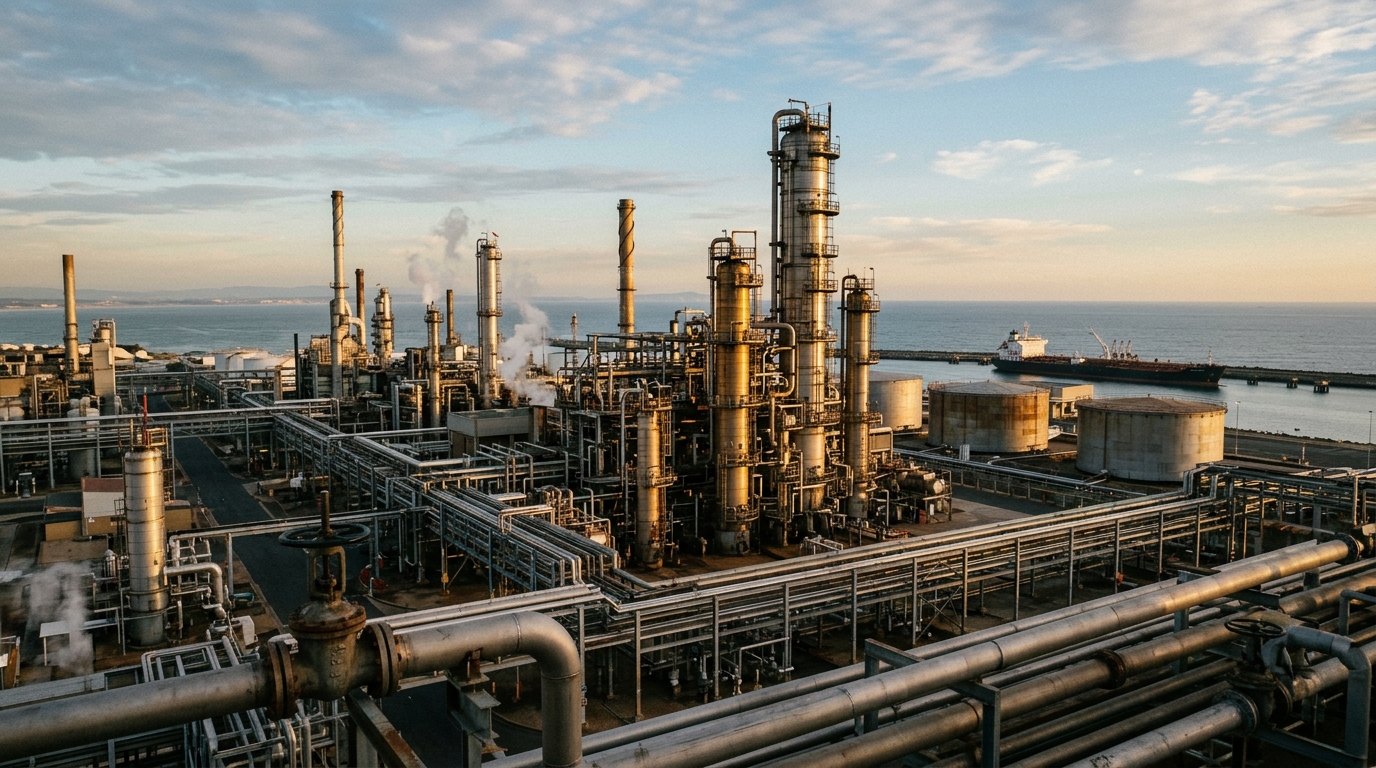
Brent crude settled at $116.72 a barrel on Friday, its highest settlement since April 29, after gaining 3.1%. Brent added 6.2% for the week, the third consecutive week of gains. WTI settled at $103.27.
The market is now pricing something more specific than supply disruption: renewed U.S. military action against Iran after the midterm elections.
President Donald Trump said at a rally on Friday that the U.S. “may do another little” round of operations against Iran. Separately, U.S. and Israeli officials told The New York Times that the two countries have drawn up plans for renewed strikes on Iran after the midterm elections.
Saudi Aramco evacuated its headquarters in Dhahran after an alarm on Thursday, according to reporting by Rigzone. Saudi officials also said falling debris from an intercepted drone killed two people and injured two others near Aramco’s Shaybah oil field on Wednesday. The U.S. State Department has ordered non-emergency personnel and their families to leave Saudi Arabia.
The practical question for investors today is not whether the geopolitical risk is real. It clearly is. The question is where the money has already been made and where it has not.
The Energy Select Sector SPDR ETF (XLE) surged to a record close on October 23, closing at $69.33. Through October 23, XLE is up about 55% in 2026.
Within that broad gain, the spread is dramatic. Marathon Petroleum (MPC) is up about 181% year-to-date, Valero Energy (VLO) has returned about 158%, while ExxonMobil (XOM) and Chevron (CVX) have gained about 52% and 53%, respectively. Refiners collected a windfall that the integrated majors are only now catching up to.
Pure-play producers sit outside that refiner-versus-integrated debate entirely. ConocoPhillips has no refining exposure, meaning every dollar of crude price moves directly into realized earnings.
That distinction shapes how to think about what comes next. Integrated producers like XOM and CVX still carry realistic upside if Brent holds above $110. Their upstream realized prices move directly with crude, and both trade below the broader market’s earnings multiple.
Refiners are a different conversation. VLO and MPC have already turned a geopolitical crisis into triple-digit returns. Further gains from here require crack spreads to widen again, which becomes harder as crude prices themselves rise and squeeze margins from the other side.
Rising crude squeezes refiner margins from one side and airline balance sheets from the other. Unhedged carriers absorbing a billion-dollar fuel bill show how far the pain from high crude spreads beyond the energy sector.
Investors treating XLE as a war hedge should understand that the protection comes with a ceiling. If a ceasefire materializes or the midterm elections pass without new strikes, the same correlation that made energy a hedge can work in reverse.
For long-term wealth builders, the cleaner position is the integrated majors over the refiners at this stage. XOM and CVX hold production leverage to crude without the margin-squeeze risk, pay dividends that grow regardless of where Brent trades next month, and remain cheap relative to their own earnings history. Sizing matters: a 5% to 8% portfolio weighting captures the hedge without concentrating in a trade that has already made its most dramatic move.
The single most durable lesson from this cycle: commodity-linked sectors offer their best entry when the headlines are grim but the stocks have not yet moved. Brent at $116 and XLE at a record high means today’s entry is buying a proven thesis, not an overlooked one. That is not a reason to avoid energy, but it is a reason to be selective about which part of it you own.