September 19, 2026
A $1 billion Q4 fuel overrun at American shows why unhedged airlines are the wrong place to build lasting wealth.
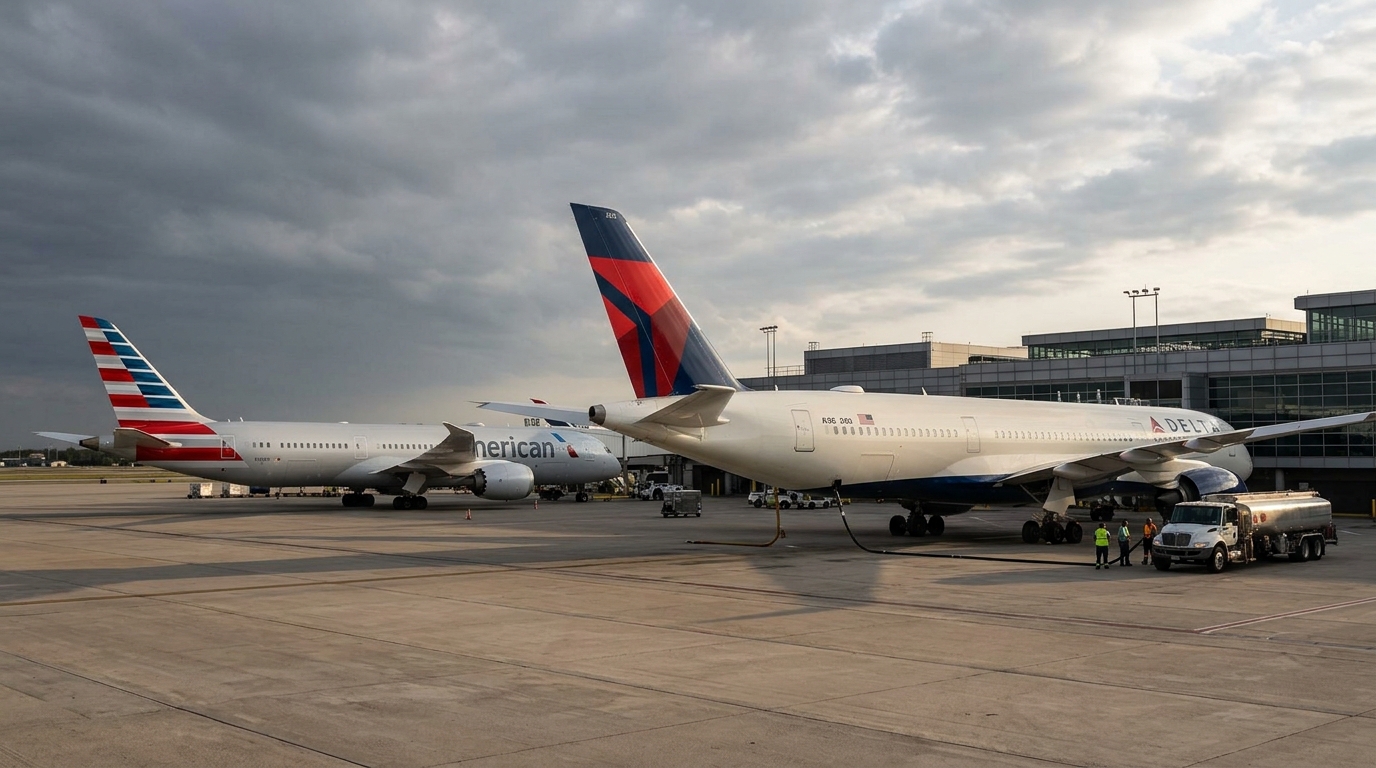
American Airlines CFO Devon May delivered an uncomfortable number at the Morgan Stanley 14th Annual Laguna Conference on September 16, 2026: a roughly $1 per gallon increase in fuel prices since July will add approximately $1 billion to American’s fourth-quarter expenses. Every one-cent-per-gallon increase in jet fuel adds roughly $10 million in costs per quarter, May explained, which means the fuel market has effectively handed American a bill it cannot negotiate away.
Elon Musk Just Called the Dollar “Hopeless” – Then Reinvented It
What’s going on with Elon Musk? Last year, he launched a full-blown attack on the U.S. dollar, calling it “hopeless.” And within months, he hatched a plan to reinvent the world reserve currency. Now, with the blessing of President Trump and the U.S. Treasury, it’s coming to life. And investors who grasp what’s going on could make a fortune.
The energy backdrop driving this is not a routine commodity wobble. North Sea Dated crude prices averaged about $91 per barrel in August after rising $7.61 from July’s average, and industry reporting put North Sea Dated around $113.48 per barrel on September 9. Meanwhile, the distillate market set its own records. AAA reported the national average price of diesel hit $6.23 per gallon on September 14, 2026, the highest level on record. Jet fuel tracks distillates closely; Airlines for America’s Argus-based daily jet fuel index was about $4.51 per gallon for September 18, 2026, after running around the mid-$4 range in the prior days.
The supply shocks behind these prices are not resolving quickly. The diesel price shock is being blamed on a prolonged disruption to shipping through the Strait of Hormuz and Russia’s diesel export restrictions, among other factors. In its Short-Term Energy Outlook, the U.S. Energy Information Administration assumes oil flows from the Middle East remain constrained through the fourth quarter of 2026 and that it could take until the second quarter of 2027 for most production and trade flows to return to pre-conflict averages.
Your coffee order costs more than this. We checked. It’s true.
Go ahead, order the oat milk cortado. It’s still pricier than Tim Sykes’ full Weekend Gap training this weekend, $1, no fine print. Click here.
American, United, and Southwest are all responding the same way. American Airlines executives said at the Morgan Stanley conference on September 16, 2026 that they are evaluating capacity and network choices as they manage higher fuel costs. Southwest, which had expected full-year 2026 capacity growth of about 2% at its last update, has now reduced that plan to approximately 1.5%. Fewer flights mean fewer loss-making seats, but the fuel bill does not shrink proportionally.
This is the moment that separates Delta from the rest of the group. Delta Air Lines stands alone. Its Monroe Energy Trainer refinery can offset some of the pain when the spread between crude and refined products widens, because the refinery’s economics improve as margins expand even while competitors face higher market fuel costs. In Delta’s June 30, 2026 10-Q, the company reported that the refinery generated operating income of $351 million in the June 2026 quarter. As for hedging, the big U.S. carriers have largely stepped away from traditional fuel hedges. American is one of them. As of June 30, 2026, American said it had no fuel hedging contracts outstanding and that its current policy is not to enter into hedging transactions, meaning it remains fully exposed to fluctuations in fuel prices.
For long-term wealth builders, the lesson here reaches beyond airlines. Energy-sensitive businesses with no structural cost protection, and no pricing power sufficient to offset a sustained commodity shock, cannot be treated as core portfolio positions. They are cyclical bets dressed up as businesses. When the fuel cycle turns against them, the margin compression is fast, the cash burn is real, and the recovery timeline depends entirely on factors management does not control.
A Forgotten Energy Source Is Powering Back Up
While investors chase the next tech story, one long-ignored sector is quietly heating up. A mix of global policy, rising demand, and tightening supply could reignite this market before 2026. See what the latest research reveals.
Within the sector, Delta’s refinery is not a curiosity. Delta is not escaping expensive fuel, but it is also capturing some of the refining margin embedded within it, providing it with a distinct advantage over competitors without a similar asset. If you must own airline exposure, own the carrier with an industrial hedge rather than one that flies completely naked into a distillate market that is setting records.
Position sizing still matters. Even Delta faces a cumulative 2026 fuel headwind measured in billions, and any operational issue at the Monroe refinery would reduce Delta’s primary offset during the worst possible time. Keep any airline allocation modest within a diversified portfolio. The bigger takeaway is structural: businesses that cannot control their largest cost and refuse to hedge it are not wealth builders. They are inflation pass-throughs with wings, and right now, the inflation is winning.