September 20, 2026
A two-month Sacramento working group may change AI compliance for growth stocks.
Most investors who own Nvidia, Alphabet, Meta, or Microsoft think they have priced in the AI risks that matter: demand disappointment, a capex bubble, a Chinese rival that ships a cheaper model. Regulatory shutdown risk barely registers. That needs to change after Friday.
What is “The Presidio Initiative”?
A single $20 million check delivered to a former military base may have launched the biggest megaproject in American history.
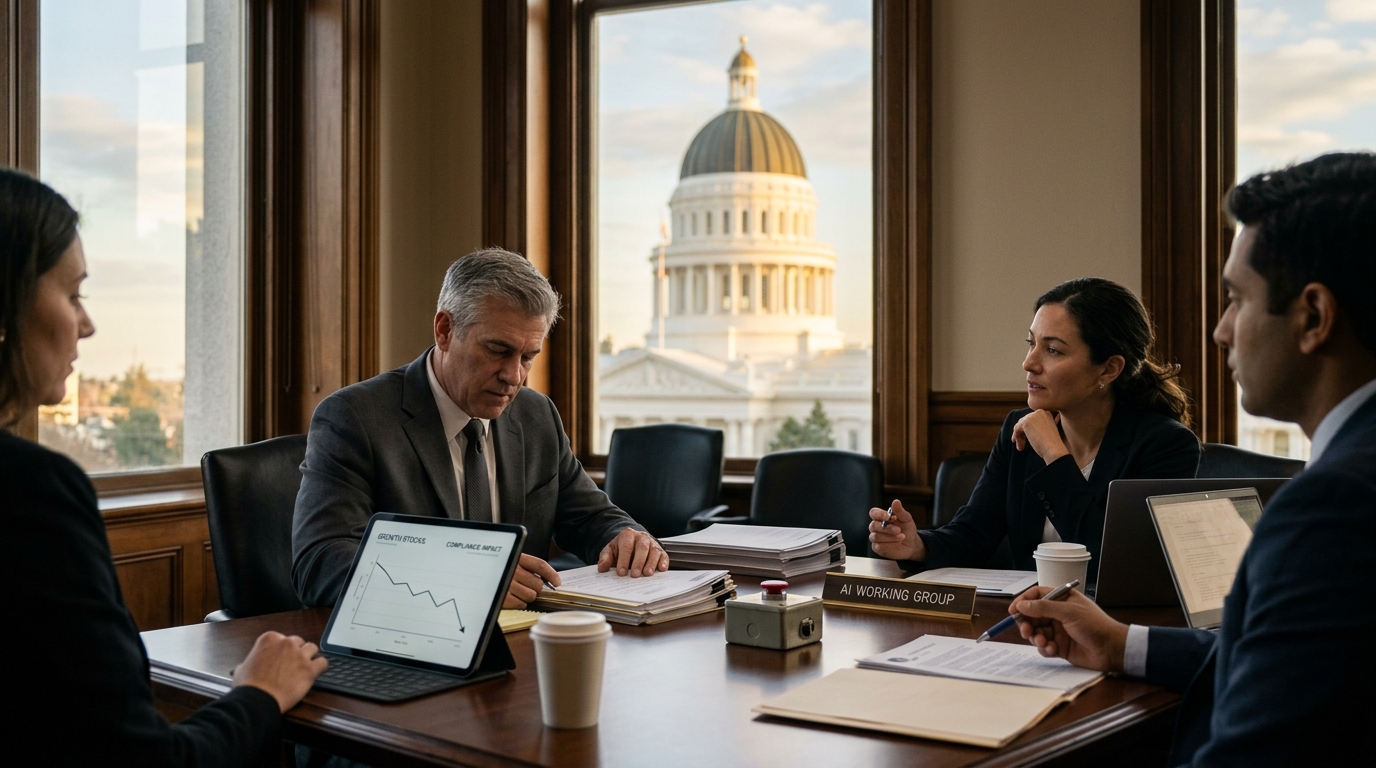
California Governor Gavin Newsom issued an executive order directing the state to convene a working group of experts to develop recommendations for strengthening the state’s AI safety and security laws, including a potential requirement that companies build an emergency shutoff, or “kill switch,” for frontier AI models.
The group has two months to deliver a guide. Potential measures include requiring independent third parties to write safety plans for frontier AI companies, and requiring developers to retain the ability to deactivate their systems in an emergency.
Read that last part carefully. A mandatory emergency shutoff, independently verified on an ongoing basis, is not a disclosure form. It is a constraint on how the most capable models can be architected and deployed. Every frontier lab with a California address, which is most of them, would need to build that constraint into their core product.
The order builds on SB 53, the Transparency in Frontier Artificial Intelligence Act, which Newsom signed on September 29, 2025 as California’s first-in-the-nation frontier-model AI safety law. That law requires large frontier developers to publish safety frameworks, report certain critical safety incidents to the state, and includes whistleblower protections for workers who report serious risks. The kill switch proposal goes further, moving from disclosure to architecture.
The Real Edge Hiding at Every Single Market Open
Forget mythical strategies and screen time that eats your whole day. One morning setup has been quietly delivering triple-digit wins to traders who know where to look. The Opening Bell Trade Guide shows you exactly how it works and right now you can grab it at zero cost.
The federal picture is the complicating factor for investors. Trump has planted himself against calls for AI safety regulations as a growing chorus of AI leaders and CEOs, spearheaded by Anthropic CEO Dario Amodei, called for a slowdown in AI development and better regulations. A federal executive order signed on December 11, 2025 directed the administration to pursue a national policy framework that would preempt certain state AI laws, and it signaled potential federal challenges to state-level AI rules. So the compliance cost for a company like Alphabet or Palantir now depends, in part, on which government prevails in a jurisdictional dispute that has no clear resolution date.
Anthropic’s Dario Amodei, OpenAI’s Sam Altman, and xAI’s Elon Musk have all publicly called for federal AI guardrails, and Trump has continued to reject those calls in recent days. Newsom’s push is expected to set up a jurisdictional battle between Sacramento and Washington over the future of tech oversight. That battle is not priced into any of the major AI names.
Consider the scale of what is at stake. Microsoft reported $115.948 billion of additions to property and equipment for fiscal 2026. Meta Platforms has guided to 2026 capital expenditures, including principal payments on finance leases, of $130 to $145 billion. Those commitments were made against a regulatory backdrop that assumed Washington would remain permissive. Sacramento is now moving to change that backdrop, and the working group’s recommendations could become the basis for proposed California legislation as early as 2027.
Major AI companies including Alphabet, Microsoft, and Meta already face growing compliance costs and strategic constraints under California’s expanding set of AI laws. A mandatory kill switch requirement would add a structural engineering burden on top of those costs, not a one-time filing fee.
Inside the Nuclear Revival Reshaping Energy Markets
Governments worldwide are investing billions to revive a proven energy source. Supply chains are tightening, demand is rising, and select companies stand to benefit. The Nuclear’s Second Act report explains what’s happening next.
For investors building or maintaining positions in AI, the practical question is not whether this specific executive order becomes law. It may not, or may be diluted. The question is what it signals about the trajectory. California moved from disclosure rules in 2025 to exploring shutdown mandates in 2026, alongside new laws focused on independent verification and third-party audits of AI systems. SB 53 could serve as a blueprint for other states or even federal legislation, much like the California Consumer Privacy Act influenced national privacy standards.
The prudent response is not to exit AI positions but to be honest about what your portfolio is actually exposed to. Heavy concentration in frontier model developers, whether public hyperscalers like GOOGL and MSFT or the private labs influencing their roadmaps, carries a regulatory dimension that the last two years of AI enthusiasm have largely ignored. Diversifying across the AI value chain, toward infrastructure beneficiaries like Nvidia that supply the picks and shovels rather than operate the mines, offers some insulation from model-level compliance risk.
The Sacramento working group reports in roughly two months. Watch what it recommends. That document will tell you more about the long-term regulatory cost curve for AI investing than any earnings call this quarter.