September 6, 2026
The copyright cases against OpenAI and Microsoft are growing. Here is how to think about it as an investor.
Friday’s lawsuit was not from the New York Times or the Washington Post. It came from the Seattle Times and Newsday, two regional publishers that most investors never think about. That matters, because it signals the copyright campaign against OpenAI and Microsoft has moved well past the flagship media brands and is now recruiting a much longer list of plaintiffs.
Jon Najarian’s Shocking “Beyond SpaceX” Prediction
For 16 years, Jon Najarian was a fixture on CNBC’s Fast Money – known as the man in the red beret.
He called Apple in 2010, Tesla in 2014, and Palantir in 2020. Now that the SpaceX IPO is in the books, he’s making what he believes could be his most important call of the decade.
A shocking prediction about what comes “Beyond SpaceX.”
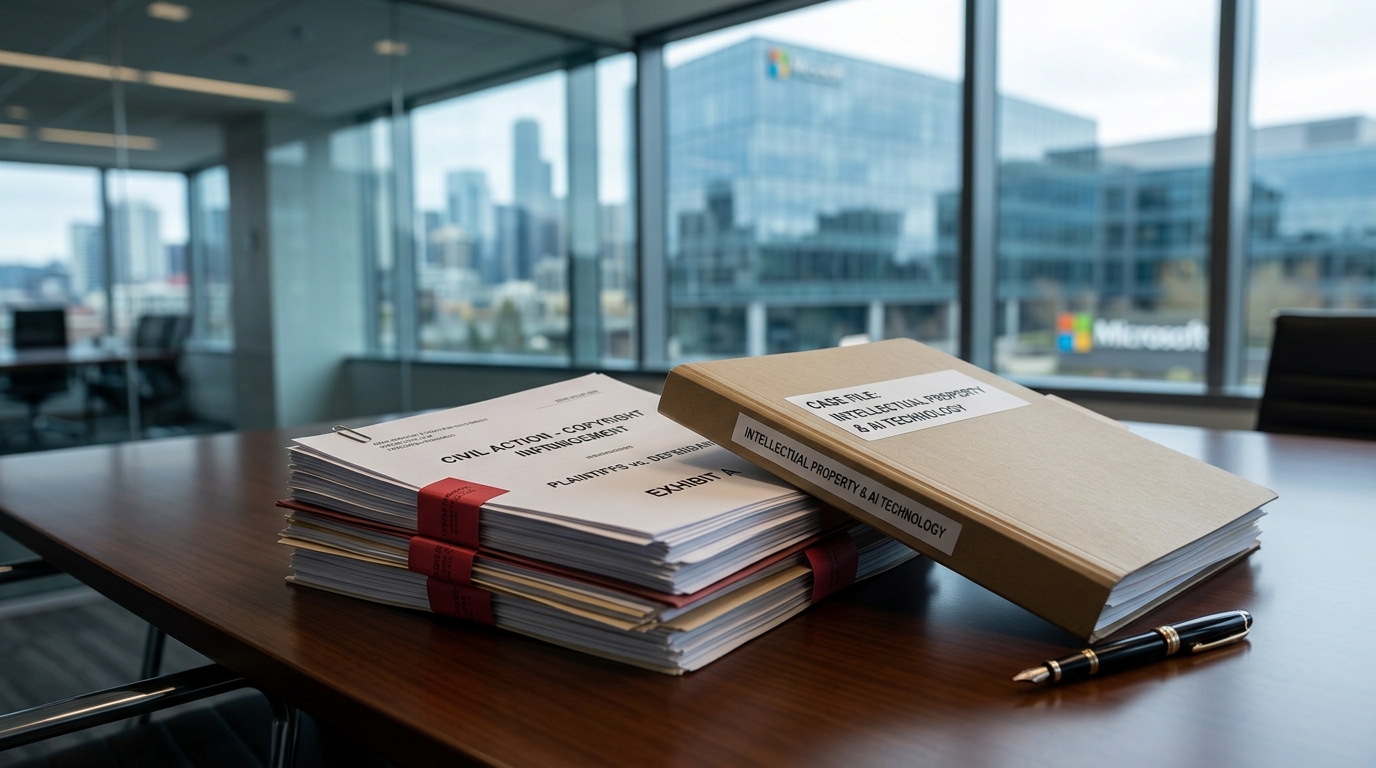
The Seattle Times Company and Newsday LLC filed a federal complaint on September 4, 2026 against OpenAI and Microsoft, escalating the dispute over whether generative AI companies can copy journalism for training, retrieval, and output generation without a license. The suit alleges that OpenAI and Microsoft scraped the newspapers’ websites, including content behind paywalls, and incorporated articles into datasets used to train and operate products including ChatGPT and Microsoft Copilot.
The remedy being sought is where investors should pay closest attention. The complaint seeks damages, injunctive relief, and an order requiring the destruction of copies of the publishers’ works, along with any training datasets or AI models that incorporate them. No judge has yet ordered anything like that, but having it on the table changes the legal calculus.
Microsoft’s response was careful. A Microsoft spokesperson said the company was surprised by the lawsuit, that it appreciates the importance of local journalism, and that it is open to discussing solutions. OpenAI’s posture was more combative: an OpenAI spokesperson said the company’s models are trained on publicly available data and that its approach is grounded in fair use.
The gap between those two postures — Microsoft’s conciliatory tone and OpenAI’s defiant one — reflects a broader pattern playing out across the AI industry, where companies are making large, hard-to-reverse infrastructure commitments even as the legal ground shifts beneath them. Nvidia’s $3 billion Lancium grid acquisition and what it means for AI infrastructure risk is one example of how capital is being deployed at scale before regulatory and legal frameworks have settled — a dynamic that shapes the risk calculus for every major AI holding.
The Man Who Went 13-for-13 After Trump’s Election Issues Buy Alert
In Q1 2025, Larry Benedict didn’t miss a single trade.
13 wins. Zero losses.
While others panicked during Liberation Day, his readers made 30%… then 59%… then 18%… and then 29%.
Four winning trades in just over two weeks during the worst crash since COVID.
Now he’s issuing a major buy alert connected to Trump’s next move.
How Courts Are Thinking About This
The AI copyright landscape in 2026 is still unsettled, and it is too early to say courts have converged on a single, clean market-competition standard for these cases. What is clear is that plaintiffs are leaning hard on market-harm arguments, including claims that AI-generated alternatives reduce traffic and digital advertising revenue, while AI companies are leaning on fair use and arguments that training is transformative.
The New York Times case, filed in 2023, remains the one to watch. The court largely denied key parts of the defendants’ motion to dismiss in 2025, allowing major copyright claims to proceed while also narrowing some DMCA-related claims. The case remains in discovery in 2026, but there is no definitive public trial date, and fair use has not been decided on the merits.
That unresolved fair-use question hangs over every AI model developer, not just the American ones. Open-source model builders face a version of the same exposure, since training datasets and output generation are at the center of the legal dispute regardless of whether a model is proprietary or freely distributed. how Alibaba’s Qwen open-source model dominance sets up its next earnings test examines how one of the largest non-Western AI model developers is navigating the commercial pressures that copyright litigation is beginning to define.
Is This Risk Priced or Ignored?
Microsoft shareholders are already carrying meaningful legal weight. A separate shareholder class action followed Microsoft’s January 28, 2026 earnings report, after which the stock fell about 10% on January 29, 2026, erasing roughly $357 billion in market value.
5 Nasdaq Stocks Under $5 That Aren’t What You Think
Most stocks under $5 come with a reputation. These don’t.
Each company on this list is tied to major trends like AI, cybersecurity, and next-gen infrastructure.
They may not have the spotlight yet, but they are building real businesses in real markets. That combination is not always easy to find at this price level.
If a court rules that reproducing substantial portions of copyrighted text as model output constitutes infringement, it would fundamentally change how models are deployed and how outputs are filtered. A model-destruction order, even if unlikely, would force costly retraining. Licensing obligations would compress margins across the industry.
For long-term Microsoft holders, this is not noise, but it is also not a sell signal on its own. The company’s Azure cloud business and its broader product ecosystem have the financial strength to absorb licensing settlements or new compliance costs. What the litigation does is extend uncertainty around the commercial model for AI, and that uncertainty is unlikely to resolve quickly. Position sizing should reflect that timeline.
The Wealth Builder Takeaway
The most durable lesson here is that transformative technologies almost always generate a legal reckoning before they generate stable profits. That reckoning does not necessarily destroy the technology or its leaders. It does, however, create an environment where disciplined position sizing and patience matter more than conviction alone. Microsoft remains a core holding for long-term wealth builders. The copyright litigation front is a risk to monitor, not a reason to exit.
For investors who want to maintain AI exposure while managing the uncertainty that model-layer litigation introduces, the infrastructure beneath the models has become an increasingly attractive alternative. why the AI network layer is outperforming model developers in the current trade environment makes the case that the companies moving data between AI systems carry less direct copyright liability than those training and deploying the models themselves — a distinction worth understanding before sizing any position in this space.