August 9, 2026
Nvidia Paid $3B for a Closed Door
The ERCOT legacy interconnection path ended July 10. Lancium was already through it.
First a note from Paradigm Press
Dear Reader,
White House, Pentagon, and CIA insider Jim Rickards is widely considered to be among the top gold experts in the world…
He even wrote the definitive book on gold, titled The New Case for Gold – which was praised by The Wall Street Journal, Forbes, and more.
And now, he’s just released this critical message for anyone invested in gold.
Fair warning…
What you’re about to hear is highly controversial…
But regardless of your political affiliation, or who you voted for in the last election…
You should drop what you’re doing and view Jim’s urgent message right away.
Because if he’s right, this little-known gold story is about to make a lot of investors very rich.
WARNING: Don’t buy a single ounce of gold until you hear about this coming gold shock.
Click here now for the details.
Regards,
Matt Insley
Publisher, Paradigm Press
Nvidia Paid $3B for a Closed Door
On August 8, The Information reported that Nvidia plans to invest up to $3 billion in Lancium, a Texas-based power infrastructure developer. The structure: $2 billion upfront for a roughly 20% stake, and another $1 billion contingent on Lancium hitting grid hookup milestones. The enterprise value attached to the deal is around $10 billion.
Most of the coverage treated this as a big chip company buying into the data center buildout. That framing undersells what Nvidia actually acquired. The $3 billion is not primarily for land or wire. It is for a time advantage that cannot be replicated: Lancium’s grid interconnection positions in Texas were secured before the legacy Large Load Interconnection Study process closed at the end of July 10, 2026. The Public Utility Commission of Texas approved the replacement framework, known as Batch Zero, effective July 11. Anyone who was not already in line does not get the same entry.
What the Grid Actually Looks Like Right Now
ERCOT is handling a queue unlike anything the Texas grid has seen. The Electric Reliability Council of Texas is evaluating more than 474 gigawatts of large-load connection requests, and approximately 90% of that requested capacity comes from data centers. Most of those requests will not result in built projects. The Batch Zero framework, approved unanimously by the ERCOT Board in early June 2026, groups qualifying projects of 75 MW or larger into a single system-wide study rather than evaluating each individually. Results from that study are not expected until early 2027, with a final transmission plan due in fall of that year.
Lancium’s advantage is that its key sites were already through the old process before Batch Zero replaced it. That is not a procedural technicality. It means Lancium holds interconnection positions that new entrants, no matter how well-capitalized, cannot obtain by following the same path. The door closed on July 10. Lancium was already inside.
Why Nvidia Is Here
Nvidia sells AI chips. It holds roughly 80% market share in GPUs used for AI training and inference, and its fiscal year 2026 revenue came in at $215.9 billion. The company does not have a power problem in its own operations. Its customers do.
Every Blackwell or Rubin system Nvidia ships has to be plugged in somewhere. That somewhere requires grid access, which in Texas is the single most constrained variable in the AI buildout. By taking a 20% stake in Lancium, Nvidia aligns itself with the infrastructure layer its chip customers depend on most. More Lancium capacity brought online means more sites capable of absorbing Nvidia hardware at scale. The equity stake creates a direct financial incentive to see that happen.
This fits a broader pattern. Nvidia has been aggressively building a private investment portfolio in AI infrastructure companies. Its non-marketable equity securities, which are private company stakes, stood at $22.25 billion at the end of January 2026, up from $3.39 billion a year earlier. During fiscal 2026, the company deployed $17.5 billion into private companies and infrastructure funds. The Lancium deal is one more node in that strategy, aimed at the power layer specifically.
The Asset Lancium Actually Owns
Lancium is not a data center operator. It owns and develops large sites with power infrastructure already in place, then licenses that infrastructure to operators who build and run the data centers. The company calls these properties Clean Campuses. Under its standard model, Lancium owns the land, secures the power interconnection, and manages the site’s energy infrastructure. Partners like Crusoe or QTS handle design, construction, and operations.
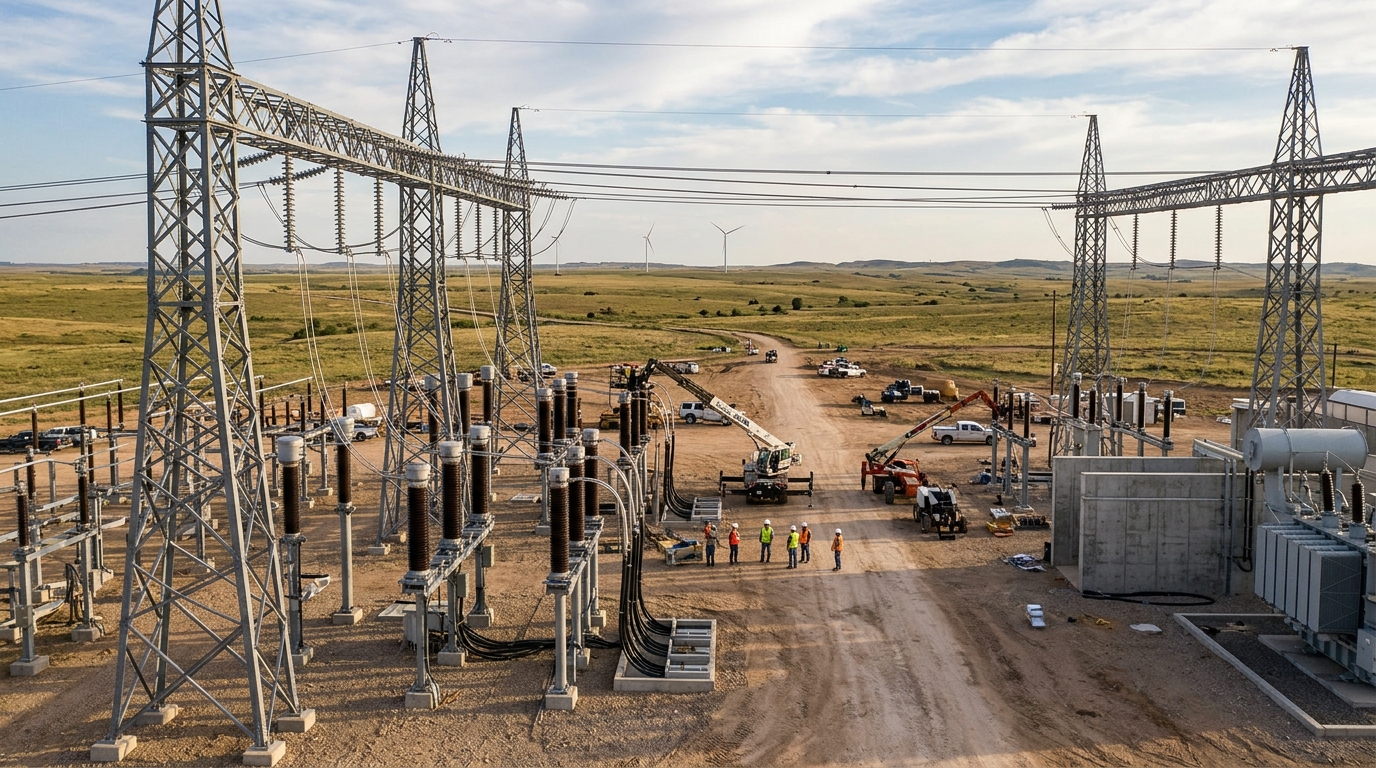
The company has 4 gigawatts of power resources secured on the Texas grid, with a further 15 gigawatts of interconnection projects in progress. That 4 GW of secured capacity is the number that matters most for the current deal. It represents grid work completed before the July 10 cutoff, which is exactly what Nvidia is paying to be associated with.
Recent activity confirms how quickly Lancium is deploying that grid access. On July 13, QTS Data Centers announced an 11-building campus at Lancium’s third site near Turkey in Hall County, Texas, representing more than $10 billion in capital investment. Two days later, Crusoe and Lancium announced a 1.0 GW AI data center campus in Childress, spanning 270 acres owned by Lancium, with construction set to begin in Q3 2026. Two gigawatt-scale announcements in one week, both built on grid connections secured before the new framework took effect.
Wall Street quietly buying these stocks before November 3?
We caught Wall Street in the act.
Take a look:
Right here in June…
BlackRock made a strange move.
It put nearly $1 billion into a forgotten-about corner of the AI market.
In fact, we flagged a number of strange transactions from gigantic firms like Goldman Sachs and JPMorgan…
Into two specific stocks in this critical but rarely talked about corner of AI.
I believe these companies are loading up ahead of November 3.
The Circular Capital Problem
The Lancium deal comes with a risk that Wedbush analyst Matthew Bryson flagged in a research note about Nvidia’s investment strategy: the circular investment theme. Nvidia is simultaneously an equity investor in and a chip supplier to the same infrastructure ecosystem. Some portion of the demand for its hardware is, at least indirectly, being catalyzed by its own capital deployment. That is not inherently disqualifying, but it does complicate any clean reading of organic demand.
The regulatory backdrop adds another layer. On August 3, Texas Governor Greg Abbott ordered an audit of data center projects seeking grid connection. That review could introduce delays or disqualifications for projects in the queue, including those tied to Lancium’s pipeline of 15 GW in progress. The Batch Zero process itself imposes strict site control, financial security, and energization schedule requirements. Projects that miss milestones risk losing their capacity allocation.
The milestone structure inside the Nvidia deal also deserves direct attention. The extra $1 billion is not guaranteed. It is contingent on Lancium securing additional grid hookups. That means one-third of Nvidia’s total potential commitment only converts to confirmed equity as physical infrastructure is energized. In a Texas grid environment that is getting harder to navigate, not easier, that is a real contingency.
Three Things to Watch Over the Next 12 Months
First, watch the gigawatt count. Lancium has 4 GW secured and 15 GW in progress. The gap between those two numbers is where the risk lives. Every gigawatt that converts from pipeline to operational capacity validates the $10 billion enterprise value. Every gigawatt that stalls calls it into question.
Second, watch the milestone payments. Each incremental grid hookup Lancium completes converts contingent Nvidia capital into confirmed equity. The pace of that conversion is the clearest real-world signal of whether execution is tracking to the investment thesis.
Third, watch the IPO clock. The investment is expected to help Lancium expand its operations as it explores a potential public offering in 2027. A Lancium IPO would be the first direct public market look at the value of advanced ERCOT grid access as a standalone asset class. It would either confirm the $10 billion valuation assigned to this deal or force a reset. Either outcome tells investors something important about how the market prices grid scarcity in the AI buildout.
Bottom Line
Nvidia is not becoming a utility. It is buying a position at the one chokepoint its chip customers cannot engineer around. Grid connections in Texas are the new rate-limiting input, and Lancium holds some of the most mature, advanced positions on the ERCOT system. The $3 billion price is not for the acreage or the cable runs. It is for the years of regulatory progress behind both, at the precise moment that path became permanently unavailable to new entrants. That is a rational bet, with real execution risk attached, and a 2027 IPO as the moment of reckoning.