September 30, 2026
Bonus Content: Iowa’s $15B Steel Mill Won’t Produce Steel Until 2030
Miners worked this mountain by candlelight in 1898
They came in on horseback and dug by candlelight. By the 1940s the district went quiet.
One company now holds 37,000 hectares of it… and says most of the ground has never seen a modern drill.
The first holes are done. What the picks missed is the open question.
Take a closer look at what’s going on in this historic district.
Iowa’s $15B Steel Mill Won’t Produce Steel Until 2030
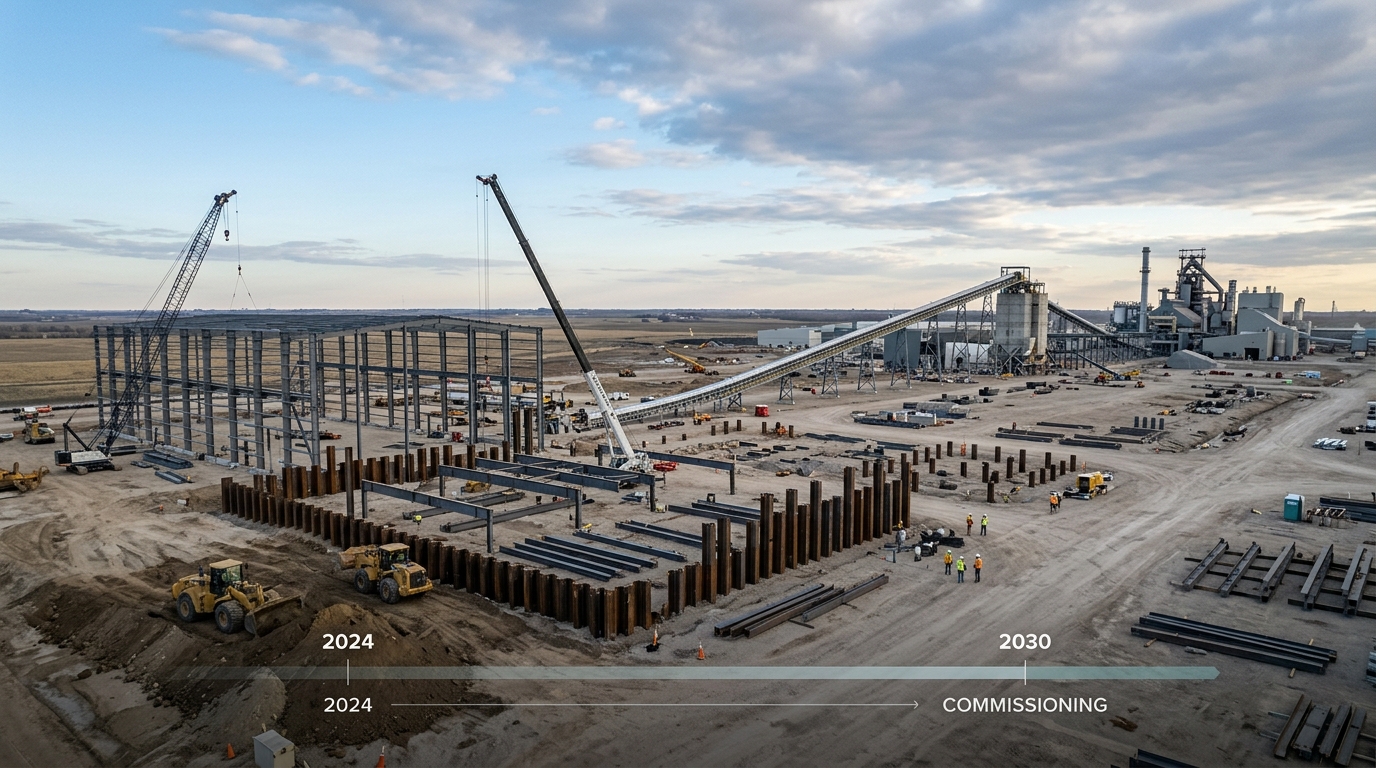
Monday’s Oval Office ceremony was an impressive production. President Trump announced a steel-making company’s plan to invest about $15 billion to build what the White House says would be the largest plant of its kind in U.S. history. The room included Commerce Secretary Howard Lutnick, Export-Import Bank leadership, and Iowa’s congressional delegation. “Everyone is building their plants here because they don’t want to pay tariffs,” Trump said. The political timing was equally deliberate: the announcement comes weeks ahead of the Nov. 3, 2026 midterm elections, with Iowa at the center of the fight for the Senate and the House.
None of that tells you whether to buy NUE, STLD, CLF, or X today. The announcement does not.
The Gap Between Pledge and Production
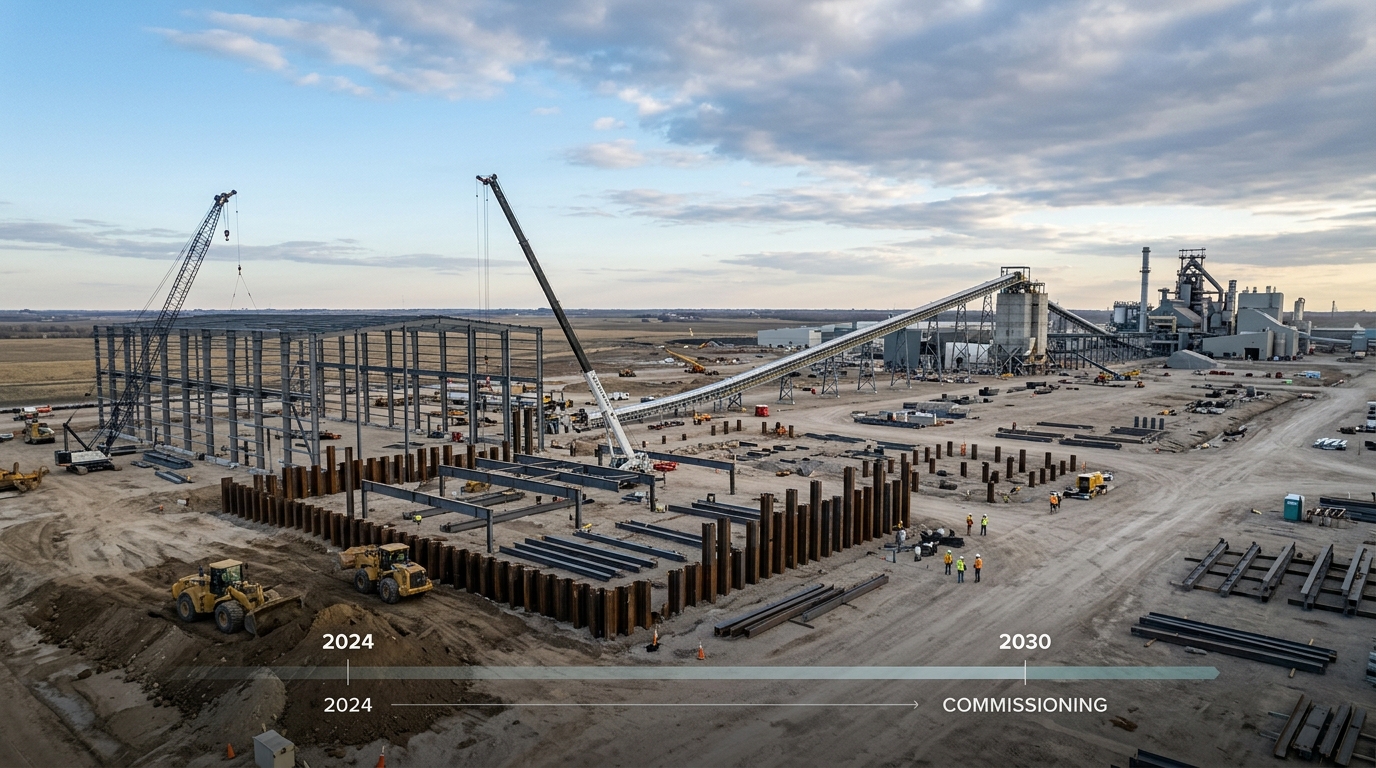
Mesabi Metallics plans to invest about $15 billion in a steel plant in Iowa, with the planned facility aiming to begin production in 2030 and create an estimated 1,750 full-time jobs. That four-year runway from announcement to first steel is the number serious investors should pin to their screens. Projects of this scale routinely slip. This one has a documented history of doing exactly that.
In 2008, Essar Group’s Essar Steel Minnesota LLC began work on a massive iron mine and processing facility in Minnesota. After years of delays, missed deadlines, and financial challenges, it filed for bankruptcy in 2016. Mesabi Metallics’ Minnesota iron ore mine opened on Sept. 23, 2026, a more than $2.5 billion project that took roughly two decades in development. The Iowa steel mill is five times larger and more complex. The timeline deserves at least equal scrutiny.
Other outlets also noted a pointed historical comparison: in his first term, Trump attended Foxconn’s groundbreaking for a planned $10 billion factory in Wisconsin and praised it as “the Eighth Wonder of the World,” but in April 2021 Foxconn reduced its planned investment to $672 million and cut the promised jobs from 13,000 to 1,454 under a renegotiated deal with the state. Reshoring headlines and reshoring outcomes are not the same asset.
What This Means for Existing Steel Stocks
The established producers, Nucor, Steel Dynamics, Cleveland-Cliffs, U.S. Steel, are a separate question from Mesabi Metallics entirely. Their near-term fortunes run on tariff policy, not groundbreakings scheduled for Iowa in 2027 or 2028.
Steel Dynamics has been the standout performer of 2026, with a year-to-date return around the mid-30% range as of late September. The company also disclosed that its steel mill utilization was 89% in the first quarter of 2026. Nucor has also risen meaningfully year-to-date in 2026. Both companies benefit from a tariff wall that elevates domestic steel prices. Beyond the immediate tariff impact, both Nucor and Steel Dynamics have exposure to one of the most significant sources of industrial demand in the U.S. economy: data-center construction. That structural demand driver exists independent of any Iowa announcement.
Cleveland-Cliffs presents a different picture. CLF sold off sharply this week, while Nucor declined more modestly. Part of the gap is company-specific: Cleveland-Cliffs carries heavier debt than the mini-mills, and it also owns Stelco in Canada, which adds cross-border trade exposure that rivals do not share to the same degree.
The Discipline Test
Reshoring announcements create a recurring temptation: buy the sector on the headline, assume the capex flows quickly, model the demand pull-forward. The Mesabi Metallics project could eventually reshape domestic supply in ways that matter enormously to the industry. The initial annual capacity has been described at about 7.5 million tons per year, with longer-term plans described as reaching 10 million tons annually. At full scale, that is material new American capacity.
But 2030 is the earliest date for first steel, and the company behind this project has already demonstrated that announced timelines are aspirational. The existing mini-mills, with their lower capital intensity and tariff-protected pricing, are the actual investment available right now. The Iowa plant is a reason to keep watching the sector. It is not a trade.
Daily Wealth Takeaway
The most enduring discipline in long-term investing is separating the announcement from the asset. A $15 billion pledge from a company tied to a prior bankruptcy, targeting production four or more years out, is a reason for optimism about American steel broadly. It is not a catalyst for the steel stocks sitting in your brokerage account this week. Those are priced on tariff policy today, and tariff policy can shift faster than any mill can pour its first heat.