September 27, 2026
Bonus Content: Retailers Are Dumping Overstocked Goods. Three Companies Profit From Every Pallet.

America’s Emergency Oil Reserve Just Hit A 44 Year Low
It is 40.6% full. Here is why that reaches your grocery bill and your retirement account.
284.6M
BARRELS REMAINING
Week ending September 18, 2026. EIA Weekly Petroleum Status Report, released September 21.
The Strategic Petroleum Reserve is the country’s emergency crude stockpile. Its job is to soak up a supply shock before that shock reaches the price you pay.
Federal data now puts it at 289.7 million barrels, roughly 40.6% of its 714 million barrel authorized capacity. That is the lowest level since 1982.
The short version of how it got there:
✔ Before February 28 of this year, the reserve held roughly 415 million barrels.
✔ After the Strait of Hormuz was disrupted, a chokepoint carrying close to 20% of global oil supply, President Trump authorized a 172 million barrel release in March.
✔ That release was part of a coordinated international effort, with IEA member nations collectively committing 400 million barrels. Reported as the largest emergency stock mobilization the agency has ever run.
✔ The reserve has kept draining since. It fell another 3.7 million barrels in the most recent reported week alone.
One analyst note circulated by CNBC put it bluntly, calling this another inflation impulse and saying the country effectively has no strategic reserve left to speak of.
That’s rhetoric. 289.7 million barrels is still a real stockpile, and it sits above the statutory minimum of 252.4 million barrels set under the Energy Policy and Conservation Act. Anyone telling you the tank is empty is overselling it.
But the cushion is thinner than it has been in more than four decades, and thin cushions matter for one reason.
Energy feeds into nearly everything you buy, from groceries and freight to utilities and building materials. When oil moves and there’s less reserve on hand to blunt it, more of that move ends up on the shelf. Gasoline has been running around $4.08 a gallon in recent reporting.
Inflation doesn’t arrive as an event. It works as a slow subtraction from every dollar you’ve already put away.
A retirement account does not need a crash to lose ground. It only needs prices to keep rising faster than the account grows.
This is the kind of stretch gold has historically been held for. It promises nothing about returns. It’s savings held outside the currency and outside the paper system.
Central banks seem to think so too. The World Gold Council reported they bought a net 288.9 tonnes of gold in the second quarter of this year, up 62% from a year earlier.
The tax code allows eligible IRA, 401(k), TSP, and 403(b) savings to be diversified into physical gold and silver through a properly structured self directed IRA, generally without triggering a taxable distribution when the transfer is handled correctly.
Send me the FREE Precious Metals Retirement Guide

Inside your free guide:
✔ How energy shocks have historically fed into consumer inflation, and how quickly.
✔ How gold has behaved during past inflationary stretches.
✔ How a Gold IRA generally works, and how you may be eligible to move a portion of an existing IRA, 401(k), TSP, or 403(b) into physical metals.
✔ How physical metals can help diversify savings outside the paper system.
✔ A simple, conservative way to get started.
Or call 1-888-691-8238 to speak with a precious metals specialist.
The reserve was the cushion. There’s a lot less of it now.
Retailers Are Dumping Overstocked Goods. Three Companies Profit From Every Pallet.
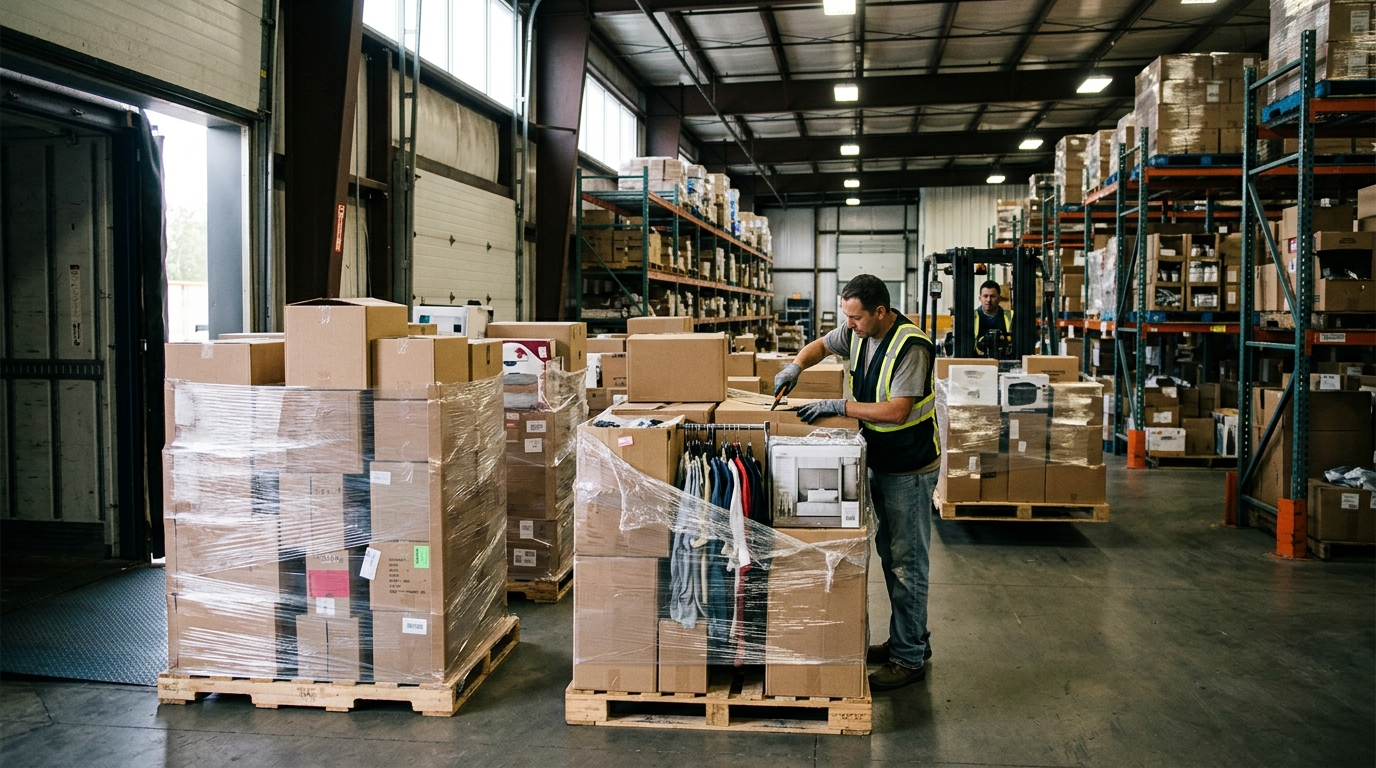
Every time a mainstream retailer miscalculates demand, someone else wins. Right now, the winners are collecting record revenue.
A combination of excess inventory, increased closeouts, and liquidations has created an extraordinary buying environment for off-price chains and B2B liquidation platforms alike. The supply side of this trade is not thinning. Mainstream retailers have struggled to accurately forecast demand and gotten saddled with goods they could not sell at full price. Add to that a wave of retail and restaurant store closures sweeping the U.S. in 2026, with major national chains aggressively trimming their footprints, and the volume of displaced merchandise reaching the secondary market is enormous.
The Off-Price Giants Are the Biggest Beneficiaries
The Big Three of off-price retail, TJX, Ross, and Burlington, increased their combined topline revenues by just over $2.5 billion in the most recent quarter, representing double-digit gains for the latter two. That growth is happening while broader retail is stagnant. Taken together, the three chains are adding roughly $3 billion in combined topline revenue per quarter, a striking figure given that broader retail sales have been largely flat over the same period, according to Kearney partner Michael Karabus.
TJX is the clearest expression of the thesis. Net sales for its fiscal first quarter of 2027 reached $14.3 billion, up 9%, with comparable sales up 6% and diluted earnings per share rising 29% versus the prior year. TJX now carries a market capitalization of roughly $143 billion, reflecting the market’s conviction that this sourcing advantage is structural, not temporary. Ross followed with fiscal Q2 2026 comps up 10% and earnings per share of $2.66.
What powers these numbers is purchasing discipline. Unlike brands and stores that lock in inventory six to twelve months in advance, TJX and other off-price chains buy surplus merchandise to sell right away, capitalizing on canceled orders and overproduction. Availability is currently so strong that TJX has been telling its 1,400 buyers to slow their roll, which speaks to the depth of the opportunity rather than any constraint on demand.
The B2B Platform Angle: Liquidity Services (LQDT)
Investors who want exposure to the liquidation wave without betting on any single off-price retailer have a less obvious option: Liquidity Services. The company operates the world’s largest B2B e-commerce marketplace for surplus assets, with over $15 billion in completed transactions to more than six million qualified buyers worldwide. Its retail segment is where the current story lives. Its most recent quarter marked the company’s 10th consecutive quarter of year-over-year EBITDA growth, with retail segment gross merchandise volume reaching a record $121.6 million, up 19%. Total revenue for that quarter reached $129.6 million, an 8% increase year-over-year, with the retail segment setting a new quarterly record on higher volumes and a favorable product mix.
Where the Risks Sit
The best margins in 2026 are found at the intersection of knowledge, speed, and sourcing discipline. General merchandise loads from major retailers remain the core for most operators, but margins on these have compressed as competition has increased. For the off-price giants, as top-tier excess inventory eventually thins out, pressure will shift directly onto sourcing strategies, and the channel has historically balanced genuine overstock with goods produced specifically for discount channels. That distinction matters: purpose-built discount merchandise carries lower inherent value than genuine brand-name overstock, which is what drives the treasure-hunt appeal consumers love.
The wealth lesson here is about structural positioning. Retailers that miscalculate demand pay to unload merchandise. The companies that absorb that merchandise at a discount, whether a TJX buyer or a Liquidity Services auction, turn someone else’s forecasting error into a durable margin advantage. That asymmetry does not require a perfect economy to persist. It requires a retail industry that keeps overordering, and that part seems secure.