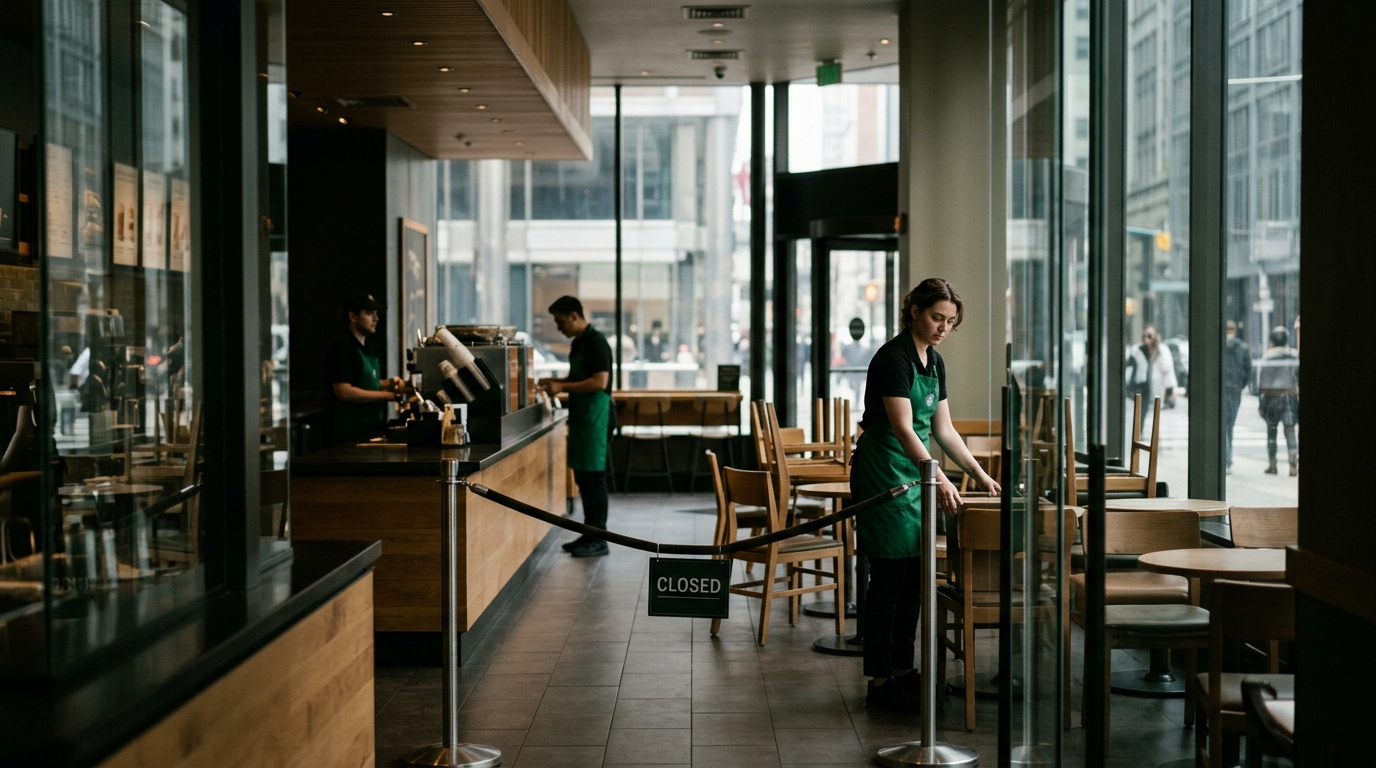
Brian Niccol’s second year at Starbucks ends the same way his first one did: with a wave of store closures and a fresh restructuring charge. The announcement marks the second round of closures in North America during Niccol’s two-year tenure. This time, Starbucks expects to shutter about 250 underperforming cafes out of its more than 18,000 locations in North America, and the company is booking about $300 million in restructuring charges related to the closures. COO Mike Grams delivered the news in a letter to employees on Thursday, September 24, not a press conference.
The operational logic is sound enough. The strategy reflects a shift toward fewer, stronger, and better-performing locations, while directing capital toward stores where improvements are showing tangible results. Alongside the closures, Starbucks plans to complete at least 1,500 so-called “uplifts” by the end of fiscal 2026, and more than 1,000 stores across the U.S. and Canada have already been redesigned, with changes including the return of more seating and a warmer, more comfortable café environment.
The Numbers That Actually Matter
The sales recovery is not in question. Global comparable store sales increased 7.9% in the fiscal third quarter, primarily driven by a 4.2% increase in comparable transactions and a 3.5% increase in average ticket, while North America comparable store sales rose 8.1%. That came on the heels of Q2 global comparable store sales growth of 6.2% and consolidated net revenues of $9.5 billion, up 9%. Four consecutive quarters of positive comps is a real achievement for a chain that was bleeding traffic not long ago.
But the cost picture complicates the celebration. Just two months after telling investors on the July 29 earnings call that net-new-store guidance of 600 to 650 openings “remains unchanged,” Starbucks reversed course on September 24, cutting that figure to about 440 and confirming the 250 North America closures alongside $300 million in restructuring charges. Reported operating margin was 10.5% in the quarter ended June 28, 2026, up modestly versus a year earlier.
What the Closures Tell Long-Term Holders
Here is the harder question: is Niccol still finding underperformers two years in, or is this disciplined portfolio management? Cutting 250 underperforming coffeehouses and trimming new-unit growth by roughly a third could be exactly the kind of capital discipline that makes the next margin reading more trustworthy. Or it could signal that Niccol’s team is still finding rot in the portfolio, with $300 million in restructuring charges as the cost of admission. Both readings are defensible. Neither is complete without the Q4 results.
Of the approximately $300 million in restructuring charges, about $200 million are cash charges primarily related to lease exit costs and employee separation benefits, real money leaving the business. SBUX shares remain down nearly 11% versus their September 1, 2026 close, sitting near $94.86 as of September 25. The market has priced in some skepticism already.
Comparable store sales tell you if customers are coming back. They do not tell you whether the cost structure underneath those visits is getting lighter or heavier.
The Wealth-Building Takeaway
Patience in a turnaround is only rational when the evidence keeps moving in one direction. For Starbucks right now, the sales line and the cost line are moving in opposite directions at the same time, and investors will not get a full picture until the next earnings update. The next earnings call is tentatively scheduled for October 29. Investors holding SBUX for the long term should watch that call closely. A cleaner margin reading, with no one-time tailwinds helping the number, is what would finally justify the patience premium this stock still asks you to pay.