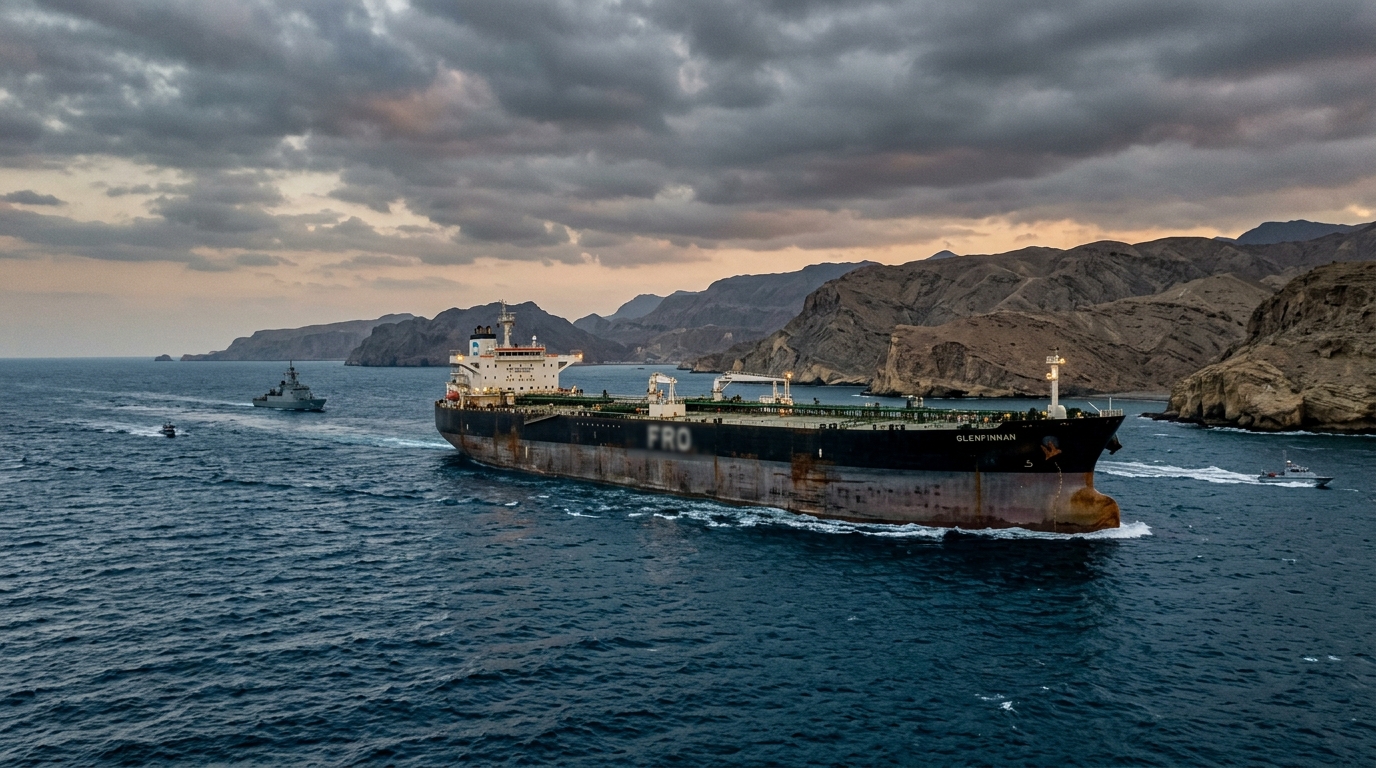
The number that matters most this weekend is not a stock price. It is Trump’s two-word verdict on Iran’s Hormuz proposal: “not acceptable.”
Trump rejected Iran’s latest proposal to reopen the Strait of Hormuz on Saturday, calling it “not acceptable.” That rejection, delivered as he boarded Marine One, is the single most important piece of information a tanker equity holder could receive. Not because a deal was imminent, but because the market had started pricing in the possibility that one was.
U.S. and Iranian negotiators in New York spent the week exploring a phased path out of war that would involve Tehran reopening the Strait and Washington lifting its economic blockade of Iran, according to reporting citing Reuters. Crude oil sold off into Friday’s close on that diplomatic noise. Tanker stocks wobbled. Trump has now told aides he expects to resume bombing Iran after the midterm elections, the Wall Street Journal reported, citing U.S. officials. The relief trade evaporated before it started.
What the Rates Are Actually Saying
Clarksons’ cross-sector ClarkSea Index has moved to record territory, supported by the crude tanker market surge. That headline obscures how extreme the individual route numbers have become. Global average VLCC earnings rose 68% week on week to a fresh high of $451,000 per day, with record rates on the Oman-Korea route at $572,000 per day.
The old ClarkSea record was $50,714 per day in December 2007, Clarksons has said. This is not a cyclical uptick. It is a structural reset driven by one factor: Hormuz is closed.
The Equity Lag
Here is where the trade lives. Tanker equities are not priced at spot. They never are. Valuation summaries vary by name and methodology, but multiples across the crude tanker group still reflect the market’s persistent belief that rates will mean-revert. The rates themselves are arguing otherwise.
Frontline reported record second-quarter 2026 earnings with net profit of $659.2 million. Those were Q2 averages. Current spot is multiples higher. Q3 earnings, due next month, will be a different document entirely.
International Seaways reported record second-quarter net income of $295 million. DHT, a VLCC pure-play, has direct exposure to the routes generating the most extraordinary earnings.
Sizing the Asymmetry
Trump’s rejection of Saturday’s proposal does not mean Hormuz stays closed forever. Former U.S. negotiator Dennis Ross has been quoted in recent commentary putting the probability of a deal before November’s midterms at 30%. That is not zero. A deal before the midterms could benefit Trump, as reopening Hormuz would ease Gulf tensions and help bring down politically sensitive U.S. gasoline prices. The incentive structure remains in play even after Saturday’s rejection.
The correct way to hold FRO, DHT, INSW, TNK, or TRMD here is with explicit position sizing that reflects that 30% tail. These stocks will move violently on a genuine ceasefire headline. The question is not whether to own them; it is how much of a drawdown your book can absorb if diplomacy accelerates faster than the market expects.
For now, Trump’s “not acceptable” has handed traders the clearest possible signal: the rate environment that produced record earnings in Q2 is still intact for Q3, and probably Q4. Trump has told aides he expects to resume bombing Iran after November’s midterms. Until the diplomatic calendar forces a reassessment, the rate floor is higher than most equity valuations imply. Size accordingly, and keep one eye on Marine One.