
October 24, 2026
Bonus Content: Lloyds and NatWest’s Dividends Face Budget Risk. HSBC’s Less So.
Below is an important message from one of our highly valued sponsors. Please read it carefully as they have some special information to share with you.
** If you’re within miles of one of these dots you could see your electric bill increase. **
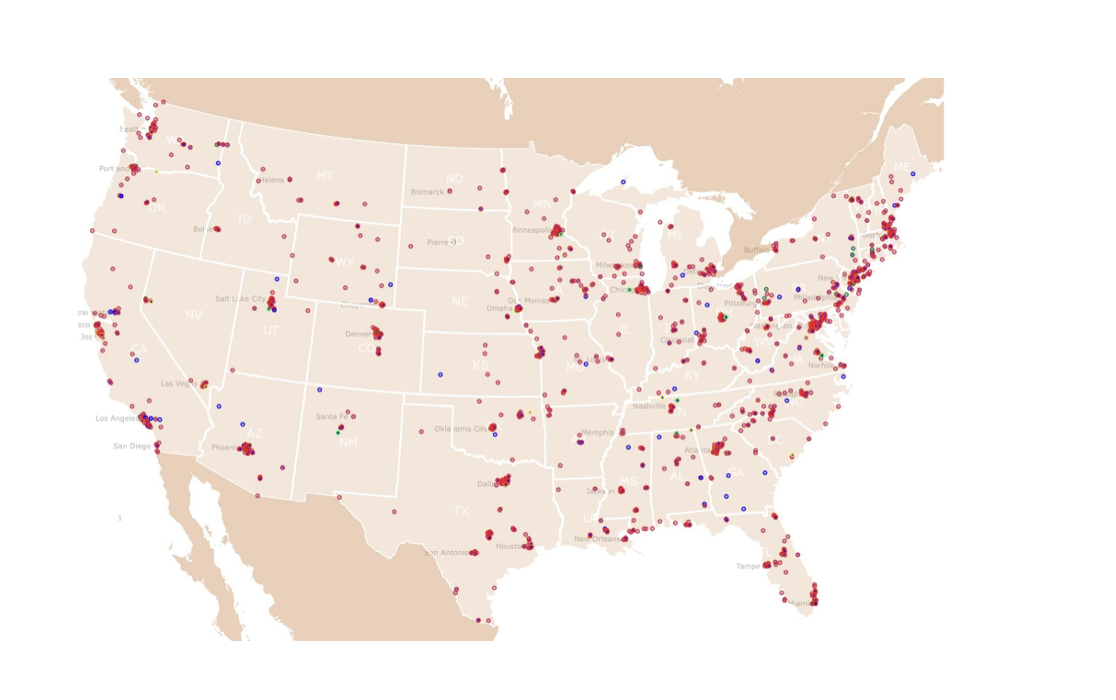
These are data centers. Warehouses full of computers, built to run AI.
There’s about 1,300 operating in America right now.
A single one can draw as much electricity as 100,000 homes.
In Manassas, Virginia, a man who’s lived in the same house for 40 years opened a $281 electric bill in January.
The month before, he paid about $100.
And this is just the beginning.
Another 2,500 data centers are set to be built in the coming years.
It’s only a matter of time before all of us feel this. If you haven’t already.
So who’s going to stop it?
I can tell you it isn’t your congress man. It isn’t your senator.
There’s exactly one person who can. And he’s not in government. Elon Musk. His new “hidden” project would take data centers out of our cities entirely
He’s already filed his plan to do this with the FCC.
And Trump has been in full support of this,, so that you don’t get hit with rising electric bills in the coming years.
And this goes one step further.
Which is the real reason I’m writing to you today.
We’re at the ground floor of a problem only Elon can solve.
And there’s one company I believe is sitting at the center of his solution.
It’s a company 99% of people have no idea exists, let alone has Elon’s name attached to it.
It’s publicly traded, and it costs less than $100 a share.
Imagine getting in on the ground floor of PayPal. Tesla. SpaceX.
That’s exactly where we are right now with his next project.
And this one could not only be his last… but it could be BIGGER than all of his past projects combined.
Learn how to get positioned before December 8th.
> GET POSITIONED BEFORE DEC 8 <
Sincerely,
James Altucher
Lloyds and NatWest’s Dividends Face Budget Risk. HSBC’s Less So.

Three UK bank earnings reports land this week against one of the most consequential tax decisions in a decade. HSBC reports Tuesday, Lloyds on Thursday, NatWest on Friday, and between Lloyds and NatWest, Chancellor John Healey delivers the Autumn Budget on Wednesday, October 28, 2026. The sequencing is not accidental. Lloyds and NatWest will respond in real time to whatever Healey announces, and both companies have said their longer-range assumptions depend on policy and regulatory settings.
The most widely expected Budget measure is a reversal of the bank profit surcharge cut made in 2023, taking it from 3% back to 8%. That single change would push the combined headline tax rate on affected UK bank profits to 33%, and analysts at Goldman Sachs have estimated it could cut net profit by about 6% to 7% for Lloyds and NatWest.
Why Domestic Banks Carry More of This Risk
The asymmetry matters. HSBC’s exposure is far lower than the UK-focused lenders because the bulk of its earnings come from outside the UK. In Q1 2026, HSBC’s Hong Kong segment generated about $2.6 billion in pre-tax profit versus about $1.6 billion from the UK. The surcharge is a domestic lever. For a bank earning most of its money in Edinburgh and Cardiff, it cuts deep. For one earning most of it in Hong Kong and Singapore, it barely registers.
That gap is what income investors need to price correctly. Lloyds raised its interim dividend 30% to 1.58p per share alongside its half-year results in late July and announced a fresh buyback of up to £1.0 billion. Forecast dividend yield runs to around 4.47% for 2026, rising toward 5.25% in 2027 if earnings hold. NatWest raised its interim dividend 26% to 12p. Both capital-return programs are real, and both are built on profit forecasts that a 6% to 7% earnings haircut would immediately revise downward.
HSBC as the More Insulated Holding
HSBC enters Tuesday’s results with consensus expecting roughly $19 billion in revenue for the quarter, and several market data services indicate year-on-year EPS growth of a little over 20%. The bank has beaten consensus in six of its last seven quarters. Its 50% payout ratio target is locked in for 2026, 2027 and 2028. The third interim dividend is due to be considered Tuesday, with payment scheduled for December 17. None of that math changes materially if Healey raises a surcharge that applies only to the UK slice of HSBC’s earnings.
Building Wealth Around This Idea
For a long-term income portfolio, this week argues for holding HSBC as the more stable yield anchor, precisely because its geographic diversification insulates it from domestic fiscal risk. Lloyds and NatWest are not uninvestable: Bank of America has price targets of 140p and 850p respectively, and UBS sees Lloyds at 133p. But anyone buying them for income should treat the post-Budget picture as the real starting point for projected returns, not the pre-Budget yield.
Risks to Monitor
The surcharge could come in below 8%, limiting the damage. Alternatively, policymakers could tighten the way past losses are offset against future profits, which would be an additional hit for the sector. HSBC carries its own risks: net interest margin sensitivity to central bank rate cuts, Hong Kong commercial real estate provisions, and geopolitical exposure that UK-focused banks simply do not share.
Daily Wealth Takeaway
The best income investments are not always the ones with the highest stated yield. They are the ones whose yield survives the next policy change. This week, HSBC’s overseas earnings geography is not a complication. It is a form of portfolio protection.