October 11, 2026
Bonus Content: Living Concrete Could Cut Infrastructure Costs
Hi Trader,
What happens when the longest bull market in history finally snaps?
Hint: It won’t be pretty.
Ordinary buy-and-hold investors are in for a beatdown.
But I trade a strange “11-Hour Window” that delivers winning trades even in a bear market. Don’t take my word for it:
To Your Success,
Dave Aquino
Living Concrete Could Cut Infrastructure Costs
Steel and conventional concrete built the modern world. They also account for roughly 15% of global CO₂ emissions combined, cost industrialized nations an estimated 3% of GDP annually in corrosion and material degradation, and require expensive maintenance cycles that compound over decades. A generation of biomaterial startups is now betting those two facts create the opening for something genuinely different.
The Technology Is Further Along Than Most Investors Realize
The most commercially advanced approach embeds dormant bacterial spores directly into concrete. The technology places limestone-producing bacteria and nutrients inside the concrete mix; when cracks form, water and oxygen activate the bacteria. The result is a structure that repairs itself rather than waiting for an inspection crew. Lab studies show bacterial concrete can heal small cracks, with some studies reporting crack sealing up to about 1mm under controlled conditions over a period of weeks.
At the University of Bath, a team led by Professor Kevin Paine is developing “smart concrete” using encapsulated bacteria to fill cracks with limestone. The University of Bath describes the work as moving toward real-world use, with industry involvement through the Resilient Materials for Life (RM4L) program. That is not a rendering. It is a road.
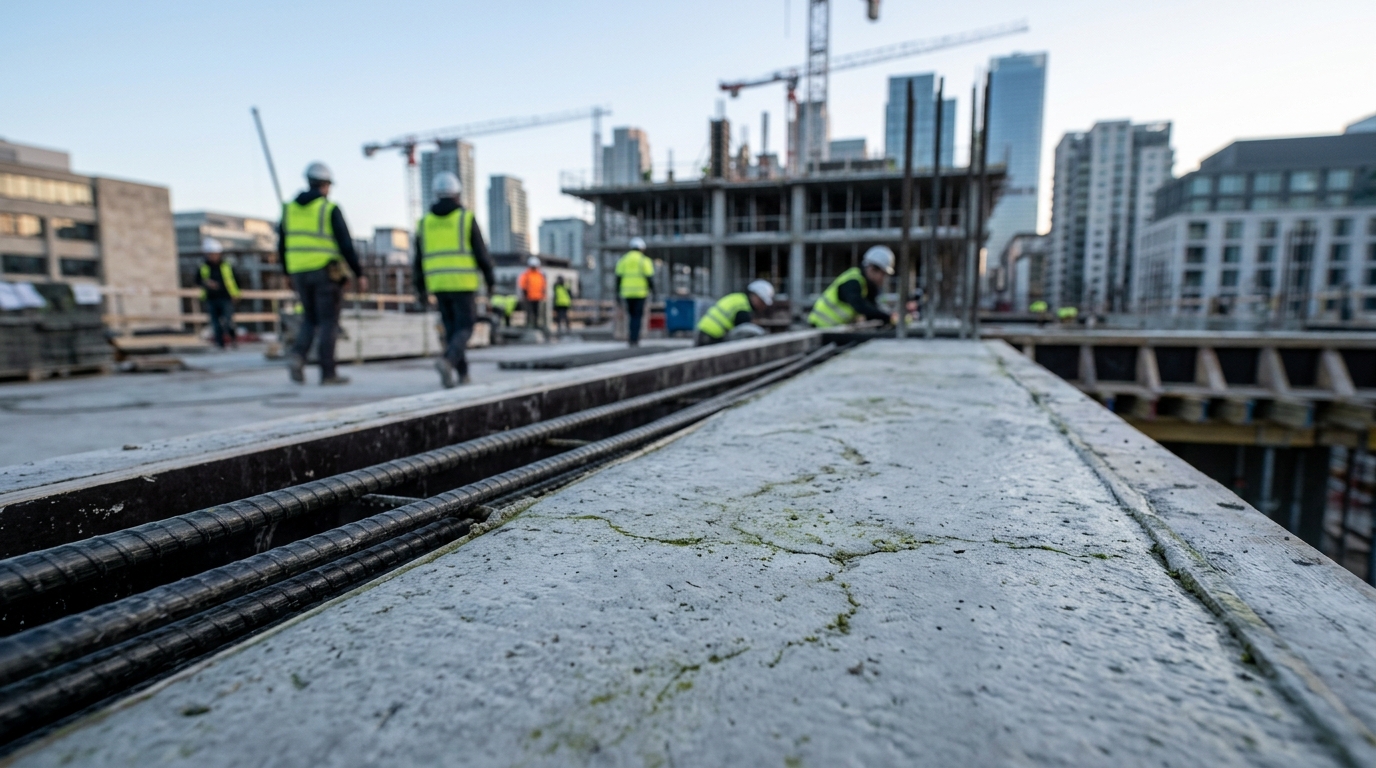
On the steel-replacement side, Austrian startup Fiber Elements is taking a different route. The company replaces conventional steel reinforcement with basalt-fiber reinforcement structures derived from volcanic rock. The company and Austria Wirtschaftsservice describe it as an industrial approach aimed at replacing steel mats with tailored basalt-fiber reinforcement. The material does not rust, which targets the primary failure mode that turns a small crack into a long-term structural problem.
The Economics Are the Real Argument
Bio-concrete carries a cost premium, but the framing of that premium matters. Conventional concrete requires significant maintenance interventions over time. Self-healing concrete, even at a material premium at the outset, is often positioned as a way to reduce repair frequency and lower lifetime cost of ownership, especially where access is difficult or disruptive.
Research indicates that wider adoption could materially reduce repair and maintenance costs, but the size of the reduction varies by design, environment, and which self-healing system is used. For a government managing a 75-year bridge program, even a partial reduction can change the procurement model.
Where the Opportunity Actually Lives
The infrastructure segment is already driving the bulk of commercial interest. One recent market report estimates civil infrastructure held about 51% of the self-healing concrete market share in 2025. Bridge rehabilitation programs across North America are also growing, which is where corrosion-resistant reinforcement and crack-control technologies tend to get a serious look.
The scale of the broader category is also worth noting. Research highlighted in September 2026 by Shenyang Agricultural University described a concrete mixture combining zeolite with bamboo biochar that boosted compressive strength by 7.48% and tensile strength by 15% compared with conventional concrete, while capturing about 1.2 grams of CO₂ per day in lab testing in a carbonation chamber. A material that is simultaneously stronger and carbon-negative in production is not a marginal upgrade.
The Risks That Still Deserve Honest Attention
The gap between a successful panel trial and widespread adoption is not trivial. Higher initial costs compared to traditional concrete, the need for contractor training, and limited long-term performance validation remain real constraints. Certification timelines are long. Contractors are often reluctant to adopt innovations when they must bear responsibility for materials without decades of field history.
The Wealth Builder Takeaway
The long-term wealth-building lesson here is not about picking a single startup. It is about recognizing when a structural cost problem in a multi-trillion-dollar industry becomes large enough that the question shifts from whether the solution will arrive to which platform captures it first. Living concrete is past the laboratory stage. The contractors and infrastructure owners who act on lifecycle economics rather than upfront sticker price will be the ones who look smart a decade from now.