July 27, 2026
When the Lights Almost Went Out
Heat waves plus AI demand just exposed a grid that was never built for this moment.
First a note from Brownstone Research
Editor’s Note: Larry Benedict has spent more than 40 years as a professional trader. He went 20 years without a losing year and made over $274 million for his clients. Now he’s revealing a ticker he calls one of the best-kept secrets in the market. Click here to see the details.
Dear Reader,
There’s a single asset that Wall Street legend Larry Benedict calls “the best kept secret in the stock market right now.”
It’s a ticker that next to no one searches for online.
You won’t find it on top 100 lists anywhere.
But when this market starts moving, it quickly becomes Wall Street’s favorite way to trade it.
Larry says now is the time to reveal this ticker to hardworking Americans.
The people who save as much as they can but just need that extra something to get ahead.
This ticker could very well be that thing – if you’re willing to act fast.
Because there’s a huge event coming out of the Oval Office that could send billions flooding into this corner of the market.
And this ticker sits right at the very heart of it.
Play it right, and you could make 2026 one of the best years you’ve ever had.
Click here to discover the name and symbol of this special ticker, for free.
Lauren Wingfield
Managing Editor, The Opportunistic Trader
P.S. Larry went 20 straight years without a single losing year – a record that earned him the nickname “The 20-Year Man.”
When a trader like that says August 15 could be the best window of the year, it’s worth a few minutes to hear why. Click here to learn more.
When the Lights Almost Went Out
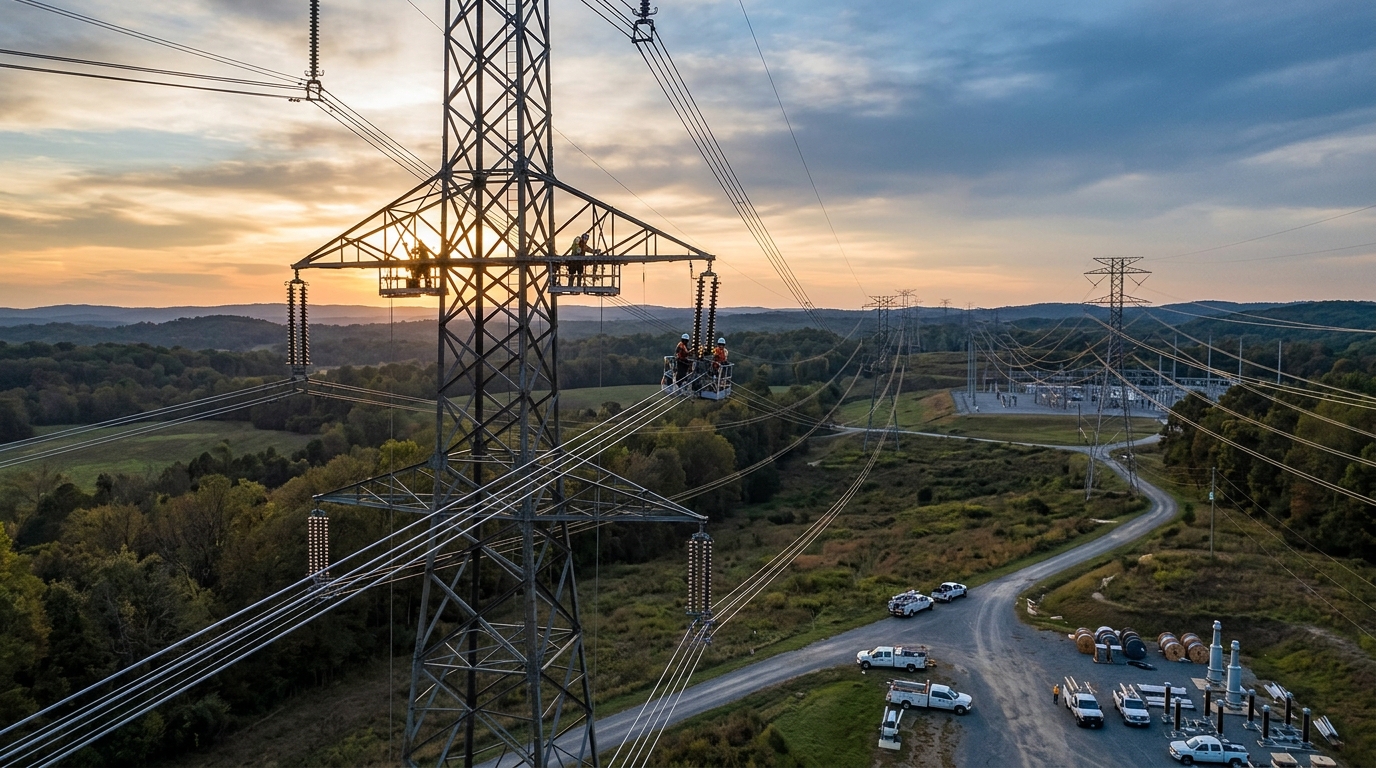
July 2, 2026. Triple-digit heat from the Plains to the Atlantic coast. PJM, the largest grid operator in the country, forecasting demand of 166,304 megawatts, a level that would shatter a record that had stood since 2006.
The Department of Energy had already issued emergency orders two days earlier. Data centers across the mid-Atlantic were told to switch to backup diesel generators. Power plant pollution limits were waived. Maximum generation alerts went active across 13 states and Washington D.C.
And still, the grid barely held.
Here is the question value investors should be asking: who gets paid when a system this large, this old, and this underprepared is finally forced to rebuild from the ground up?
Because that rebuild is not a future event. It is happening now. The money is already committed. The contracts are already signed. What is still being sorted out is which investors will benefit from it, and which ones will overpay chasing a story that has already become obvious.
The Numbers Behind the Crisis
The stress on the US power system did not appear overnight. It built quietly for years, then arrived all at once.
Data center demand for grid power is projected to reach 75.8 gigawatts across the US in 2026, up from roughly 61.8 GW in 2025, and is expected to climb to 134 GW by 2030, according to S&P Global’s 451 Research. Bloomberg reported this week that back-to-back heat waves are straining grids serving millions of households while data center load requires around-the-clock power regardless of the weather outside. The two pressures are not taking turns. They are arriving simultaneously.
The PJM capacity market tells you exactly what that collision is worth in dollar terms. The 2026/2027 auction cleared at $329.17 per megawatt-day, a 22% jump from the prior year. The 2027/2028 auction cleared at $333.44 per MW-day, hitting the maximum allowed price for the second straight year, and still came up 6,623 MW short of PJM’s reliability requirement. Total capacity cost for the 2027/2028 delivery year: $16.4 billion. PJM estimates that without the temporary price cap negotiated ahead of those auctions, prices would have cleared closer to $530 per MW-day, roughly 60% higher.
The reserve margin procured in the most recent auction was 14.8%. The target was 20%. That is the lowest reserve margin PJM has ever recorded.
The AI Boom’s Most Profitable “Tollbooth” Stock?
A little-known company is quietly building what may be the closest thing to a virtual monopoly the AI era has ever seen.
Whitney Tilson – the man CNBC calls “The Prophet” – calls it the world’s most profitable tollbooth. One billionaire put more than half his $9 billion fund into it.
Right now it’s trading at a rare discount…the same kind that’s previously turned $10,000 into $55,000…in just over 12 months.
Worth noting separately: this is not a regional problem. NYISO approached record demand during the same July heat event. MISO, covering 15 states across the Midwest and South, was similarly tested. The stress is distributed, structural, and not going away when summer ends.
The Crowded Trade and the Less-Noticed One
A lot of investors have already found the power grid story. The problem is where they found it.
Infrastructure contractors and AI-adjacent names have been bid up sharply. Quanta Services trades at a forward P/E near 55, well above its five-year average of roughly 24 to 25. The business is genuinely excellent. The tailwinds are real. But a lot of good news is already embedded in that price, and for a patient investor looking for a margin of safety, that valuation does not leave much room for error.
The less-discussed opportunity sits closer to the source: the regulated utilities that own the wires, own the service territories, and are being paid to build out the infrastructure directly. These are slower-moving companies. They do not make headlines the way semiconductor names do. But the shift in their earnings trajectory over the next five years is significant, and in at least one case, the market has not fully caught up to it.
Duke Energy: What the Market Is Partially Missing
Duke Energy serves approximately 8.7 million electric customers across North Carolina, South Carolina, Florida, Indiana, Ohio, and Kentucky. That footprint is not incidental. It places Duke squarely in the Southeast AI data center corridor, the region hyperscalers are prioritizing due to favorable regulatory conditions, available land, and competitive power costs.
The Q1 2026 results were not complicated to read. Adjusted EPS came in at $1.93 against a consensus estimate of $1.80, a beat of more than 7% that extended Duke’s streak of exceeding Wall Street expectations to four consecutive quarters. Revenue of $9.18 billion grew 11.3% year over year and topped estimates by more than 8%. Full-year 2026 adjusted EPS guidance of $6.55 to $6.80 was reaffirmed, with analysts currently penciling in roughly $6.71 for the year, up 6.3% from 2025’s $6.31.
But the quarterly numbers are almost secondary to what management disclosed underneath them.
Duke has now signed 7.6 gigawatts of electric service agreements with data centers, nearly two-thirds of which are already under construction, according to CEO Harry Sideris. The company also disclosed an additional 15.4 gigawatts in advanced discussions. Management cited a 73% year-over-year increase in data center power requests within its territory. Customers include Microsoft and Compass. The 2.7 GW added in Q1 alone represents a pace that would not have been imaginable three years ago.
To handle the load, Duke raised its five-year capital plan to $103 billion, targeting grid upgrades, new generation, and fuel infrastructure. That plan supports roughly 14 GW of incremental generation through 2031 and is expected to drive meaningful rate base and earnings growth. Management expressed confidence in achieving the high end of its 5% to 7% long-term EPS growth target, particularly as data center loads ramp in 2028 and beyond.
Louis Navellier: Don’t buy OR sell another AI stock…
Until you’ve heard this urgent AI warning from the man who called Nvidia before its 44,000% rise…
According to Louis, a massive reset is coming in an obscure corner of the AI market.
This $100 trillion disruption could send some of the world’s biggest AI stocks to zero… and one off-the-radar stock soaring… starting now.
The risk protections built into the data center contracts deserve attention because this is where Duke differs from a simple demand bet. Electric service agreements include minimum billing provisions and termination charges. The company is risk-adjusting its load forecast based on those minimums, not on optimistic projections. That is a meaningful distinction for anyone who remembers how demand forecasts have disappointed in past cycles.
The Cheap Investor Scorecard
- Business Quality: Regulated monopoly across six states with irreplaceable infrastructure in the Southeast AI corridor. Difficult to replicate at any price.
- Financial Strength: Revenue up 11.3% year over year in Q1 2026. $103B five-year capital plan underpinned by contracted load and regulated rate base recovery.
- Valuation: P/E near 19x at current prices around $130. Consensus 12-month price targets cluster in the $138 to $141 range, with Goldman Sachs, BTIG, JPMorgan, and KeyBanc all moving targets higher in July 2026.
- Competitive Position: Geographic dominance in the region data centers are choosing most aggressively. Not easily disrupted by a new entrant.
- Cash Flow: Regulated utility model limits near-term free cash flow, but minimum billing in ESA contracts protects revenue. Dividend recently raised to $1.085 per quarter, annualized yield near 3.4%.
- Management Execution: Four consecutive earnings beats. Capital plan raised with specificity. Contract protections structured with customer interests in mind.
- Catalyst Strength: 7.6 GW of signed ESAs with nearly two-thirds under construction. Earnings inflection expected as load ramps from late 2027 into 2028.
- Margin of Safety: Not deeply discounted in absolute terms, but defensible relative to a 6%+ compounding EPS growth profile with contract-backed visibility.
- Long-Term Potential: Data center load could represent 25% to 30% of total Duke system demand by 2030. Morningstar believes the company can reach the high end of its growth target.
Where the Thesis Can Break Down
Regulatory risk sits at the center of every regulated utility investment. State commissions in North Carolina, South Carolina, and Florida determine the allowed return on Duke’s rate base. A hostile rate case outcome compresses margins and delays capital recovery. BMO Capital lowered its price target in mid-July 2026 citing this exact concern. It is not an abstract worry.
The $103 billion capital plan also requires consistent, affordable access to debt markets over a multi-year period. Higher interest rates directly raise financing costs. If rate case recoveries lag capital deployment timing, near-term earnings can be pressured even as the long-term case remains intact.
And there is the question of whether data center demand materializes as forecast. As one equity analyst put it, if the AI buildout slows even modestly, Duke could end up with a generation portfolio sized for a load curve that never fully arrives. The contract protections mitigate this risk, but they do not eliminate it. The 2010s natural gas overbuild offers a cautionary precedent worth keeping in mind, even if today’s commercial structure is considerably stronger.
Three Scenarios
- Bull: Data center load ramps on schedule. Rate cases in the Carolinas and Florida come in constructively. EPS growth hits the top half of the 5% to 7% range through 2030. The stock moves toward analyst high targets near $146, implying meaningful total return from current levels including the dividend.
- Base: EPS compounds at roughly 6% annually. Dividend grows steadily. Total annual return in the 9% to 10% range including yield. Durable rather than dramatic.
- Bear: A rate case goes sideways. AI buildout slows and some ESA timelines push out. EPS growth stalls at the low end of guidance. Stock stays range-bound. The dividend remains intact, but capital appreciation is limited for a period.
The grid has needed an upgrade for years. Utilities, grid operators, and regulators all knew this. What changed is that the gap between what the system can handle and what it is being asked to do became impossible to ignore on July 2, when the Department of Energy had to issue emergency orders to keep the lights on during a summer heat wave.
That is not a warning shot. That is the problem itself, arriving on schedule.
The investment cycle required to address it is long, capital-intensive, and already underway. Duke Energy is not the only company that stands to benefit, and it is not the cheapest stock you will find. But a regulated monopoly with 7.6 GW of signed data center contracts, a century of consecutive dividends, a below-market earnings multiple, and a $103 billion capital plan aimed squarely at the decade’s defining infrastructure challenge is worth studying carefully before the rest of the market catches up to what July 2 actually meant.
The bill for decades of underinvestment is arriving. Patient investors who understand infrastructure cycles tend to get paid to wait for moments exactly like this one.