October 12, 2026
Bonus Content: Black Hills Could Earn $150 Million a Year From Google
Dear Fellow Investor,
When Elon Musk transforms an industry, his own companies aren’t the only ones that strike it rich.
The suppliers around him get rich too.
- ON Semiconductor makes the camera sensors and power chips inside every Tesla, and it ran as high as 1,550%.
- Planet Labs launches its satellites on SpaceX, and it soared as high as 3,000%.
- AST SpaceMobile rides SpaceX rockets to orbit, and it exploded as high as 6,695%.
Just $5,000 in each of those four stocks could have grown to more than $650,000.
And now Elon is about to do it again.
After disrupting payments… cars… and even the space industry…
This time he’s creating a new venture that dwarfs Tesla and SpaceX combined.
And former Wall Street CEO Dylan Jovine has found the one AI firm Elon needs to pull it off.
Elon has been quietly relying on this firm since 2012.
Dylan calls it “Elon’s 100X AI Stock.”
And he says a major catalyst could send this stock soaring on October 24.
Click here for the full story >>
The Buck Stops Here,
Kelly Maguire
Behind the Markets
Black Hills Could Earn $150 Million a Year From Google
The AI buildout is being fought on two fronts: who builds the chips and who keeps the lights on. Investors have poured money into the first fight. The second one is quietly being settled contract by contract, and a South Dakota utility called Black Hills Corp. just signed one of the most consequential deals in its history.
The Bigger Trend
Hyperscalers are no longer content to wait for utilities to build power infrastructure on their behalf. They are funding it themselves, before a single megawatt flows. Google provided Black Hills with $399 million in refundable advances for procurement of long lead-time equipment under a generation reservation agreement. That is not a letter of intent. That is a construction deposit on power that does not yet exist.
The same week, We Energies announced an agreement that would allow Oracle to subscribe to between 10% and 20% of the Point Beach Nuclear Plant’s electricity generation, electricity that would help meet the energy needs of Project Lighthouse, the data center campus in Port Washington that Oracle is co-developing with OpenAI. And on October 6, 2026, Google and Constellation Energy announced a long-term collaboration to bring 890 megawatts of new nuclear capacity onto the PJM grid, enabled by a 20-year power purchase agreement funding upgrades at 11 Constellation-owned nuclear units in Illinois, Pennsylvania, and New Jersey.
The pattern is consistent: the hyperscalers are becoming de facto co-financiers of American power infrastructure. Regulators and grid operators are still arguing over capacity pricing. The contracts are moving faster than the policy debate.
The Investment Case
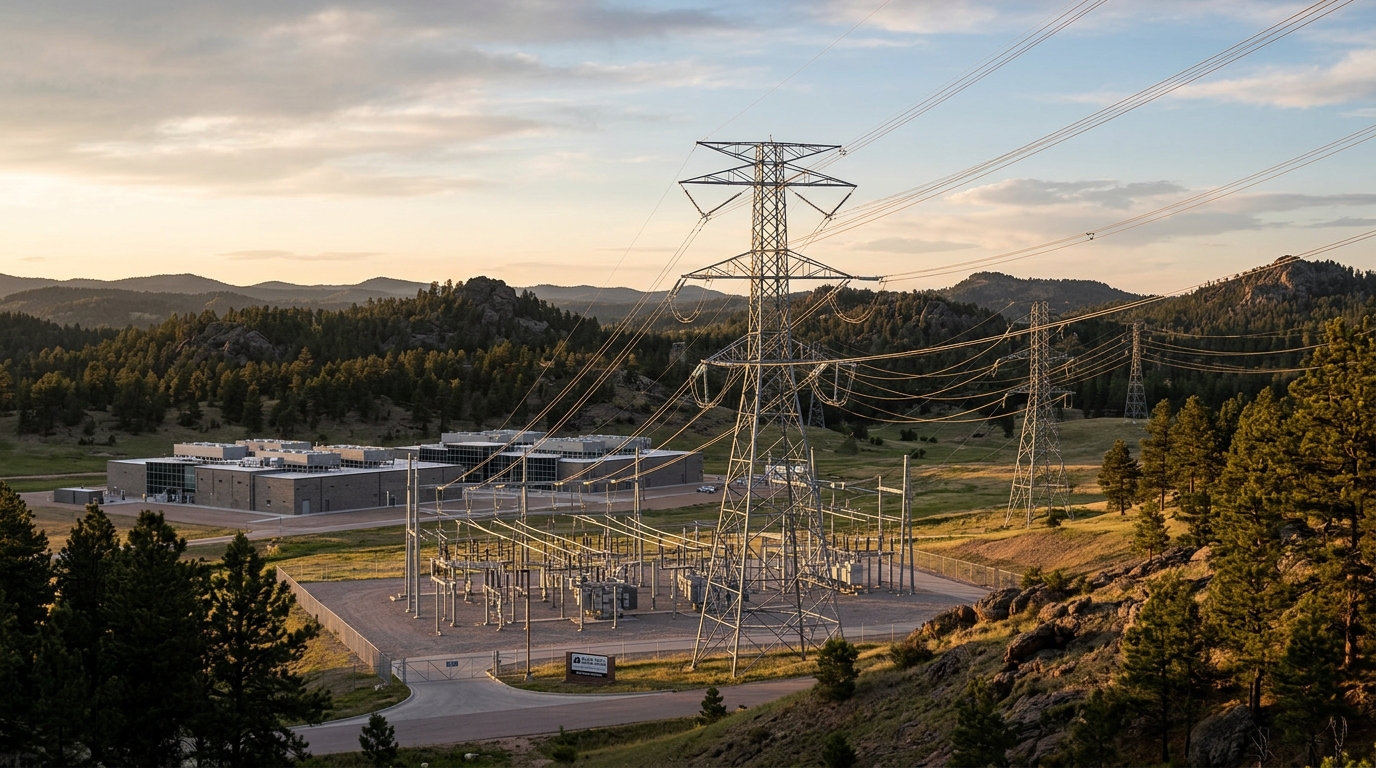
Black Hills signed definitive agreements, effective September 30, 2026 and running through 2048, to serve Google’s planned data center in Cheyenne, Wyoming, investing $1.8 billion in new company-owned natural gas generation while providing up to 590 megawatts of grid-connected energy and managing 2.1 gigawatts of third-party contracted resources through a private microgrid.
The project is planned to begin taking energy service in late 2027 and ramp to peak load in 2030. By that point, Black Hills expects the project to generate approximately $150 million in net income in 2030. For a company whose trailing net income currently sits near $299 million, that is a material addition from a single customer relationship.
The deal is also structured to protect existing ratepayers. Black Hills said the agreements and supporting regulatory mechanisms are structured so that Google bears all costs associated with serving the planned data center throughout the life of the project, with no cost shifting to other customers. That is a critical political and regulatory point. It removes the single biggest obstacle that has slowed similar deals in other states.
Building Wealth Around This Idea
Black Hills is not Nvidia. It will not double in a quarter. That is precisely the point.
Black Hills has an annual dividend of $2.81 per share, yielding roughly 4%, paid every three months. The dividend has grown at 3.8% per year over the past 19 years. That kind of consistency belongs in a different category from the rest of the AI trade. BKH carries a beta of 0.66, meaning it moves substantially less than the broader market. An investor who wants exposure to the AI power surge without the volatility of semiconductor names has very few places to look. A regulated utility with a 22-year Google contract and $2.4 billion in projected unlevered free cash flow through 2048 is one of them.
WEC Energy Group, parent of We Energies, offers a comparable angle via the Oracle-Point Beach arrangement. If approved, We Energies says the Oracle deal could spare the utility’s other customers roughly $300 million in fuel costs over the next five years. That is exactly the kind of customer-protection framing that tends to ease regulatory approval.
Risks to Monitor
Google’s Cheyenne data center does not exist yet. Black Hills expects to repay the $399 million in advances by June 30, 2027, while financing the remaining generation investment through project cash flow, debt, and other financing options. A $1.8 billion capital program carries execution risk, and natural gas generation faces long-term regulatory pressure as states push toward cleaner sources. Remaining regulatory approvals in Wyoming are still outstanding. And if Google’s data center plans shift, the agreements would need to be unwound.
Analysts set a median price target of $84.50 on BKH, implying more than 20% above the current price, with 8 of 9 analysts currently recommending the stock as a buy. That consensus existed before the Google deal was announced.
Daily Wealth Takeaway
The most durable wealth in any technology cycle rarely goes to the companies that build the headline product. It goes to the companies that own the infrastructure nobody else wants to finance. Small regulated utilities with long-term contracted cash flows attached to the AI buildout are filling that role right now, and most income investors have not noticed yet.