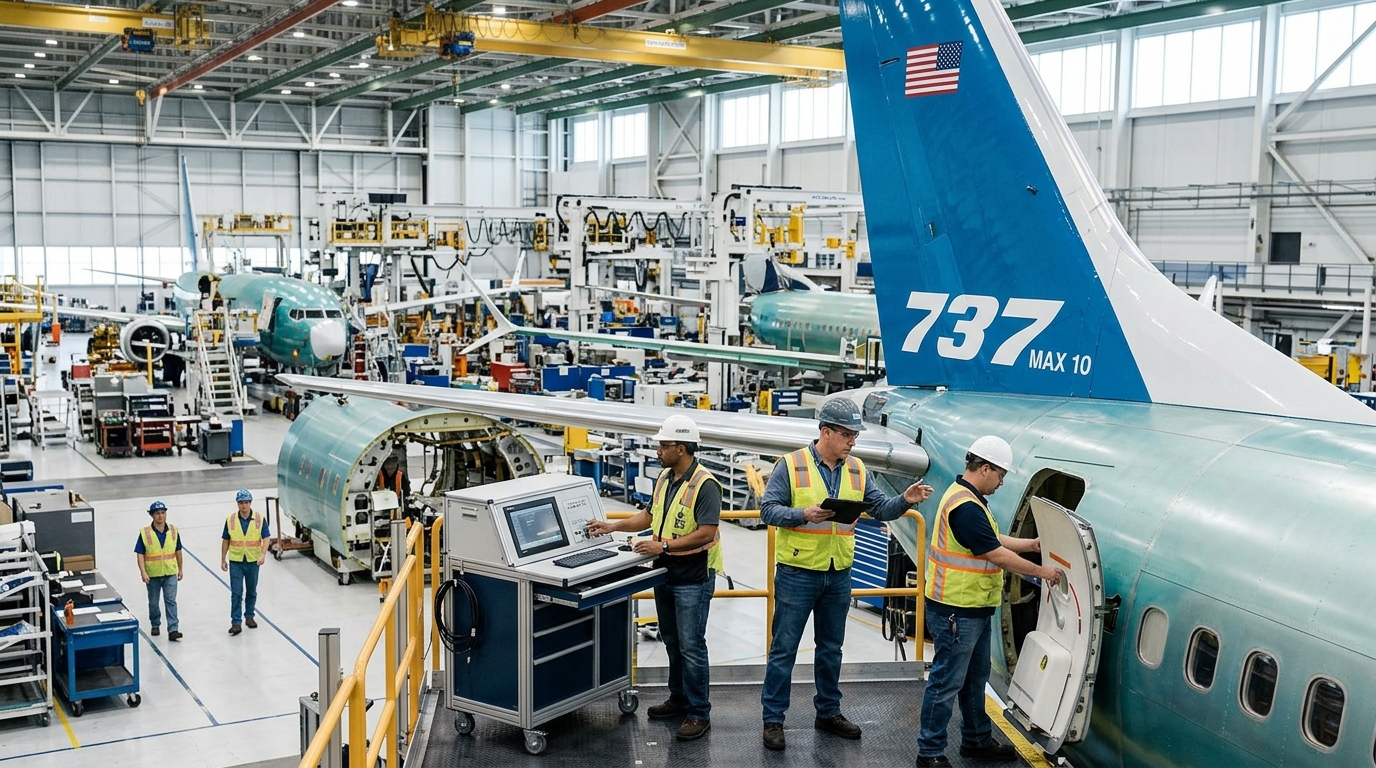
Two weeks ago, Boeing carried three compounding threats: a white-collar strike looming as early as October 7, a software question mark over the 737 MAX 10, and a stock that sold off sharply on the software headlines. As of October 3, 2026, two of those three threats are gone. That is why BA deserves serious attention right now.
Why This Stock Now
On Thursday, October 1, SPEEA, Boeing’s largest white-collar union, said its members ratified new four-year contracts, averting a strike that threatened to slow production and delay certification efforts for two long-delayed jets. Then, on Friday, October 2, U.S. aviation regulators said a software issue affecting certain 737 MAX flight computers does not pose a safety concern and that the FAA will not require a flight management system software update as a prerequisite for certifying the 737-10. For a stock still trading well below its 52-week high, the inflection is worth examining carefully.
The Business
Boeing makes commercial jets that the global airline industry cannot source anywhere else at scale. The company ended the first quarter of 2026 with a record backlog of $695 billion, including more than 6,100 commercial airplanes. That is not speculative demand. Airlines have placed firm orders and are waiting for deliveries. In the first quarter, Boeing delivered 143 aircraft, a 10% increase from the prior-year level, driving Commercial Airplanes revenue up 13% year over year to $9.2 billion. The recovery machine is already in motion.
Why Wall Street Is Paying Attention
The SPEEA ratification removed an immediate operational overhang. Combine that with the FAA’s Oct. 2 statement on the MAX software issue, and BA has gained meaningful ground in a week that could easily have gone the other way. SPEEA, which represents about 17,000 Boeing workers, saw both bargaining units vote to accept the new offer: the professional unit by 67.62% and the technical unit by 53.48%. A previous version of Boeing’s offer was voted down in August, which makes this approval more meaningful, not less. It reflects a genuine settlement rather than a grudging one.
On the MAX 10, the FAA said it will not require Boeing to update 737 MAX flight management system software as a prerequisite for certifying the 737-10. The agency’s decision, made by a panel of internal safety experts on October 2, alleviated concern that the 737-10 and the recently certified 737-7 would face a mandatory update before entering service. Regulators said the issue, which can affect automated guidance during missed approaches, is apparent to pilots and manageable.
What’s Driving the Opportunity
The labor resolution clears the path for Boeing to focus on two near-term catalysts: third-quarter earnings, due October 27, should show delivery rates and updated production guidance, and sustained monthly delivery announcements will signal execution capability. Alaska Airlines has said it expects 22 MAX 10 deliveries in 2027 and plans to take its first aircraft next spring, with passenger service planned between April and mid-May. Those commitments are now back on the schedule the market had anticipated before the software scare.
The supply chain picture is also improving. Boeing CEO Kelly Ortberg had warned at a Wall Street conference last month of damaging effects a strike would have had, including a halt to efforts to certify the 777X and negative impact on production. None of that happens now.
What Could Go Wrong
Execution remains the central risk. Still unclear is whether customers will accept the newest 737 MAX variants without software updates if the changes, which are in progress, are not ready before deliveries begin. Airlines can push back on individual deliveries. Boeing itself acknowledges significant uncertainty regarding the timing of when backlog converts to revenue, and has flagged that production disruptions and delays to the 777X, 737-7, or 737-10 could reduce that backlog. Defense program losses and free cash flow remain negative. The stock is not cheap on near-term earnings.
The Bottom Line
The bear case on Boeing for most of 2026 has rested on compounding disruptions: strikes, software failures, certification slides. This week removed two of those simultaneously. Both SPEEA groups voted on October 1 to approve new four-year contracts, with the current contracts set to expire in days. Had the union not approved, thousands of workers would have been free to strike, further delaying certification programs and hurting 737 MAX production. That scenario is off the table. The MAX 10 software issue is not a safety disqualifier, and the FAA said it will not require a software update as a prerequisite for 737-10 certification. Q3 earnings arrive in weeks. For investors willing to own the recovery rather than wait for it to be obvious, BA looks like the most compelling risk-adjusted position available today.