August 3, 2026
Caterpillar Is Down 25%. Here Is the Long-Term Case.
Q2 earnings drop Tuesday. The wealth opportunity may be in what the market is missing.
World’s Largest Investors Are Moving Their Money (Not Into AI)
While the media distracts you with stories about the next big AI IPO… The world’s largest investors are moving their money into one asset – at the fastest pace in a generation. This asset has crushed the S&P 500’s return over the past 12 months… More than TRIPLED the S&P 500’s return in 2025… and has outperformed the S&P 500 over the past 25 years by more than 1,100 percentage points. According to one Wall Street veteran, with over 40 years of professional investing experience… the biggest gains could be still ahead. That’s why he’s urging you to make one money move now.
Caterpillar Is Down 25%. Here Is the Long-Term Case.
Good morning and welcome to Investing Wealth Daily.
One of the most reliable wealth-building patterns in investing is this: when a high-quality company with strong fundamentals sells off sharply for reasons that are forward-looking and uncertain rather than immediate and confirmed, disciplined investors pay close attention. That is exactly what is happening with Caterpillar right now.
The stock hit an all-time high of $1,073 on June 30. It was trading near $809 heading into Tuesday’s Q2 earnings release. That is a 25% drawdown in roughly five weeks on a company with a $62.7 billion order backlog, record Q1 orders, and a business that has quietly evolved into one of the most direct plays on AI infrastructure power demand in the entire market.
The selloff was not driven by bad earnings. It was driven by two analyst downgrades, a state-level regulatory order, and growing concern about what 2027 and 2028 might look like if hyperscaler capital spending moderates. Those concerns deserve serious analysis. But they are also worth separating from what the business is actually doing today.
Today’s Wealth Opportunity
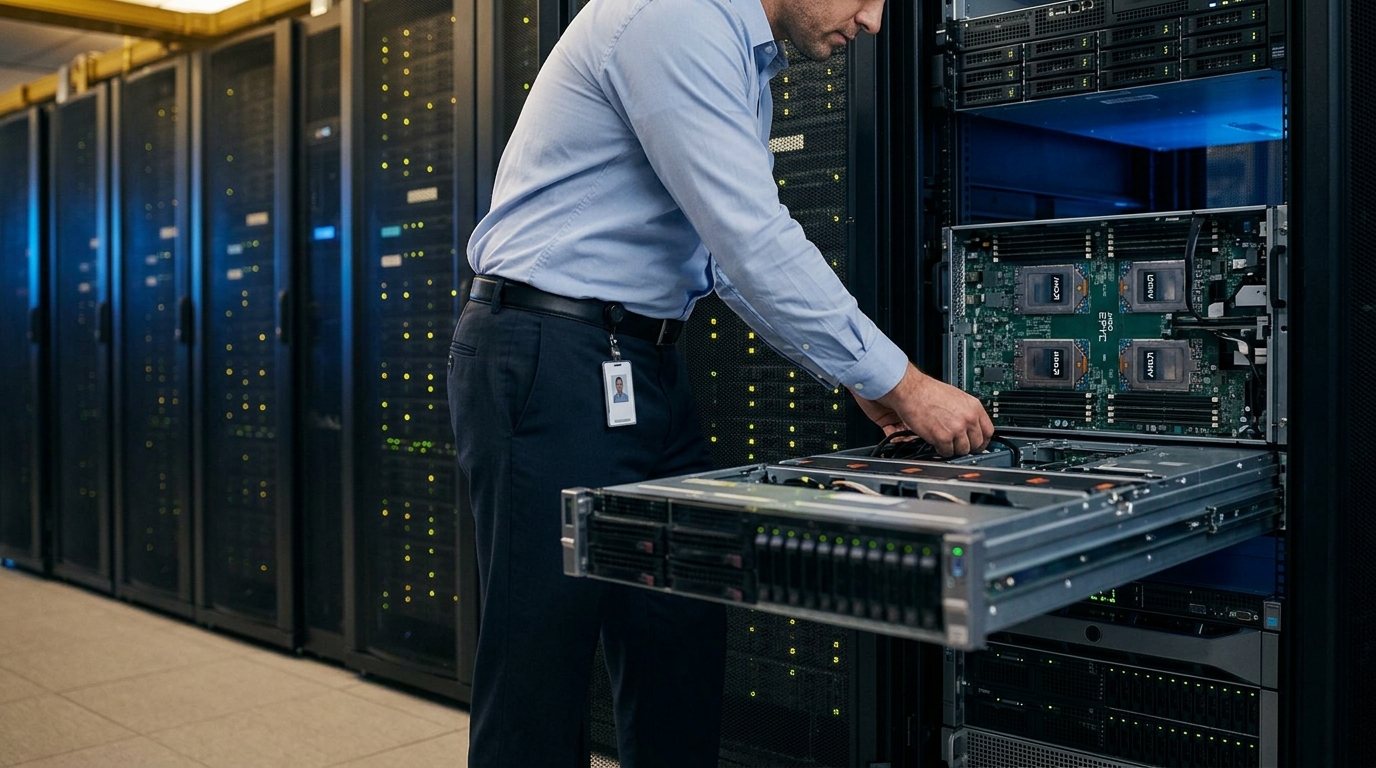
The AI infrastructure buildout is one of the most significant capital investment cycles in a generation. Most investors think about it through semiconductors and hyperscalers. Fewer are thinking about what powers the physical infrastructure those data centers require. That is where Caterpillar has made a remarkable pivot.
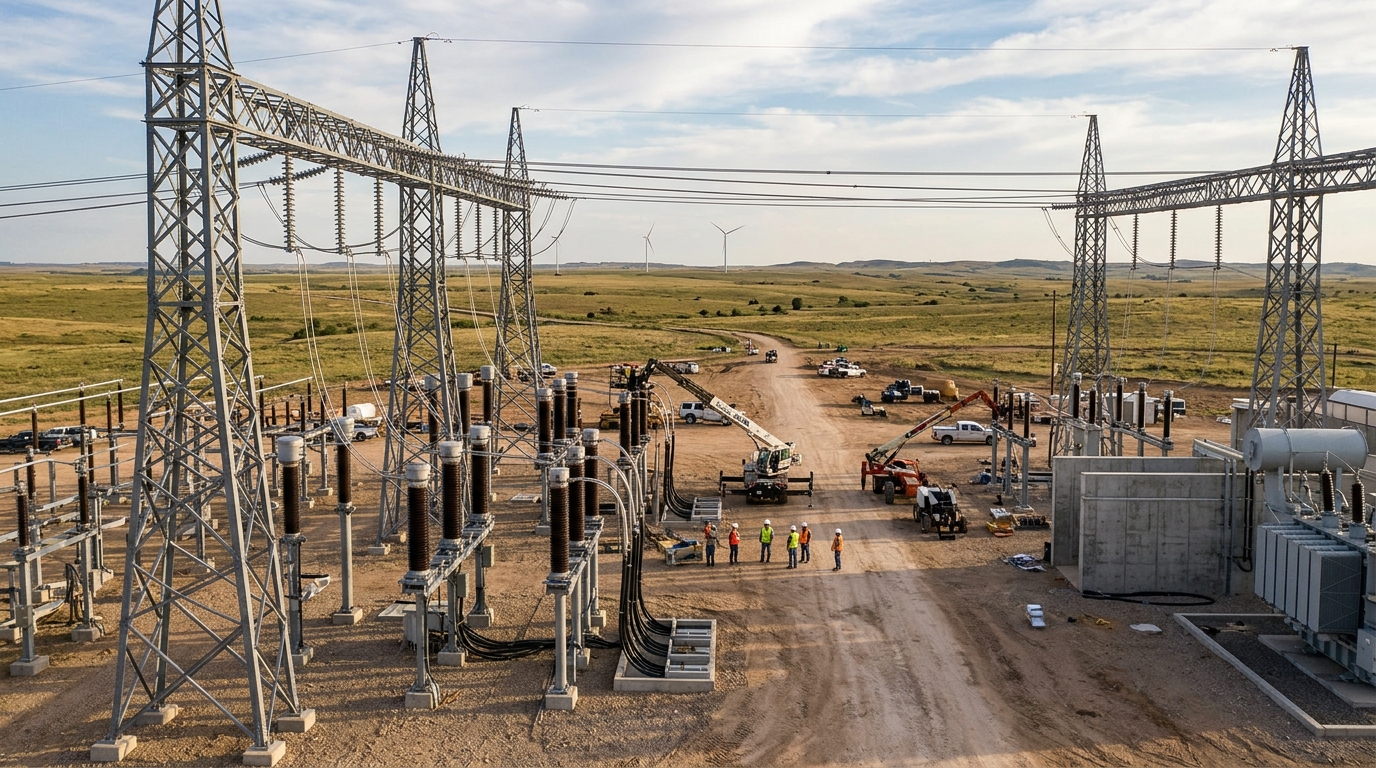
Large reciprocating engines and turbines for data center power generation have become one of Caterpillar’s fastest-growing businesses. The company’s Power and Energy segment has seen its backlog for large engines grow more than 3.5 times since January 2024. Customers are signing frame agreements stretching into 2028. In April 2026, Caterpillar announced a framework agreement to supply PROPWR, the power services division of ProPetro Holding Corp., with up to 2.1 gigawatts of power generation assets. These are not small contracts or speculative pipeline items. They are committed, multi-year revenue.
And now the stock is 25% off its high, five days before reporting Q2 results that consensus expects to show 32% earnings growth year over year.
The Bigger Trend Behind This Story
The bottleneck for AI infrastructure has been shifting. For the first few years of the current AI investment cycle, the constraint was compute: GPUs, chips, server capacity. That constraint has not disappeared, but a second bottleneck has emerged alongside it. Power.
The International Energy Agency estimates that global data center electricity consumption will more than double by 2030, rising from approximately 415 terawatt-hours in 2024 to around 945 terawatt-hours. The electrical grid cannot build fast enough to meet that demand in many geographies. That gap is being filled by on-site and near-site power generation, and Caterpillar’s large reciprocating engines and turbines sit directly in the middle of it.
What makes this particularly interesting from a wealth-building perspective is that Caterpillar is not competing with Nvidia for AI dollars. It is competing with the electrical grid. The risk profile is different, the customer base is different, and the demand drivers are different. That diversification of exposure to the AI theme is genuinely valuable for long-term investors who already hold technology positions and want broader participation in the infrastructure cycle.
Apple Price Hikes Reveal Mode’s Big Opportunity
Apple will potentially raise prices on Macs and iPads by $200 or more, another reminder that the devices we rely on keep getting more expensive.
Mode Mobile, is building the countertrend: technology that turns everyday smartphones into income-generating assets.
Its EarnOS platform has already helped users earn and save $1B+, reached 490M+ users, and powered 32,481% three-year revenue growth, earning Deloitte’s #1 fastest-growing software company ranking.
Now, Mode has secured the Nasdaq ticker $MODE, and its pre-IPO investment offering is open at $0.52/share with up to 20% bonus shares. But that window is closing fast.
Please read the offering circular at invest.modemobile.com. This is a paid advertisement for Mode Mobile’s Regulation A Offering.
The Investment Case
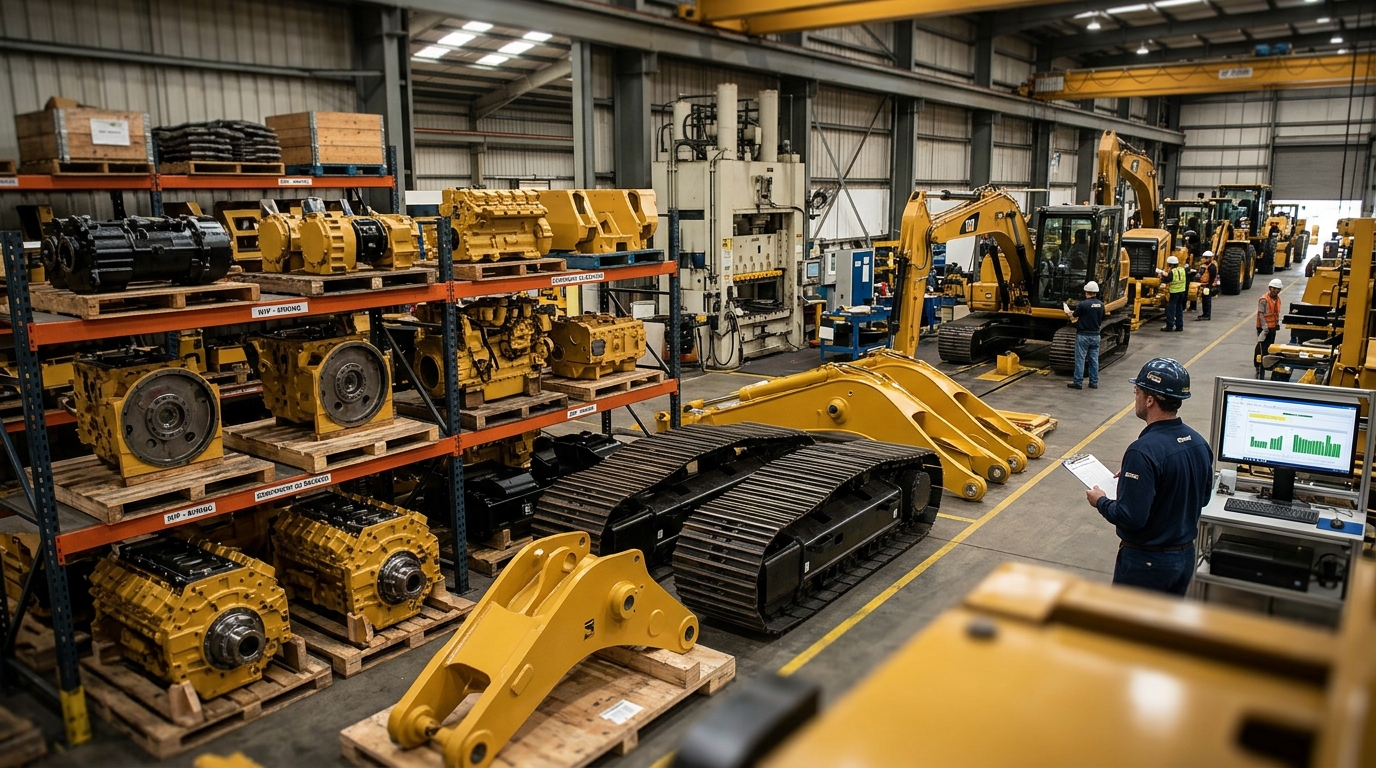
In Q1 2026, Caterpillar’s Power and Energy segment delivered $7.0 billion in sales, up 22% year over year, with a 20.6% segment margin. Construction Industries added $7.2 billion in sales, up 38%, with a 21.4% margin despite absorbing roughly 550 basis points of tariff-driven cost compression. Management reported that total Q1 orders were an all-time company record.
The one genuine trouble spot was Resource Industries. Sales rose just 4% to $3.8 billion, but segment margin dropped 700 basis points to 10.0%, with tariffs accounting for roughly 500 basis points of that compression. Management guided for improvement through the year, and noted that Q1 Resource Industries order intake was the highest since 2012. That is a segment under temporary cost pressure, not one losing share or facing structural decline.
Full-year 2026 guidance was raised to low double-digit revenue growth. Tariff cost estimates were revised down from $2.6 billion to $2.2 to $2.4 billion. Free cash flow from Machinery, Energy and Transportation came in near $600 million for the quarter, up approximately $350 million year over year. The company has a progressive dividend history and an active share repurchase program. This is not a company in financial distress. It is a company whose stock moved faster than the underlying business, and has now pulled back while the business keeps executing.
Caterpillar has also set a long-term services revenue target of $30 billion annually by 2030, up from roughly $23 billion today. Services revenue carries higher margins and greater recurring characteristics than equipment sales. Progress on that target is worth tracking as a signal of whether the business mix is shifting in the right direction.
What Triggered the Selloff
On July 29, Baird analyst Mircea Dobre downgraded CAT to Neutral from Outperform, cutting his price target by $300 to $900. The stock fell nearly 7% that day. Erste Group had previously downgraded the stock to Hold from Buy, citing margin compression and limited room for valuation expansion.
The regulatory backdrop that informed Baird’s view is real. New York Governor Kathy Hochul signed Executive Order No. 62 on July 14, pausing discretionary environmental permits for hyperscale data centers consuming 50 megawatts or more while the state conducts an environmental review. Baird also noted that more than 40 U.S. states considered over 260 data center-related bills in 2025, and over 300 additional proposals were filed across 30 states in just the first quarter of 2026. Maine, North Carolina, Virginia, and Indiana have all pursued similar measures. The regulatory friction is not isolated to New York, and it is not going away.
Baird’s core argument, however, was not that Caterpillar’s business is broken today. The firm acknowledged that near-term fundamentals remain solid, with strong orders, backlog, and earnings likely through the second half of 2026, potentially coming in above consensus. The concern is 2027 and 2028, when hyperscaler capital spending growth may normalize and regulatory friction may accumulate. That is a forward-looking risk, not a present-day impairment.
Don’t Make This Your First Options Trade
There’s a reason experienced traders spend time learning the mechanics before risking real money.
It’s not because options are complicated.
It’s because one misunderstood detail can change the entire trade.
This free Beginner’s Guide explains what most beginners never learn until it’s too late.
Building Wealth Around This Idea
For long-term investors, the relevant question is not whether the stock recovers to $1,073 in the next three months. It is whether Caterpillar, at the current price level, represents a reasonable entry point into a high-quality industrial business that is structurally tied to one of the most durable capital spending cycles in decades.
A few things worth considering for portfolio context.
- Time horizon: This is a 3 to 5 year thesis, not a short-term trade. The backlog stretches to 2028. The services revenue growth trajectory runs to 2030. Investors who need quick resolution should look elsewhere.
- Position sizing: At roughly 39 times forward earnings, CAT is still priced for solid execution. This is not a deeply discounted stock. It is a high-quality company that has pulled back from an elevated valuation, which is different. Size accordingly.
- Portfolio role: CAT offers exposure to AI infrastructure, the global energy transition, and the long-cycle mining and construction markets simultaneously. For investors who hold technology-heavy portfolios, it provides a form of industrial diversification that still participates in AI-related capital spending.
- Income component: Caterpillar has a progressive dividend history. The company has increased its dividend consistently for decades and has maintained that commitment through multiple economic cycles. For income-oriented investors, that adds a compounding dimension beyond price appreciation alone.
- Tariff watch: The Q2 tariff cost update matters for margin trajectory. Management guided Q2 tariff costs at approximately $700 million and full-year costs between $2.2 and $2.4 billion. Any favorable revision is a direct tailwind to earnings and free cash flow.
Risks to Monitor
Honest analysis requires clarity about what could go wrong. There are three primary risk categories worth tracking for CAT investors.
Regulatory accumulation. The New York moratorium is one state. If similar orders spread across major data center development markets in Virginia, Texas, Georgia, and the Pacific Northwest, the permitting friction could meaningfully slow hyperscaler construction timelines and, by extension, the demand for Caterpillar’s power generation equipment. This is the core bear case, and it deserves ongoing attention.
Margin durability. The Q1 Resource Industries margin decline to 10.0% from 17.0% was significant. If Power and Energy margins also begin to compress as the company scales capacity aggressively, the earnings multiple becomes harder to defend. Tuesday’s Q2 segment margins are the most important near-term data point for this question.
Valuation at entry. At roughly 39 times forward earnings, CAT is still priced for continued strong execution. Cummins, a comparable peer in power generation, trades near 24 times forward earnings. The gap between those two multiples represents the market’s bet that Caterpillar deserves a structural premium for its AI infrastructure positioning. If that positioning becomes less certain, multiple compression alone could be painful even if earnings hold up.
Wealth Builder Scorecard: Caterpillar (CAT)
| Dimension | Score | Comment |
|---|---|---|
| Business Quality | 9/10 | Record backlog, all-time high Q1 orders, pricing power intact across segments |
| Financial Strength | 8/10 | Free cash flow near $600M in Q1; progressive dividend; manageable debt profile |
| Growth Potential | 8/10 | Services revenue target of $30B by 2030; Power Generation capacity nearly tripling 2024 levels |
| Competitive Advantage | 9/10 | Dominant in large reciprocating engines; backlog 3.5x January 2024 levels; multi-year frame agreements |
| Valuation | 5/10 | ~39x forward earnings; premium to peers; requires continued strong execution to hold |
| Dividend and Income Potential | 7/10 | Decades of progressive dividend growth; active buyback program; compounding income layer |
| Risk Profile | 6/10 | Regulatory accumulation and multiple compression are real risks; Resource Industries margin pressure ongoing |
| Long-Term Outlook | 8/10 | IEA projects data center power demand more than doubling by 2030; CAT is directly positioned |
| Portfolio Fit | 8/10 | Industrial diversification with AI infrastructure exposure; suits growth and dividend portfolios |
| Overall Wealth-Building Potential | 8/10 | High-quality business, real backlog, structural tailwind; priced for execution, not perfection at current levels |
What to Watch Tuesday Morning
Q2 results are due before the opening bell at 5:30 a.m. CDT. Here are the specific numbers that will determine whether the current pullback looks like an opportunity or a warning.
- EPS consensus: $6.25 per share, implying 32% growth year over year
- Revenue consensus: approximately $19.3 billion, implying 16.6% growth year over year
- Power and Energy segment margin: above 20% sustains the long-term re-rating; compression here is the most important negative signal
- Resource Industries margin: recovery above 13% from the Q1 trough of 10.0% would confirm management’s guidance and remove a significant overhang
- Tariff cost update: Q2 guided at approximately $700 million; any reduction to the $2.2 to $2.4 billion full-year estimate is a direct earnings tailwind
- Backlog direction: does the $62.7 billion figure hold or grow? Any contraction would accelerate the bear case
- Management tone on 2027: the most forward-looking signal; constructive language here pushes the key risk further down the road
- Services revenue update: progress toward the $30 billion 2030 target matters for long-term margin durability
Investing In The Titans of AI
Carnegie didn’t invent steel. He used new technology to produce it cheaper and faster than anyone on Earth.
Rockefeller didn’t discover oil. He used industrial machinery to refine it more efficiently.
Vanderbilt didn’t build the railroad. He understood that whoever controlled the infrastructure controlled the economy.
Their combined fortunes were between $700 billion and $1 trillion.
Best-selling financial author Alexander Green has identified three companies positioned to be the Titans of the AI age.
Daily Wealth Takeaway
The most durable wealth is built by investors who can distinguish between a business that is impaired and a business whose stock price moved ahead of reality in both directions. Caterpillar going from $400 to $1,073 in roughly 18 months was partly justified by genuine business transformation. The pullback to $809 is being driven largely by forward-looking uncertainty rather than present-day deterioration.
That does not automatically make it a buy. The valuation still demands execution. The regulatory risk is real and worth monitoring over time. And any investor adding at these levels needs to accept that the path back to prior highs will likely require several more quarters of clean margin delivery and backlog growth.
What Tuesday’s report will tell us is whether the near-term execution remains intact and whether management’s confidence in the 2027 and 2028 order outlook has changed. If both answers are yes, the current price looks like a reasonable entry point for a patient, long-term investor. If the margins slip and the language shifts, the story gets more complicated.
The numbers are out before the bell. Worth watching closely.
Investing Wealth Daily