Hey there, bargain hunter.
A ~$110 billion deal just hit a wall in a California courtroom, and the stock is still sitting roughly 20% below the agreed-upon takeover price. That gap is either a trap or an opportunity, depending on what you think happens next.
Here is what actually happened.
What just broke
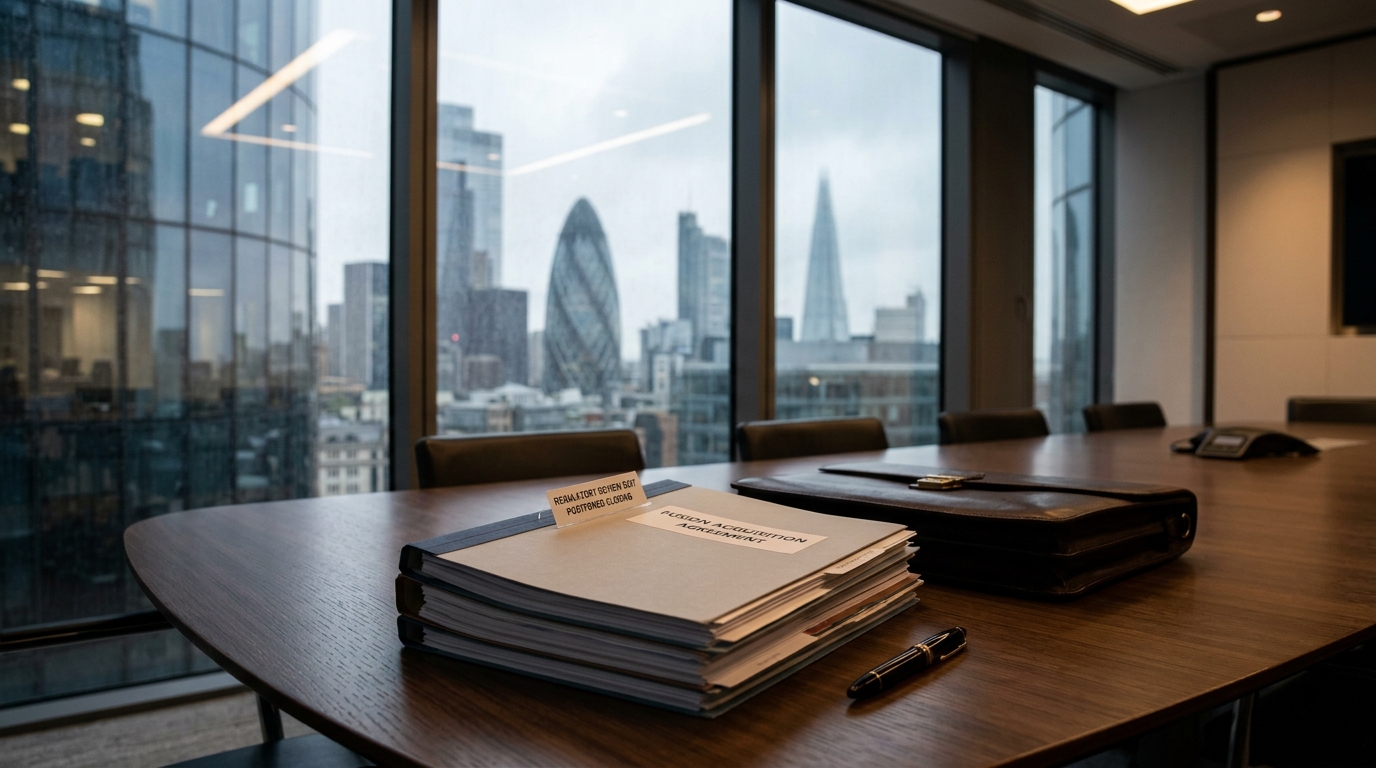
On Friday, Paramount Skydance agreed to push back the closing of its merger with Warner Bros. Discovery after a lawsuit by 12 states led a federal judge in California to freeze the transaction. The companies said they won’t close until either a court ruling is made on the states’ claims or June 1, 2027 — even though the delay could cost Paramount millions in fees.
That is not a small number. And the market noticed.
Paramount’s stock closed down more than 3% on news of the agreement, while WBD’s stock was down less than 1%. WBD finished Friday at $25.77, and the $31 per share all-cash proposal represents a ~20.3% premium.
Twenty percent spread on an all-cash deal that has already cleared the DOJ and European regulators. That is not nothing.
The cost clock is ticking
Under the terms of the merger agreement, if the transaction has not closed by September 30, 2026, WBD shareholders receive a $0.25 per share “ticking fee” for each quarter (measured daily) until closing. Depending on share count, that can add up fast — and reporting around the deal has described it as roughly $7 million per day.
Should the deal fall apart entirely due to regulatory matters, Paramount agreed to a $7 billion regulatory termination fee. That is a real anchor keeping Paramount at the table, whatever the court does.
Slight tangent, but it matters: the deal already cleared both the U.S. Department of Justice and the European Commission. The DOJ said June 12, 2026 it would not challenge the merger, and the European Commission granted conditional approval this week — with the EU remedy requiring Paramount to exit its European Economic Area stake in United International Pictures (UIP), a film distribution joint venture with Universal, within 13 months of closing, and to avoid new agreements with Universal for 10 years. The only remaining obstacle is litigation.
The state attorneys general sued July 13 to block the transaction, arguing it would substantially lessen competition — including in theatrical film distribution. The coalition is led by California, with Arizona, Colorado, Connecticut, Massachusetts, Minnesota, Nevada, New Jersey, New Mexico, New York, Oregon, and Washington also joining.
Twelve states. A WGA lawsuit layered on top. And a judge who has already issued a temporary restraining order.
The underlying business people forgot about
Here is what gets lost in the deal theater: WBD is actually building something real in streaming.
WBD has touted growth in global streaming subscribers and has publicly framed its upcoming Harry Potter TV series as a potentially massive streaming event.
But some of the precise numbers floating around are worth treating carefully. In WBD’s own Q1 2026 release, the company reported Total Adjusted EBITDA of $2.2 billion, and it ended the quarter with $30.1 billion of net debt and 3.4x net leverage.
The catch: that debt load is the reason the merger was attractive in the first place. Paramount’s balance sheet provides the relief. Without the deal, WBD has to carry that weight on its own.
What the arbitrage math looks like now
WBD at $25.77 vs. a $31 cash offer. That is the starting point. And if the deal is delayed past September 30, 2026, the $0.25-per-share-per-quarter ticking fee adds incremental value the longer closing gets pushed out — including if the schedule drifts toward June 1, 2027.
So if the deal closes at or near the original timeline — plus fees — the buyer at $25.77 is looking at a potential return north of 20% on paper, assuming nothing goes wrong.
And that is the problem. Things can go wrong. Paramount said it won’t close until either a court ruling is made on the states’ claims or June 1, 2027. If the case drags or the parties walk, WBD reverts to being a heavily indebted media company in a world that is not kind to either of those things.
What I’m watching
The question is not whether the underlying business is good. It is whether twelve states and a union can win on the merits of an antitrust argument in a compressed timeline. The DOJ already said no to blocking this. The EU said yes with conditions. The state AG coalition is working against precedent.
But courts are unpredictable. And Paramount paying $7 billion to walk away is a very real scenario if the legal picture deteriorates.
The 20% spread is wide for a reason. Whether that reason is justified is the trade.