September 8, 2026
Bonus Content: AMD Now Earns 46 Cents of Every Dollar Spent on Server Chips
They Built a Lithium Winner. Now They’re Betting on Copper
Some resource stories are about the land. Some are about the timing. The best ones usually need both.
But there is another piece investors tend to watch closely: the team. And this team has a track record worth noticing.
The Chairman and CEO helped build Alpha Lithium from a $20 million market cap into a $313 million all-cash deal during the lithium boom.
Now they are turning to copper. Different metal. Different market. Different project. But the timing has a familiar feel.
Lithium had its moment when the EV boom forced investors to rethink future supply. Now AI, electrification, grid upgrades, and infrastructure are forcing a similar conversation around copper.
This copper company gives the team another shot at a major materials cycle, but this time with copper entering the spotlight. Copper has already shown a 41% year on year increase.
Past success does not guarantee a repeat.
But, when resource veterans with a prior $313 million exit step into a new metal at a moment like this, it is worth a closer look.
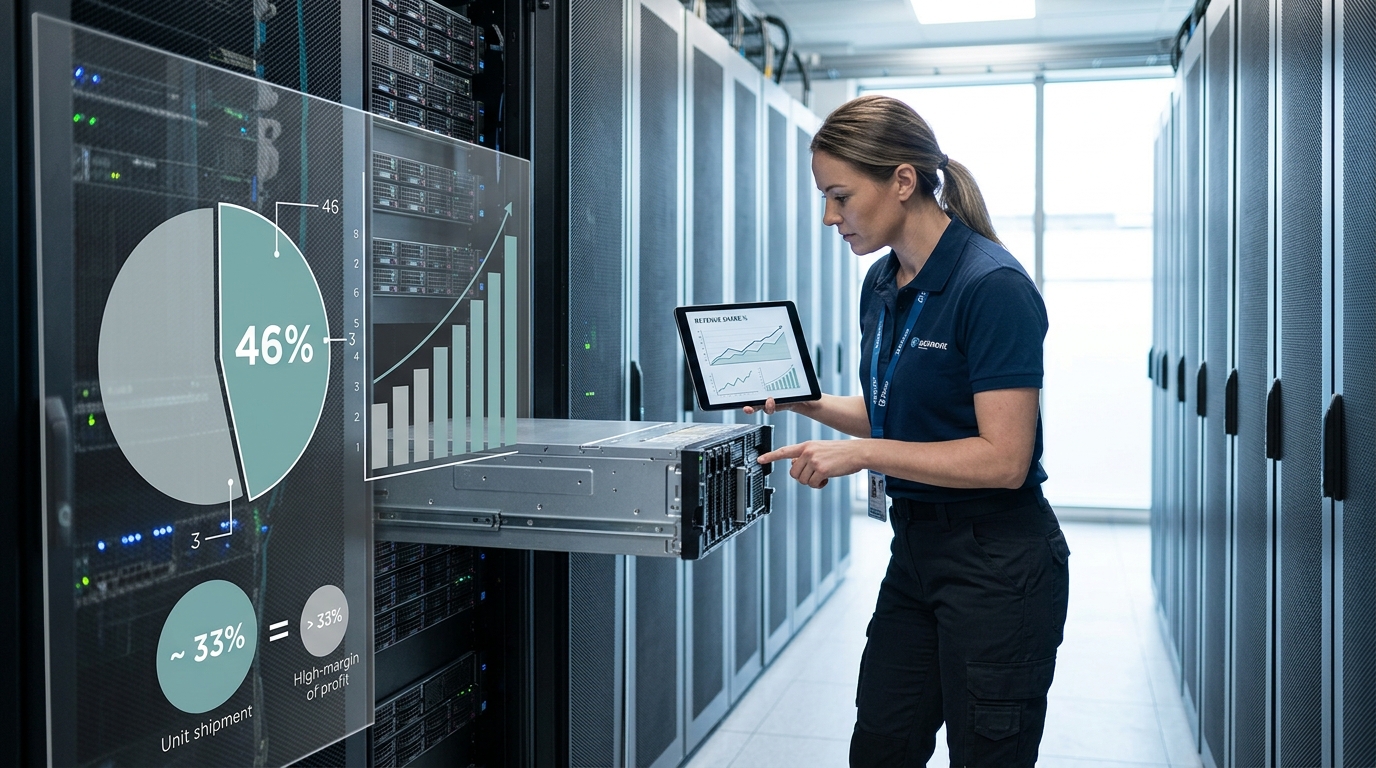
AMD Now Earns 46 Cents of Every Dollar Spent on Server Chips
Most investors following AMD track the wrong number. Unit shipment share gets the headlines. Revenue share is where the wealth-building story actually lives.
Mercury Research’s data shows AMD’s x86 server CPU revenue market share surpassed 46% for the first time in the first quarter of 2026, reaching 46.2%. Compare that to its unit shipment share of roughly a third of the market, and the gap is stark. The implication is simple: AMD is disproportionately winning the more expensive server CPU sockets. That is not a coincidence. It is the direct result of a contract strategy that has been building for years and is now accelerating.
The Bigger Trend
By the time EPYC launched in 2017, multiple industry reports described AMD’s server CPU share as having shrunk to less than 1%. Fast-forward to 2025 and 2026, and AMD is no longer trying to “get back in the game.” It is negotiating from a position of performance credibility in enterprise and cloud buying cycles. That structural shift did not happen through price cuts. It happened because enterprise buyers began qualifying EPYC processors for workloads that demand the highest core counts, memory bandwidth, and energy efficiency. Those workloads command premium prices.
The agentic AI wave is deepening that advantage. Agentic AI systems are not just about the accelerator. They lean on CPUs to orchestrate work, handle data movement and coordination, and keep the rest of the system fed as AI stacks get more complex. That is precisely where AMD’s EPYC 9006 Series is positioned.
The Investment Case
The enterprise contract wins are concrete. In a July 20, 2026 announcement, AMD said it expanded its strategic partnership with Microsoft across GPUs, CPUs, networking, and software for Azure, and that Microsoft will deploy the AMD Helios Rackscale Solution for frontier model AI inference. Microsoft also said it will expand Azure AI and HPC infrastructure with new Azure HDv2 and Azure HXv2 offerings powered by AMD 6th Gen EPYC processors.
That is one hyperscaler. The reach goes further. AMD’s newsroom said AMD, Cisco, and HUMAIN announced plans to form a joint venture targeting up to 1 GW of AI infrastructure by 2030. Separately, Tata Consultancy Services announced in January 2026 a strategic collaboration with AMD to help enterprises scale AI adoption from pilots to production, including plans to co-develop industry-specific AI and GenAI solutions.
On the financial side, AMD reported that its data center segment revenue rose 57% year over year to $5.8 billion in the first quarter of 2026. That is the proof that enterprise wins are converting into revenue at scale.
Building Wealth Around This Idea
The market share data coming out of Q2 2026 reinforces the durability of that trend. Mercury Research data reported by the tech press put AMD’s server CPU unit share at 34.5% in Q2 2026, up from 33.2% in Q1 2026 and 27.3% in Q2 2025.
For long-term investors, AMD fits the data center allocation in a portfolio the way a picks-and-shovels play should: exposure to the AI infrastructure buildout without betting on which AI model wins. The risk is real. AMD still trails Nvidia in accelerator revenue, and Arm-based server chips are taking share from both x86 vendors. Position sizing matters. But the revenue share figure, 46 cents on every server CPU dollar spent, is the kind of pricing power that compounds quietly over years.
Daily Wealth Takeaway
Unit market share tells you who is popular. Revenue market share tells you who has pricing power. AMD’s gap between the two in server CPUs is the single most important number in its enterprise story, and most investors are not looking at it.