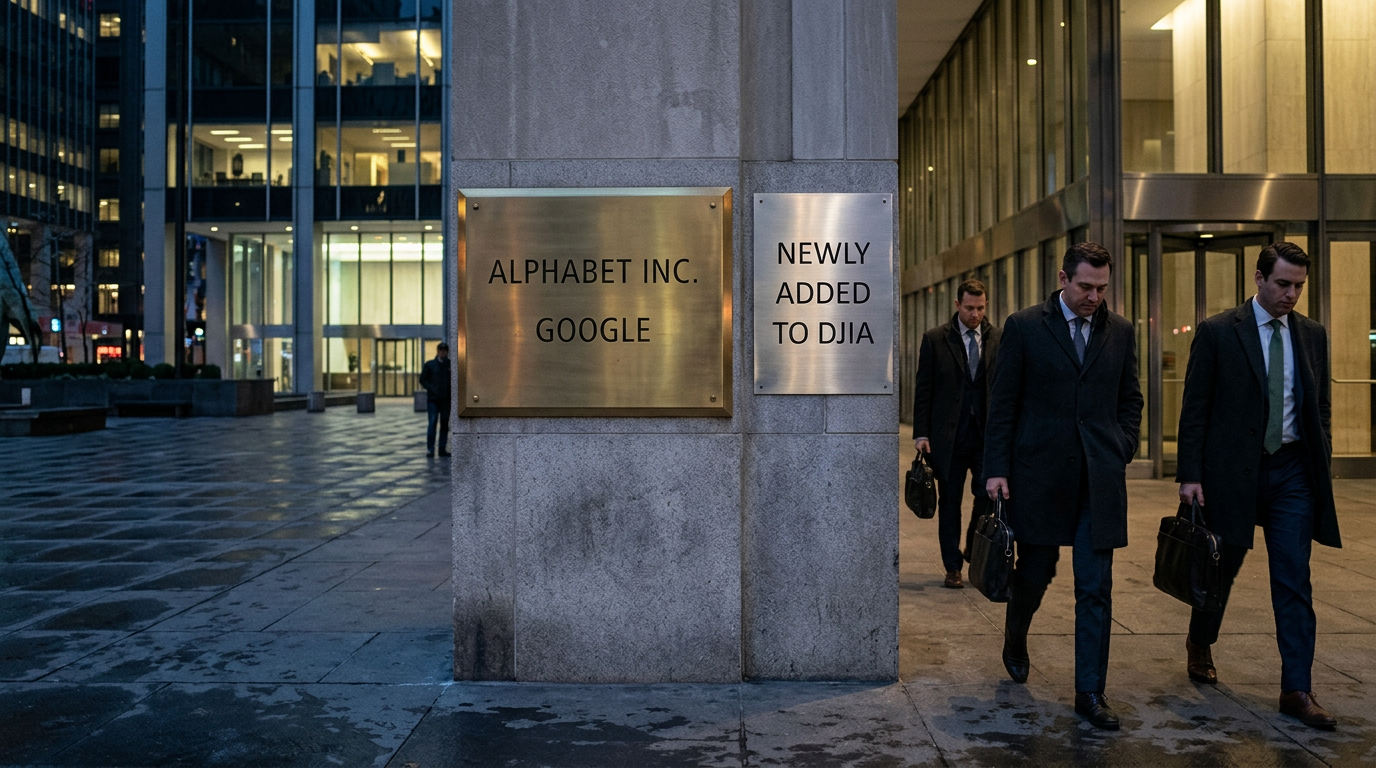
The irony isn’t subtle. Alphabet (GOOGL) officially joined the Dow Jones Industrial Average on June 29, replacing Verizon after 22 years in the index. The stock popped roughly 4% on its debut. And yet, as of the end of June, Alphabet is still on track for its worst monthly performance since early last year.
That’s the whole tension right now.
The Dow inclusion is real and it matters symbolically. S&P Dow Jones Indices cited Alphabet’s business breadth — advertising, cloud infrastructure, AI, hardware, autonomous mobility, healthcare technology, and media distribution — as the case for inclusion. With the stock trading around $350 versus Verizon’s roughly $44, the math was obvious too. Alphabet is expected to carry materially more weight in the price-weighted Dow than Verizon did.
But the Dow bump doesn’t fix what’s actually weighing on the stock.
The Real Debate
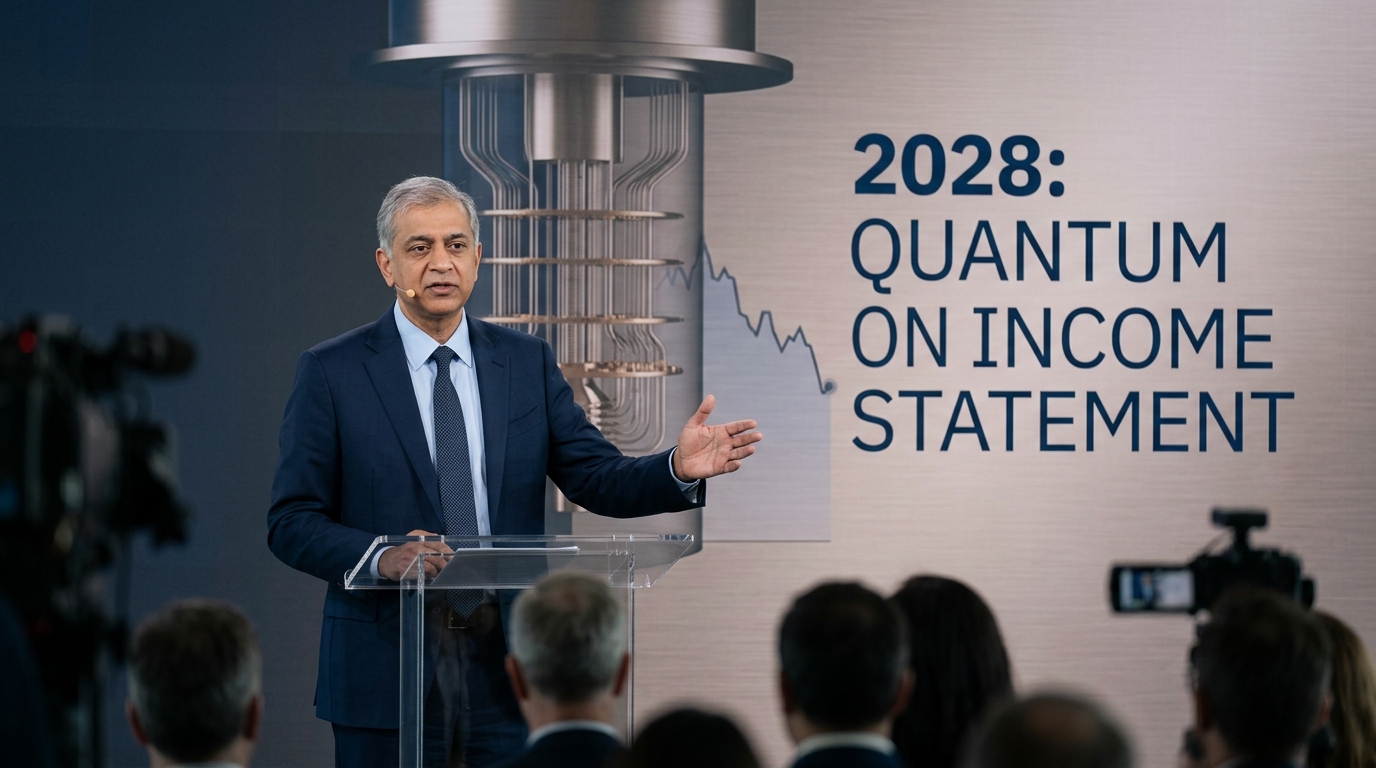
That spend is not small. Management guided 2026 capital expenditures to $175 to $185 billion — roughly double the ~$91.4 billion Alphabet spent in 2025.
Revenue is still growing. Revenue grew about 22% to $109.9 billion in Q1, and Google Cloud accelerated to about 63% growth with a contracted backlog of about $462 billion. The business isn’t broken. But the market is asking a harder question: when does the capex actually convert?
Slight tangent, but it matters — the talent story is feeding that anxiety in a way pure financials don’t fully capture. John Jumper, a Google DeepMind vice president known for AlphaFold, is joining Anthropic. One exit doesn’t break Gemini. But it feeds a perception that frontier AI talent has more mobility than it used to, and that Alphabet’s lock on top researchers is loosening.
What the Numbers Show
- Q1 2026 Revenue: $109.9 billion, up ~22% year over year
- Google Cloud Q1 revenue: $20.0 billion, up ~63% year over year, with a 32.9% operating margin
- Cloud backlog: ~$462 billion
- 2026 capex guidance: $175 to $185 billion (up from ~$91.4 billion in 2025)
- Equity raised in June 2026: $84.75 billion to fund AI infrastructure buildout
Bull / Base / Bear
Bull: The Cloud backlog at ~$462 billion is real contracted demand. If the capex cycle peaks in 2026 and free cash flow recovers in 2027, the stock re-rates sharply higher. Gemini adoption across Search, Workspace, and Android is a monetization story that hasn’t fully priced in yet.
Base: Alphabet grinds sideways for two or three quarters as the market waits for evidence that AI spending converts to sustained margin expansion. The Dow inclusion provides some institutional tailwind, but not enough to overcome free cash flow anxiety in the near term.
Bear: If lower-cost AI models continue improving and DeepMind talent losses accelerate, the market starts questioning whether Alphabet’s AI infrastructure bet is defensive spending rather than offensive growth. At that point, the valuation compression gets real.
Technical Overlay
GOOGL peaked near $408 in May before the June drawdown. Alphabet shares pulled back from that May high of $408.61, with pressure intensifying after the equity raise announcement. The stock is now fighting for credibility near $350. The 200-day moving average and the pre-Dow-inclusion resistance zone both sit in this range. Watch for whether the index-inclusion bounce holds or fades into quarter-end.
What to Watch
- Q2 earnings — the next hard data point on whether Cloud growth held above 60% and whether free cash flow stabilizes
- Any further DeepMind or Gemini team departures reported in the press
- Competitor pricing moves, specifically from Chinese AI providers on enterprise cloud
- Progress on monetizing the ~$462 billion cloud backlog — capacity additions are the gating factor
Bottom Line
The Dow badge is meaningful. The business underneath it is still large, still growing, still strategically relevant in search, cloud, and AI. But the market’s real question right now isn’t whether Alphabet belongs in the Dow. It’s whether ~$180 billion in annual capex produces a return that justifies the free cash flow hit investors are absorbing today. That answer doesn’t come from an index change. It comes from Q2 earnings, and then Q3, and then wherever DeepMind’s talent roster stands six months from now.
For informational purposes only.