June 29, 2026
The Trade That Worked All Year Just Got Complicated
GL X opened the door to Iranian crude. Energy investors are paying attention.
Energy was the one sector that made sense this year. Everything else was noise. XOM up 41% by end of Q1. CVX up 36%. The broader S&P 500 down 4.6% over the same stretch. Owning the integrated majors felt like the right call, and for months it was.
Then June 22 happened.
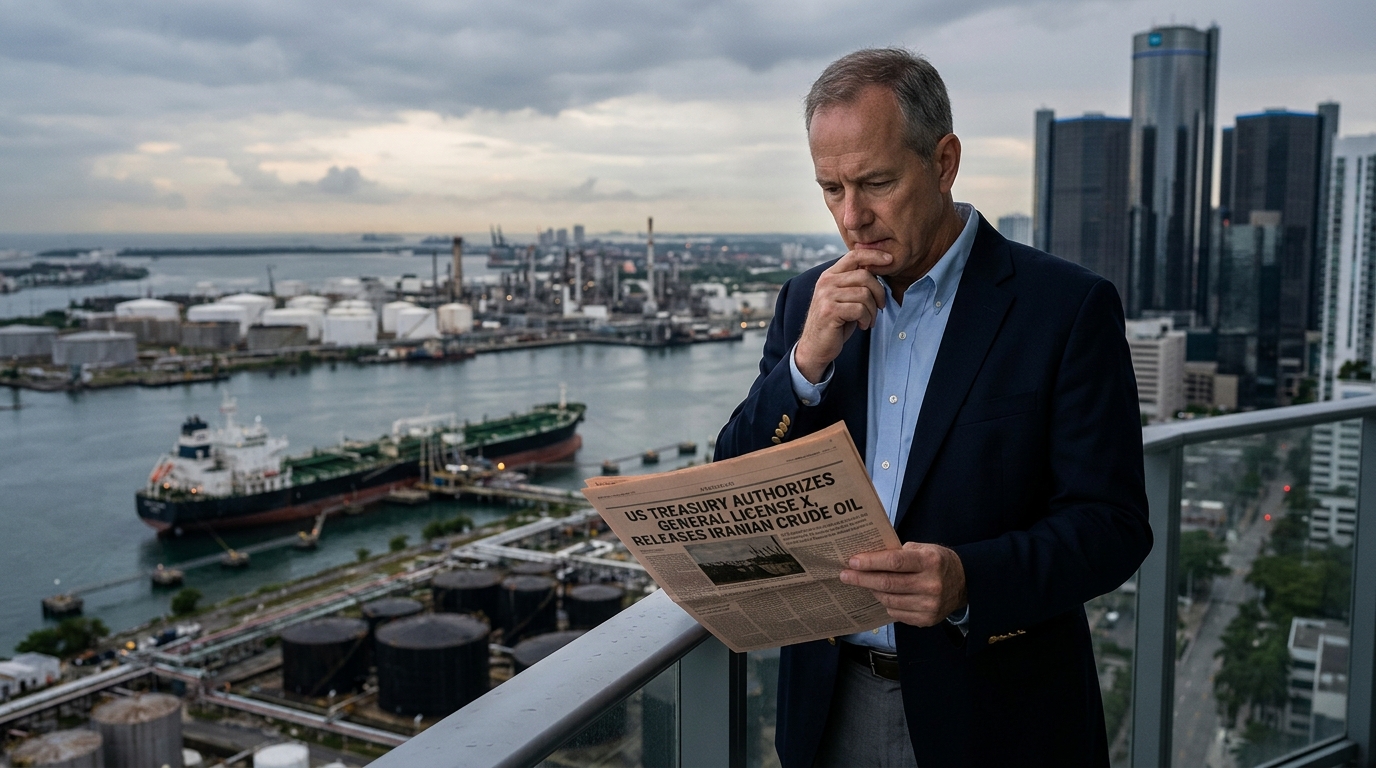
OFAC published General License X that morning. It is a 60-day authorization, expiring August 21, that allows buyers anywhere in the world to purchase Iranian crude, petroleum products, and petrochemicals with no volume cap. Buyers can pay Iran directly in U.S. dollar-denominated funds. That last part matters a lot. Dollar-clearing was one of the most effective friction points keeping Iranian oil from reaching global markets at scale. GL X removed it, at least temporarily. Brent fell more than 3.5% on the day the license dropped, and kept falling. WTI is now trading near $69-70 per barrel, down sharply from above $97 in late May.
The context behind that move is worth sitting with for a second. The Iran-linked disruption to the Strait of Hormuz, which carries roughly 25% of the world’s seaborne oil, had been one of the most significant supply shocks in recent memory. The IEA estimates cumulative oil supply losses from the disruption now exceed 1.3 billion barrels. Flows through the Strait fell from around 20 million barrels per day before the conflict to an average of just 2.7 million barrels per day during March, April, and May. Brent averaged $120 per barrel in April. Exxon’s Energy Products segment earned $2.8 billion in Q1 alone, up from $856 million in the same quarter a year earlier. That is what a real supply shock does to an integrated major’s income statement.
That premium is what is now being handed back.
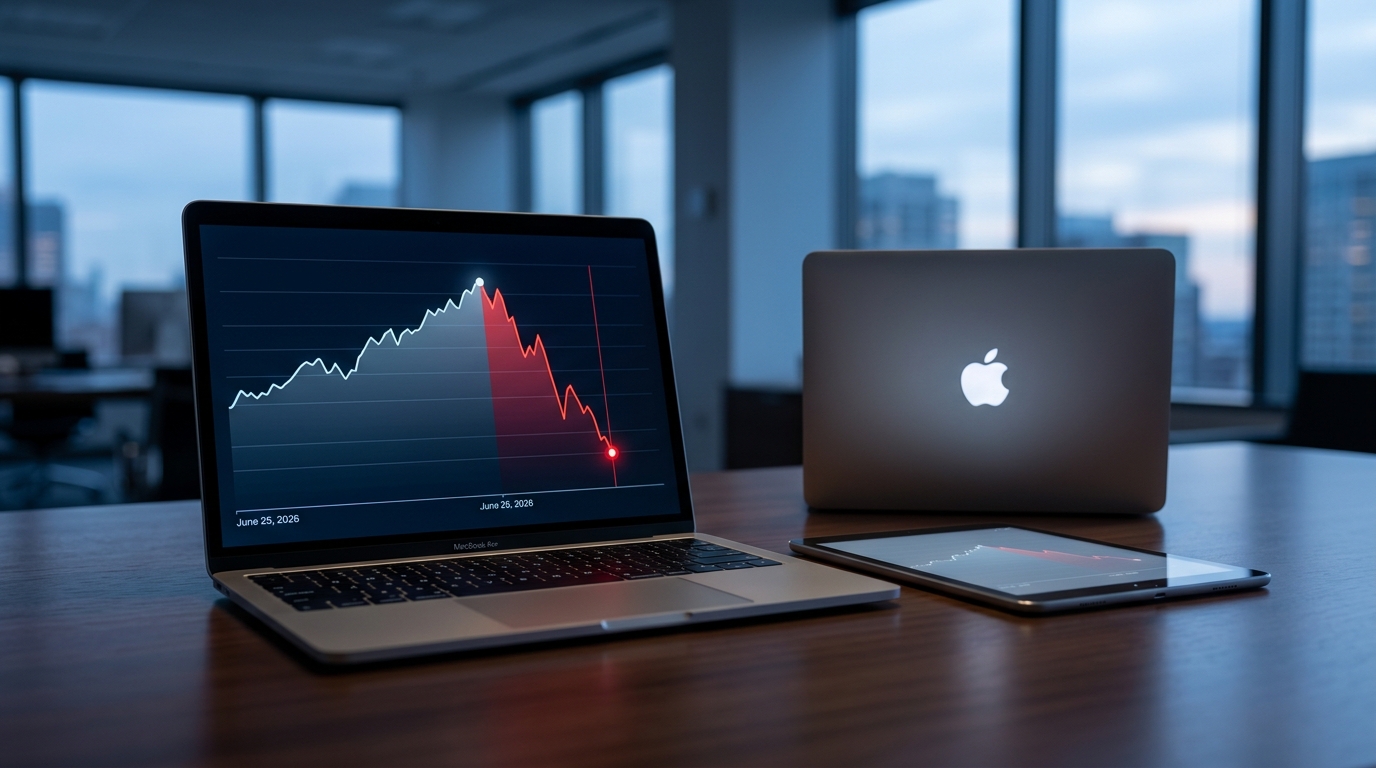
Exxon is down more than 22% from its $176.41 peak, trading near $136-137 as of late June. Chevron is off roughly 18-20% from its $214.71 high, now somewhere in the $171-175 range. These are meaningful drawdowns for stocks that had been acting like the energy cycle had years left in it. And in some ways, the underlying businesses still do. That is the part this price action is obscuring.
Slight tangent, but it is relevant here: Chevron’s acquisition of Hess brought direct ownership of the Stabroek block in Guyana, which holds some of the lowest-breakeven barrels being developed anywhere in the world right now. That asset did not get worse when GL X was published. Same goes for Exxon’s Permian Basin position and its 20-year power supply agreement with Microsoft in Texas. Chevron also has a 39-year dividend growth streak that has survived multiple full commodity cycles. Neither company’s fundamentals changed this month. What changed is the price per barrel sitting on top of those fundamentals.
5 Little-Known Stocks Behind Today’s Defense Tech Shift
Behind the headlines, a major transformation is underway.
Modern warfare is being driven by AI, autonomous systems, and next generation technology. A handful of lesser known companies are helping power this shift.
This report uncovers five stocks quietly playing a critical role in the future of defense.
Here is the thing about GL X, though. It is a window, not a policy reset. The license does not lift sanctions on Iranian sellers, only on buyers. IRGC-linked entities still carry a Foreign Terrorist Organization designation under separate U.S. statutes, and GL X does not touch that. U.S. banks and major global insurers are moving carefully as a result, which is slowing how fast Iranian barrels actually reach market. Since the MOU was announced June 14, UANI has tracked 32 tankers departing the Gulf of Oman with Iranian oil, representing roughly 43 million barrels. Kpler data puts Hormuz throughput at around 4.8 million barrels per day since the deal, which is about 50% of pre-conflict daily volume. Supply is coming back. It is just not coming back as fast as the initial price reaction implied.
The inventory picture adds another layer. ExxonMobil’s Neil Chapman warned that the world is approaching inventory levels that are historically unprecedented. Goldman Sachs estimated global stockpiles were being drawn down at 8.7 million barrels per day at the height of the disruption. Rebuilding that kind of deficit does not happen in a few weeks. Iranian crude re-entering a deeply depleted market is a fundamentally different situation than Iranian crude re-entering a well-supplied one. The market seems to be pricing the first scenario like it is the second.
There is also the negotiation risk that does not seem fully priced. The IRGC reasserted control over Hormuz transit lanes as recently as June 25, ordering vessels in the southern corridor to turn back, though traffic continued. U.S.-Iran talks are ongoing, with officials scheduled to meet in Doha. These negotiations have repeatedly threatened to break down. If they do before August 21, the supply risk premium that just evaporated could come back quickly. GL X is a 60-day window, not a ceasefire. The difference matters.
XOM is trading well below both its 50-day and 200-day moving averages from the $176.41 peak. Support in the $130-133 range is the level to watch. Chevron is in a similar position, with support roughly in the $155-158 range. Neither stock has found a clear floor yet. The August 21 expiry is the next hard date that forces a directional decision in either name, which is either a catalyst for recovery or another leg lower depending on where negotiations stand.
A few things worth tracking between now and then: the Doha talks and whether they produce anything durable; weekly IEA and EIA inventory data, which will show whether the stock draw reality is registering the way it should; actual Hormuz tanker flows from Kpler and UANI, which lag diplomatic headlines by weeks; Permian and Guyana production updates from both companies, since those are the earnings floors that exist independent of all of this; and any signal from OFAC about whether GL X gets renewed or allowed to expire.
Goldman Sachs lowered its Brent forecast to $80 for Q4 2026 after the deal was announced. That is not a crash call. It is a reset from crisis pricing to something closer to a managed supply environment. The question for XOM and CVX investors is whether the stocks are already pricing that outcome, or whether more compression is still coming.
Millionaire warns: “Move your money now.”
Larry Benedict generated $274 million in profits for his clients by knowing where money flows when the Federal Reserve shifts.
He says Trump’s Fed Takeover is triggering the most significant shift in U.S. markets in nearly 20 years.
He’s already identified the one ticker he expects billions to flood into… and he’s giving away the name for free.
Click here to get the full details before the window closes.
The businesses themselves are not broken. The Permian production, Guyana growth, decades of compounding dividends, none of that changed. What is uncertain is how long the overhang from GL X, the Doha talks, and the inventory rebuild story continues to weigh on the price. August 21 is the next moment of clarity. Until then, the situation stays fluid in a way that makes strong conviction in either direction harder than it looks.
For informational purposes only.