August 13, 2026
Record Gas. Record Margins. One Trade.
The national average has never been above $4 this late in the summer. The refining business has never been more profitable.
First a note from Weiss Ratings
Dear Reader,
In a few short months, the US government could make a sweeping change to bank accounts nationwide.
It will give them unprecedented powers to control your bank account.
They could closely track every transaction… even freeze it.
Fortunately, there are 4 simple steps you can take today that could safeguard your savings.
Discover these 4 simple steps here.
Good luck and God bless!

Martin Weiss
Dr. Martin D. Weiss, Founder
Scoreboard
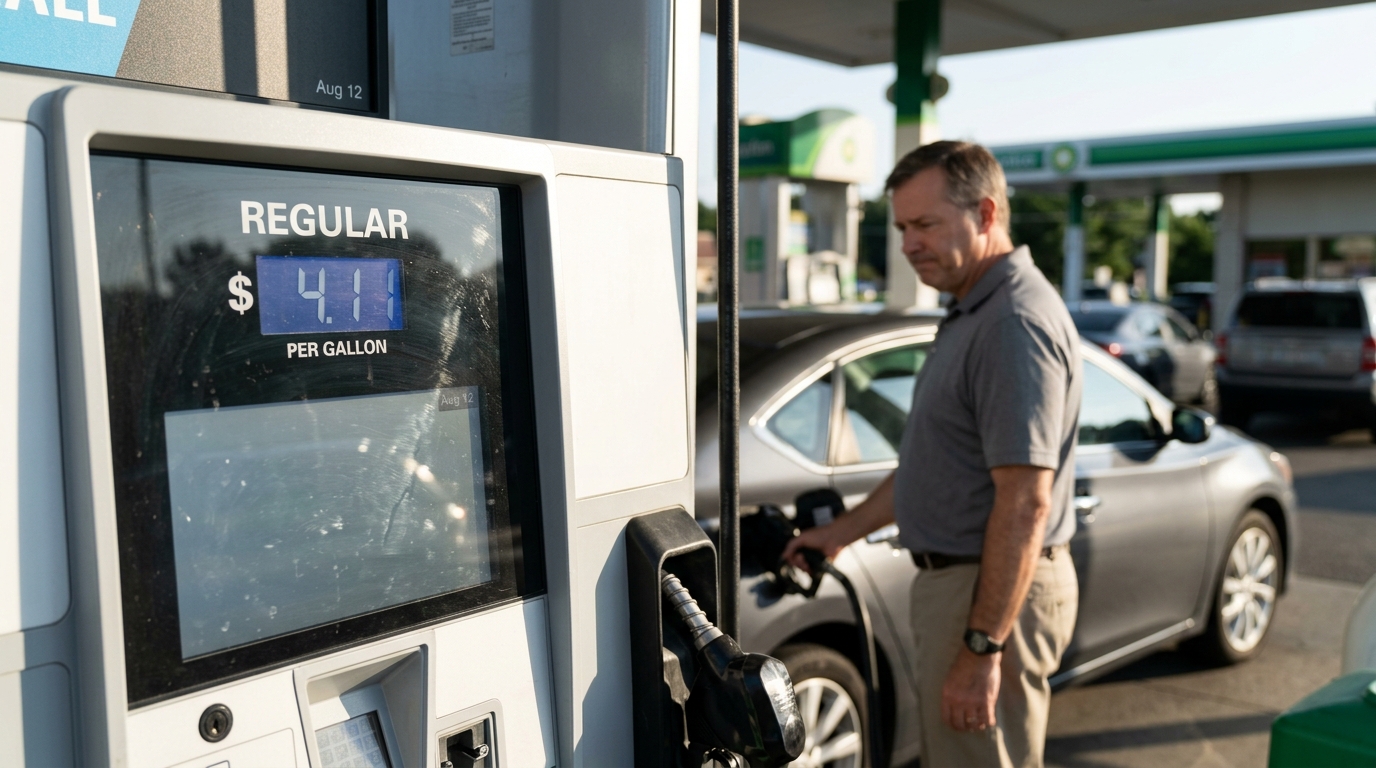
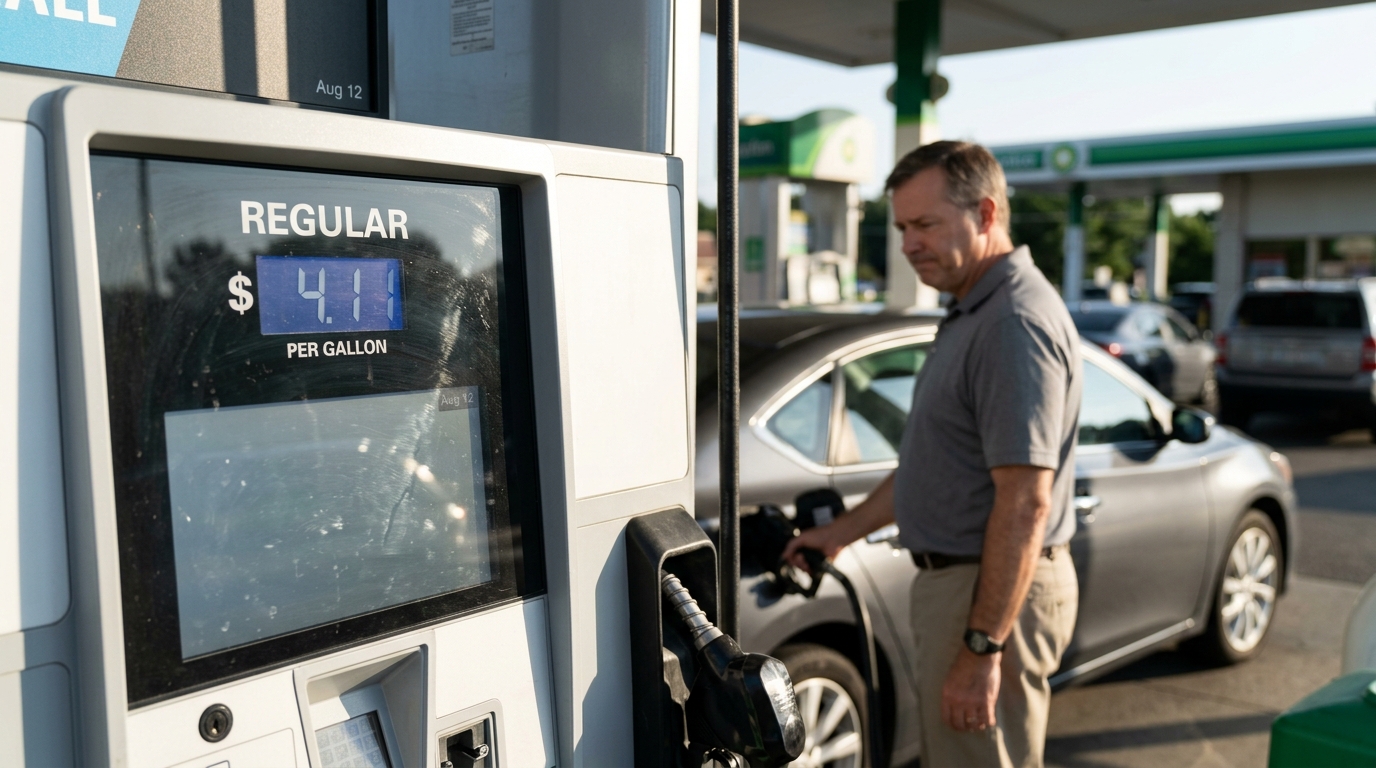
Today is August 13, 2026. Yesterday, GasBuddy’s head of petroleum research Patrick De Haan confirmed something that has never happened in the AAA era of daily national averages: the national average for regular gasoline has never been above $4 per gallon this late in the calendar year. Not once, in any prior year.
The AAA national average stood at $4.03 on Wednesday, August 12. The EIA’s weekly report, covering data through August 10, put the figure at $4.006 per gallon, down 7.3 cents from the prior week but up 88.8 cents from a year ago. California drivers are paying $5.43. Texas drivers are getting off relatively easy at $3.51. The national average peaked at $4.55 during the week of May 21 and has only partially retreated since.
The BLS released the July CPI reading on the same morning. Gasoline fell 2.9% on a monthly basis in July. Year over year, it is still up 24.6%, which accounts for 23% of the entire annual change in consumer prices. Overall CPI came in at 3.4% for the year, one tick below June’s 3.5%. The monthly headline number was 0.1%. Neither figure is alarming on its own. The combination of a partial July reprieve in gasoline and a resurgence back above $4 within days of that report tells you the trend is not cooperating.
What Is Actually Driving This
The Strait of Hormuz crisis, now in its sixth month, is the primary engine. The IRGC began attacking and boarding commercial vessels in late February 2026 following the U.S.-Israeli campaign on Iranian targets. By early August, daily transits were running in the low teens against a normal baseline of roughly 88 per day. The strait, which carried approximately 20 million barrels of oil and petroleum products daily in 2025, representing roughly 20% of global seaborne supply, has been effectively closed to routine commercial shipping multiple times this year.
The situation is not static. Transits briefly rose to 84 in the week of July 27 to August 2, up from 45 the prior week, after a partial easing. By August 12, the U.S. had fired on a vessel attempting to cross the Gulf of Oman, and WTI was trading near $84 while Brent held around $88. Crude oil prices have dropped from their earlier 2026 highs amid occasional optimism about diplomacy, but product prices have not followed. That gap is the whole story.
When crude falls but gasoline and diesel stay expensive, something structural is holding the floor. In this case it is a global shortage of refining capacity: Ukrainian drone strikes have knocked out Russian refinery capacity, U.S. plant closures have tightened domestic supply further, and the Hormuz disruption has distorted trade flows across the Pacific. High crude input costs hurt refiners in isolation. But when finished product prices stay elevated regardless of what crude does, the gap between input cost and output revenue, the crack spread, stays wide. That is exactly what has happened.
Deep Dive: The Number Behind the Headlines
Most energy coverage focuses on crude. That is usually the wrong variable when refining margins are this extended.
The 3-2-1 crack spread is the benchmark refining margin: it measures the theoretical profit from buying three barrels of crude, cracking them into two barrels of gasoline and one barrel of diesel, and selling the output at market prices. It is the single most important metric in refining economics. When the spread is wide, refiners print money. When it compresses, margins collapse fast and stocks follow.
The WTI 3-2-1 crack spread recently reached approximately $59 per barrel, according to Bloomberg data cited in market reporting, well above the historical range refiners have typically operated within. Since January 2026, refining margins have nearly tripled. That is not a cyclical uptick. It is an extreme dislocation driven by the simultaneous disruption of two major supply sources, Russian capacity and Hormuz transit flows, at a moment when U.S. inventories were already running lean.
The key point for investors: falling crude does not automatically hurt refiners. When gasoline and diesel stay expensive while crude eases, lower input costs actually widen the spread further. That is the counterintuitive dynamic that makes the refining trade different from a simple long-crude position.
The Three Names
The three largest publicly traded U.S. refiners have delivered some of 2026’s most striking returns. Marathon Petroleum, Valero, and HF Sinclair each gained over 80% year to date as of recent market data, far outpacing the S&P 500’s approximately 11% gain. Phillips 66 is up roughly 67% over the past year. The earnings behind those moves are real.
- Valero Energy (VLO): Reported Q2 2026 net income of $3.7 billion, or $12.62 per diluted share, versus $714 million a year earlier. Adjusted EPS of $12.54 beat the consensus estimate of around $10.03 by 25%. Revenue came in at $44.5 billion against a $37.95 billion forecast. Refining operating income hit $4.5 billion, up from $1.3 billion a year earlier. The company returned $2.6 billion to stockholders in the quarter, equal to 59% of adjusted operating cash flow, and declared a $1.20 quarterly dividend. Management said Q3 margins should be stronger than Q2. The St. Charles FCC Unit optimization project, a $230 million capital investment, remains on track to begin operations in Q3 2026.
- Phillips 66 (PSX): Reported Q2 2026 adjusted earnings of $3.8 billion, or $9.41 per share, crushing the Wall Street estimate of $7.02. Revenue came in at $42.1 billion. The company returned $887 million to shareholders through buybacks and dividends and generated $4.3 billion in operating cash flow excluding working capital. CEO Mark Lashier described market conditions as constructive and flagged continued improvement in refining, midstream, and commercial operations. PSX expects share repurchases to increase in the second half of 2026.
- Marathon Petroleum (MPC): Up sharply year to date, with earnings supported by its large refining network and the MPLX midstream partnership, which provides fee-based income independent of crack-spread levels.
Is the Valuation Still Reasonable?
After a massive run, valuation matters. VLO’s trailing twelve-month EPS is approximately $23.93 based on current data. The stock was trading near $306 after the Q2 report. That puts the trailing multiple in the low-to-mid teens. InvestingPro’s fair value estimate suggests the shares remain undervalued at current levels even after the rally.
Compare that to the S&P 500 at roughly 21 to 22 times forward earnings, or large-cap technology names trading at 30 to 40 times on revenue projections that are still years from certainty. Refiners are generating cash today, returning it today, and trading at a fraction of the multiple the market assigns to businesses with AI in the press release. That gap is either a bargain or a trap, depending on what happens to Hormuz and crack spreads over the next 90 days.
The structural argument is not trivial. Forbes reporting from July noted that the elevated crack spread results partly from reduced global refining capacity, including Ukrainian strikes on Russian facilities and U.S. plant closures. These are not conditions that reverse overnight. Europe continues to compete globally for distillate barrels that previously moved through supply chains now disrupted. That structural floor is what VLO management has called a higher mid-cycle going forward.
One Shark Missed Billions… Another Saw This Coming
Mark Cuban passed on Uber at a $10M valuation only to watch it go public at $80B.
Kevin Harrington, one of the original shark tank investors, invested early in Mode Mobile.
Like Uber turned vehicles into income-generating assets, Mode is turning smartphones into income streams. Deloitte named Mode the #1 fastest-growing software company.
Last chance to invest at $0.52/share. Price changes 8/14.
Please read the offering circular at invest.modemobile.com. This is a paid advertisement for Mode Mobile’s Regulation A+ Offering.
Bull / Base / Bear
Bull: Hormuz transits remain suppressed through year-end. The partial diplomatic openings in July and August collapse again, as they have at least three times since February. Russian refinery capacity stays offline. U.S. product inventories hold below seasonal norms. The crack spread stays in the $50 to $60 range. Valero’s St. Charles FCC project comes online in Q3 as planned, adding incremental high-value throughput. Management’s guidance that Q3 margins should outperform Q2 proves correct. All three names continue generating cash at rates that make current valuations look cheap in hindsight.
Base: Diplomacy produces a partial Hormuz reopening by October. Crude flows normalize enough to ease product prices but not enough to collapse the spread. Gasoline retreats toward $3.60 to $3.70 by November. Crack spreads compress from current extremes but hold well above 2024 levels. Refiners deliver strong Q3 results and guide conservatively for Q4. Stocks give back 10% to 15% of year-to-date gains but remain well above pre-crisis prices.
Bear: A full Hormuz resolution combined with OPEC restoration and weakening U.S. demand collapses crack spreads toward historical norms within 60 days. The July gasoline CPI reading, down 2.9% month over month, was the opening signal of exactly this outcome arriving faster than expected. WTI dropped sharply from earlier 2026 highs before stabilizing near $82 to $84. Names that have gained 80% or more face steep corrections when margin environments normalize quickly. The speed of a reversal in geopolitical risk premiums can be brutal: here today, priced out tomorrow morning.
Action Plan
The headline trade was six months ago. Valero was coming off a weak 2025 when the Iran conflict began; buying the chaos in March or April was the move. The question today is whether what remains is still a bargain or whether the risk-reward has shifted.
For VLO: The Q2 beat of 25% above consensus, a $2.6 billion shareholder return in one quarter, and management guidance for stronger Q3 margins all argue for holding or adding on any pullback. The $230 million St. Charles project, still on schedule for Q3 completion, is a near-term catalyst. A position entered before the Q2 report has already worked. A new position entered now at trailing multiples in the mid-teens is not an obvious overpay for a business generating $5.58 billion in operating cash in a single quarter. Wait for a 5% to 8% pullback from current levels before adding.
For PSX: The Q2 EPS of $9.41, a 34% beat against the $7.02 estimate, confirms the refining and midstream combination is working. Midstream fee income provides a floor that pure refiners lack. PSX has committed to returning more than 50% of net operating cash flow to shareholders and expects buybacks to increase in the second half of 2026. It is the most defensive of the three names and the most appropriate choice if you believe some Hormuz normalization is coming.
For MPC: MPLX midstream fee income holds up regardless of crack-spread levels. If you expect crude supply normalization to compress product prices over Q4, MPC’s midstream cushion makes it the least exposed to that outcome. It is also the name to favor if you want refining exposure with a lower correlation to pure margin volatility.
Scale into any position in thirds. Do not chase the post-record-pump headline. The first third on the current pullback, the second on a confirmed hold above $4 in the national average through September, the third only if crack spreads show no sign of mean-reverting by mid-October. If spreads collapse fast, you want to have kept powder dry.
Bargain Hunter Checklist
- AAA national average, weekly: $4 is the psychological floor. A sustained break below it signals margin compression ahead. Watch Wednesdays.
- WTI 3-2-1 crack spread: Currently near $59 per barrel. A move below $45 is a caution signal. A move below $35 signals the structural thesis is breaking down.
- Hormuz daily transit count: Normal is roughly 88 per day. The strait has been running in the low teens during peak disruption. Rising transits sustained above 50 per day for two consecutive weeks would be the first real signal of normalization.
- EIA weekly petroleum report, every Wednesday: Gasoline and distillate inventory levels relative to the five-year seasonal range. Below-normal stocks support the bull case. A return toward normal removes one of its pillars.
- VLO St. Charles FCC project: On track for Q3 2026 completion. Any delay is a throughput constraint that limits upside in the Q3 report.
- PSX Q3 utilization guidance: The company guided for worldwide crude utilization in the mid-90% range in Q3. Execution against that number will be the first read on whether the margin environment is holding.
- Russian refinery capacity: Ukrainian drone strikes on Russian facilities have been a persistent supply constraint. Any material shift in that conflict affects global distillate supply faster than most models assume.
- CPI gasoline subindex, month-over-month trend: July showed a 2.9% monthly decline. If August reverses that and the monthly number turns positive again, the Fed gets more uncomfortable and the political pressure on energy intensifies.
- Consumer demand destruction signal: $4-plus gasoline for 103 days and counting this year is the highest $4-day count since 2022. Demand destruction becomes a real risk above $4.50. Watch the EIA weekly implied demand figures alongside the inventory data.
Bottom Line
The national average has never been above $4 per gallon after August 12 in any prior year of recorded AAA data. That sentence is not a talking point. It is a fact that tells you the supply picture is structurally different from anything the market priced heading into 2026.
For the bargain hunter, the pump is not the problem to solve. The pump is the signal that the refining business is operating in one of the widest margin environments in its history, at valuations that still look reasonable against the cash being generated. Valero produced $3.7 billion in net income in a single quarter. Phillips 66 beat earnings estimates by 34% and is accelerating buybacks. The crack spread that makes both of those results possible is sitting near $59 per barrel against a backdrop of structural supply constraints that did not exist eighteen months ago.
The if/then is clean: if Hormuz stays disrupted and refining capacity stays tight, VLO, MPC, and PSX are generating cash at rates that make current multiples look cheap. If a diplomatic resolution materializes and the supply picture normalizes over 60 to 90 days, take profits on anything built below the post-crisis rally prices and wait. Watch the Wednesday EIA inventory release and the Hormuz transit count. Those two data points will tell you which world you are living in before the stocks figure it out.