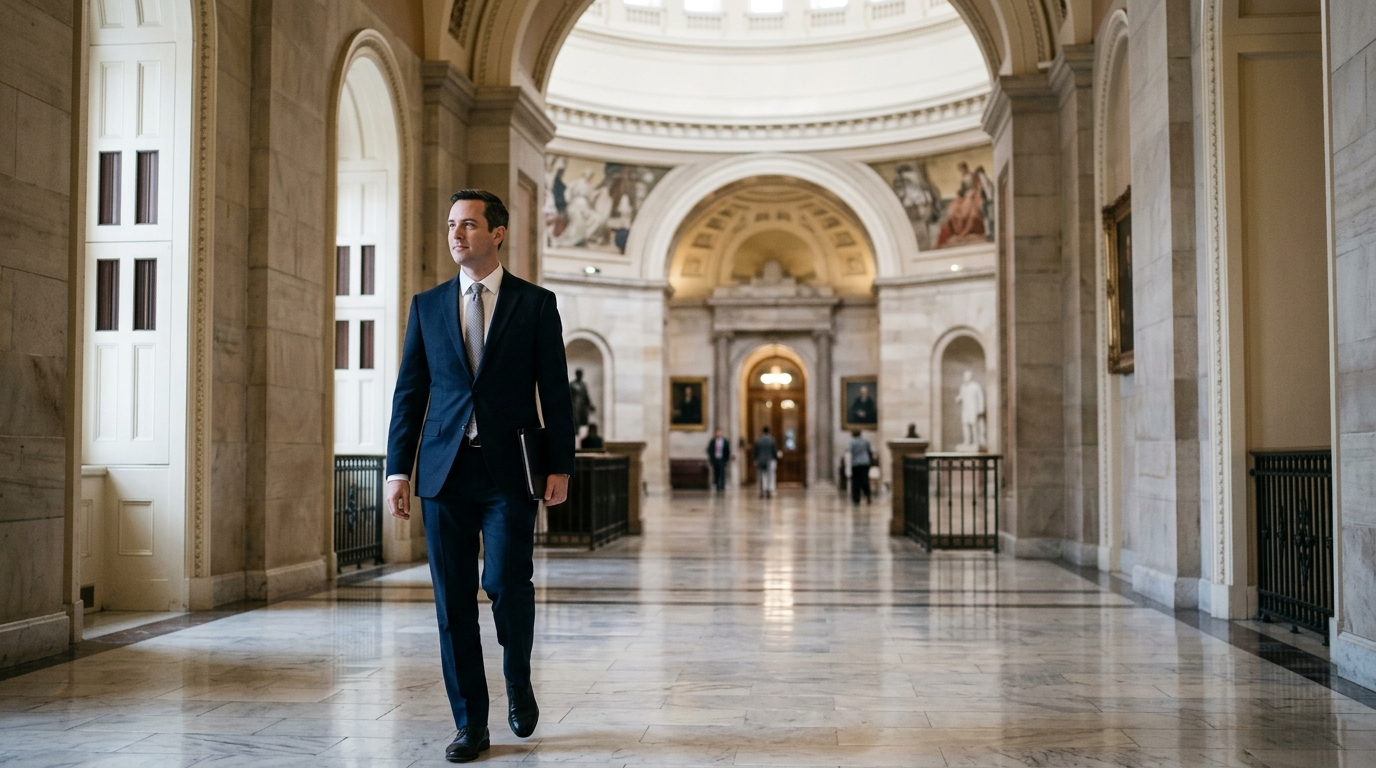
The House returns from recess today, and its first meaningful vote may settle the question investors have been quietly asking all August. The chamber returns prepared to pass a government funding bill four weeks ahead of the September 30 deadline, with leadership planning a vote on the Senate-passed stopgap that extends current spending levels through December 11. The bill is being brought to the floor under suspension of the rules, which requires a two-thirds majority, and the White House has said President Trump strongly opposes another shutdown.
That sounds tidy. It is not quite. Two provisions in the Senate bill may complicate negotiations: language delaying an OMB proposed rule and a restriction that would block the administration from transferring further funding to Border Patrol, both of which some House Republicans may oppose, preferring a cleaner measure. The Senate, meanwhile, does not return until September 14. That leaves a narrow window. If the House passes the Senate version as written, the government stays open. If it strips provisions and sends a revised bill back, the chambers have two weeks to agree before the fiscal year ends September 30.
What Actually Happened Last Time
Fiscal year 2026 started with a government shutdown that lasted 43 days, from October 1, 2025 to November 12, 2025, widely described at the time as the longest full shutdown in U.S. history. The human cost was real. President Trump signed the funding bill to end it after more than 40 days. The market cost was almost invisible.
Stocks did fine during the extended shutdown of 2025. During shutdowns since 1995, the defense sector has gained 5.2% on average, compared with the S&P 500’s 3% return, according to a Morgan Stanley analysis. Lockheed Martin barely moved, which fits its profile: essential defense functions continue, and major prime contractors tend to have the cash and credit capacity to manage payment timing issues.
The bond market is the subtler story. Historically, yields often drift lower during shutdown episodes as investors favor Treasuries, though the size of the move varies meaningfully by episode and is not reliably captured by a single point estimate. TLT, the iShares 20+ Year Treasury Bond ETF, tends to benefit from that flight-to-safety bid in the early weeks of a lapse.
The Data Blackout Risk
The piece of 2025’s shutdown that markets genuinely had to navigate was the disappearance of key economic data at the worst possible moment for Fed policy. The October 3, 2025 jobs report was not released as scheduled. The BLS later said it would not publish an October 2025 Employment Situation news release, and noted that household survey data for October 2025 were not collected due to the lapse in appropriations and were not collected retroactively.
The loss of the October jobs report and the disruption to the normal monthly cadence complicated the task facing the Federal Reserve, whose Open Market Committee was preparing for its December 9-10, 2025 meeting. That is exactly the calendar risk investors face again: the September 2026 employment report, normally due the first Friday of October, would be delayed or potentially lost if a lapse stretches long enough. The Fed’s next meeting falls shortly after that data is due.
The Playbook
Calendar risk is not a reason to sell equities. Research has generally found that stocks have risen over the 12 months following past shutdowns, and that shutdown-related weakness has historically looked more like a buying opportunity than a reason to reduce exposure.
What the 2025 experience does suggest is a tilt within a portfolio rather than a retreat from one. Government IT services and related contractors can hold up in the early weeks of a lapse as markets look ahead to post-reopening backlogs. TLT earns a modest defensive role: yields have often dipped during shutdown episodes, making long Treasuries a reasonable short-term cushion while equity volatility stays contained. LMT is the patient hold: its contracts do not stop, its liquidity is a buffer, and shutdown periods have historically offered better entry points than exit ones.
The base case today is that the House passes the Senate CR before month-end and the government stays open. In a Statement of Administration Policy, the White House said that if the bill were presented to the President in its current form, his senior advisors would recommend that he sign it into law. But the two-thirds threshold under suspension of the rules means a bloc of holdouts could force a renegotiation that eats into September’s limited legislative calendar. Know the playbook before you need it.
Daily Wealth Takeaway
Washington’s funding drama feels urgent every time it surfaces, and every time it resolves. The durable insight from 2025 is that the real shutdown risk to a long-term portfolio was not the S&P 500 falling; it was being caught without a framework when the economic data went dark. Investors who understood what drives defense services stocks, why Treasuries tend to rally early in a lapse, and why equities generally shrug it off were positioned to act rather than react. That framework does not expire with the fiscal year.