July 24, 2026
Oracle: Hated by Markets, Chosen by the Pentagon
A $7B defense deal on a deeply discounted stock deserves a hard look.
First a note from Banyan Hill Research
Dear Reader,
There’s a strategy behind the Iran war.
I know because I heard it directly.
In a closed-door meeting with a source whose connections run deep into global power networks.
He walked me through the real purpose.
The real objective.
And the massive deal tied to it.
I verified every piece.
And what I found confirms it:
This isn’t random.
It’s planned.
Click here to see the strategy behind the Iran war.
The sooner you understand this…
The better positioned you’ll be.
Here is a question worth sitting with: when the U.S. Department of Defense hands a beaten-down stock a nearly $7 billion contract, and the market barely flinches, who is reading the situation correctly?
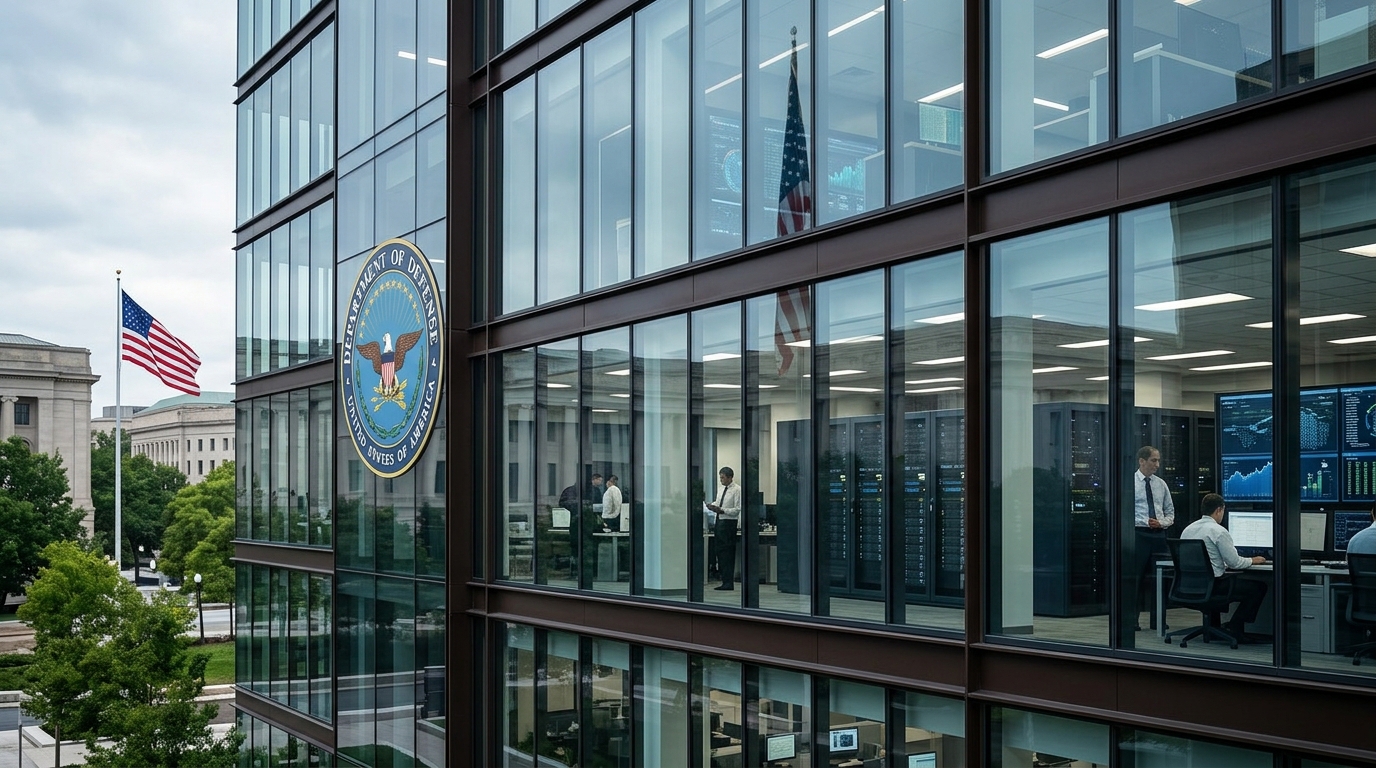
That is the Oracle situation right now. On July 23, 2026, the DOD awarded Oracle a 10-year Enterprise Software Agreement worth up to $6.9 billion, covering software licenses, maintenance, and consulting services across the Pentagon, the U.S. Coast Guard, and elements of the intelligence community. The DOD’s own chief information officer said the deal would save taxpayers a minimum of $441 million by consolidating how the government buys Oracle products. This is not a pilot program. This is the U.S. military locking in a decade-long dependency on Oracle infrastructure.
Meanwhile, ORCL shares are sitting on a painful year-to-date loss, having shed roughly a third of their value in 2026. The crowd has largely written Oracle off as an old-guard software company getting steamrolled by AI. That framing is worth examining carefully, because the business underneath it tells a very different story.
What the Crowd Is Missing
The AI-kills-Oracle thesis sounds logical until you look at where Oracle’s actual growth is coming from. Cloud revenue in fiscal year 2026 reached $34 billion, up 39% year over year. Cloud infrastructure alone grew 93% in the most recent quarter. Total FY2026 revenue hit a record $67.4 billion, up 17%. Non-GAAP earnings per share came in at $7.63, up 27%. Operating cash flow was $32 billion, up 54%.
This is not a dying business. This is a business the market has decided to be pessimistic about while the underlying numbers keep moving the other way.
The remaining performance obligation backlog, which is the clearest window into future contracted revenue, stands at $638 billion. That number is up 363% year over year. You do not build a backlog like that by losing relevance.
The Overlooked SpaceX Play
The opportunity right now is NOT to buy SpaceX – it’s to own the small, overlooked stocks that could rip triple digits as Elon expands his empire. That’s according to Tim Bohen, self-made millionaire who called Tesla at $37.
Why the Pentagon Matters More Than People Think
Here is something most coverage of this deal skips over. Oracle’s relationship with the U.S. government is not new. The CIA was Oracle’s first-ever commercial customer, going back to the early days of the company. Decades of mission-critical database infrastructure are woven into military and intelligence systems at a depth that makes displacement extraordinarily difficult. The switching costs are not just financial. They are operational and national security-level risks that no procurement officer wants to own.
So this Pentagon contract is less a new business win and more a formal extension of a relationship that was never going away. That distinction matters for anyone trying to assess the durability of Oracle’s revenue base.
The One Risk That Is Real
Free cash flow turned negative in FY2026, coming in at roughly negative $23.7 billion. That is not a rounding error. Oracle is spending aggressively to build out AI data center capacity, and those capital outlays are hitting the balance sheet hard right now. Gross margins stepped down as a result. This is the legitimate bear case, and investors flagging it are not wrong.
The question is whether that spending is value-destructive or value-creating on a multi-year horizon. Given a $638 billion backlog and management guiding FY2027 total revenue toward roughly $90 billion, the spend looks more like investment than impairment. But that call requires patience, and not everyone has it.
By the Numbers
- FY2026 total revenue: $67.4 billion, up 17% year over year
- Cloud revenue: $34 billion, up 39%
- Cloud infrastructure growth, Q4 FY2026: up 93%
- Operating cash flow: $32 billion, up 54%
- Non-GAAP EPS: $7.63, up 27%
- Remaining performance obligations: $638 billion, up 363%
- FY2027 revenue guidance: approximately $90 billion
- Pentagon contract value: up to $6.9 billion over 10 years
A business growing cloud infrastructure at 93% year over year, sitting on a $638 billion backlog, and just locked into a decade of Pentagon revenue does not fit the broken-company template. It fits the overlooked-company template. Those are very different things, and confusing them is how investors end up selling quality at exactly the wrong moment.
The market’s pessimism may persist for a while longer. Capital spending cycles take time to resolve, and patience is not something most investors budget for. But the evidence here points toward a company being penalized for investing in its own future, not one losing its competitive footing.
That gap between perception and reality is exactly what this publication exists to find.
The government’s next investment?
One insider has a track record few can match: the U.S. government. It backed Palantir, MP Materials, and Intel before major moves. Now it’s taking an ownership stake in a little-known $20 quantum-chip company – and recent executive orders point to why.