
September 8, 2026
Bonus Content: British Gilts at 28-Year Highs. Collecting or Caught?
Dear Reader,
Elon Musk has spent years quietly developing a new machine.
It’s not a rocket… robot… or car…
Most investors have never heard of it.
But the United States Patent Office has already revealed how it works.
The evidence is buried inside Patent No. US 11,291,508 B2.
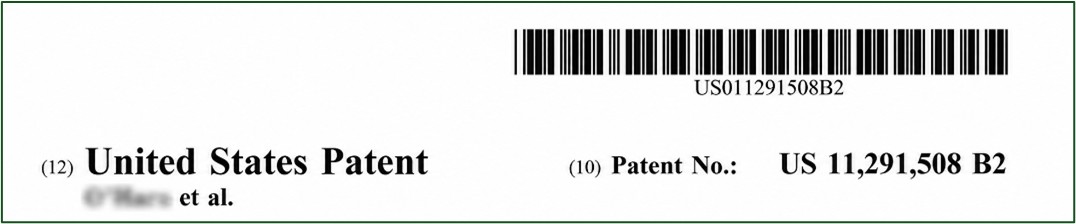
Click here to examine the discovery and the stocks connected to it.

Let me be clear…
This is something completely new.
If it works, it could open an enormous new market for artificial intelligence and launch what Wall Street veteran Matt McCall calls the sixth “Musk Stampede.”
Click here to see what Elon’s patented machine could make possible
Matt has spent more than 25 years identifying major technology trends before they became obvious.
Over that time, he has uncovered more than 50 stocks that later climbed 1,000% or more at their peak.
Now he believes one small public company could benefit as Elon brings this patented technology into the mainstream.
It’s already attracted an eight-figure investment from Nvidia.
And a major gathering beginning November 14th could bring fresh attention to the entire field.
Click here to learn how to get the name and ticker symbol before November 14th.
Good investing,
Matt McCall
Former Fox Business analyst, Editor of McCall Innovations Report
P.S. The patent is already public. The companies surrounding it are still almost entirely unwatched.
British Gilts at 28-Year Highs. Collecting or Caught?

On September 1, the UK’s long-term borrowing costs jumped to their highest level since early 1998, with the yield on 30-year gilts hitting 5.89% as investors dumped government bonds on bets of higher inflation. The 10-year gilt touched 5.25%, its highest level since the 2008 global financial crisis. For a dollar-based investor scanning global fixed income for income, a sovereign-backed instrument yielding nearly 6% on a 30-year commitment demands attention. The question worth asking honestly is whether this is a genuine income opportunity or a yield that simply prices the risk underneath it.
What the Bond Market Has Already Done to the Budget
Analysts at Pantheon Macroeconomics calculate that a global bond market rout, driven by renewed Middle East conflict, has already slashed Chancellor John Healey’s fiscal cushion from £23.6 billion at the Spring Statement to roughly £13 billion. Deutsche Bank’s chief UK economist Sanjay Raja arrived at a similar figure: based on September 1 yields, Healey’s headroom against the current budget rule would fall from £26bn at Rachel Reeves’s spring forecast to £13.8bn, before covering any additional spending plans. Almost all of the deterioration results from higher government interest costs.
Every 0.25 percentage-point rise in UK gilt yields adds approximately £2.5 billion to the government’s annual debt-servicing costs. That arithmetic lands before Healey has spent a single new pound on anything. Prime Minister Andy Burnham has been under pressure to show a credible path toward the NATO defence investment pledge, including a core defence spend target of 3.5% of GDP by 2035. The bond market is already writing the Budget’s opening paragraph.
The Currency Complication for Dollar-Based Buyers
Here is where the income case gets complicated. GBP/USD was around 1.354 on September 8, meaning the pound is not especially weak by recent standards. Forecasters have recently pointed to a roughly $1.32 to $1.36 trading range for GBP/USD in the near term, but a range is not the same as safety. Markets have been sensitive to any hint that the Bank of England could need to keep policy tighter for longer if inflation proves persistent, while UK fiscal sustainability remains in focus. A tighter policy path that pushes sterling higher would benefit dollar investors converting back; one that fails to contain inflation would erode the real value of those fixed gilt coupons.
A near-6% yield on 30-year UK government debt is, on paper, a meaningful return for a sovereign-backed instrument. But if inflation remains sticky or reaccelerates due to energy shocks, real returns could be far less impressive than the headline yield suggests. British Retail Consortium data published on September 1 showed shop prices rose 1.5% year-on-year in August, accelerating from 0.9% in July and marking the fastest increase in more than two years.
The FTSE 100 Trade
UK equities present a different calculus. The FTSE 100 recently traded around the 10,800 level, well above the 10,000-barrier it first cleared at the start of 2026. The FTSE 100’s character is often misunderstood: over 70% of constituent revenues are derived internationally, meaning the index is less a bet on UK domestic growth than on global earnings denominated in sterling. That overseas revenue base provides a natural hedge when sterling softens. The consensus puts the FTSE 100’s forward dividend yield at roughly the mid-3% range for 2026, which looks modest against a 5.25% gilt. But analyst consensus forecasts roughly £88 billion in ordinary dividends for 2026, a figure expected to surpass the previous all-time high of £85.2 billion set in 2018, and dividends can grow while gilt coupons cannot.
The Wealth-Building Verdict
Neither gilts nor UK equities are a trap in isolation. Together, they may be more useful than either alone. A small allocation to long-dated gilts captures a sovereign yield not seen since Tony Blair’s first year in office, with currency exposure that is manageable at current GBP/USD levels. A complementary position in a FTSE 100 ETF, particularly one focused on the index’s top dividend payers, adds inflation-linked income growth and global revenue diversification.
The risk to monitor between now and October 28 is straightforward: whether Healey raises taxes and which ones, how much new spending the devolution agenda and defence commitments require, and whether the government can deliver on spending ambitions while meeting markets’ demand for restraint. If the Budget disappoints bond markets, yields could push toward 6% on the 30-year, lifting returns for those already in. If the Budget exceeds market fears, sterling could rally and compress gilt yields, hurting late buyers.
The enduring lesson here is one that applies far beyond Britain: sovereign yield spikes created by fiscal stress can become genuine opportunities, but only for investors who size the position to survive the volatility between entry and resolution. The October 28 Budget is the event that separates a well-timed income allocation from an expensive lesson in patience.