September 6, 2026
Bonus Content: The Russell 2000 Is Up 20% This Year. Here Is What It Means
Dear Reader,
Most people are looking at AI the wrong way.
They’re chasing the next hot stock.
The next chatbot.
The next flashy headline.
But AI does not run on excitement.
It runs on power.
It runs on data centers.
It runs on infrastructure.
And right now, that buildout is turning into one of the biggest money flows in America.
He believes it sits in the path of the AI infrastructure boom…
And could be one of the most important retirement opportunities most people have never heard of.
The part that makes this urgent?
Trump has reportedly invested up to $25 million of his own money.
Alex says regular Americans can learn how to access this fund for around $15 through a regular brokerage account.
This is the kind of thing I’d rather see early than read about later.
Good investing,
Rachel Gearhart
Publisher, The Oxford Club
The Russell 2000 Is Up 20% This Year. Here Is What It Means
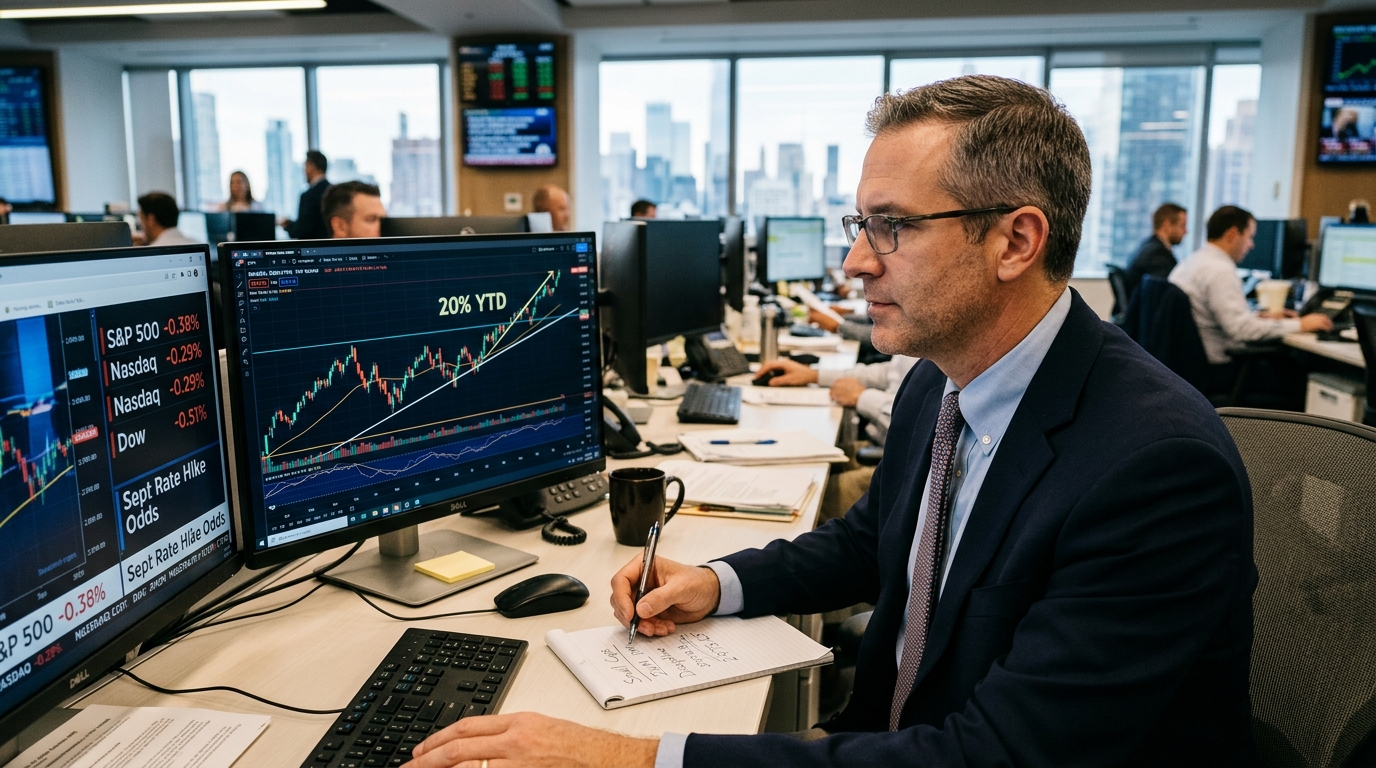
On Friday, September 4, the Russell 2000 closed at 2,975.65, up 0.25% on a day when the S&P 500 fell 0.38%, the Dow dropped 0.51%, and the Nasdaq slipped 0.29%. The day’s employment data pushed September rate-hike odds higher by some estimates, yet traders still saw CME FedWatch putting the chance of a rate increase at about 58% at the September 16 meeting. Small caps, the corner of the market most exposed to floating-rate debt, closed higher anyway.
That is the puzzle worth solving before you touch your allocation.
The Bigger Trend
The Russell 2000 has gained about 20% so far in 2026. The S&P 500 trails by roughly nine percentage points. The small-cap index also notched a new record high close in August.
That combination, a generational outperformance gap and a fresh all-time high, is precisely when long-term investors tend to make the worst allocation decisions: they either pile in too late or refuse to participate at all.
Small-cap companies carry more floating-rate debt than large caps on average, so their interest expense moves with the Fed almost in real time, unlike a mega-cap that termed out its debt at fixed rates years ago. That makes the Russell one of the most rate-sensitive corners of the market in either direction. The textbook says a rate hike should hurt them. The market is not reading the textbook.
The reason it is not: the Russell 2000’s surge has been driven by investors reaching beyond mega-cap tech into smaller companies tied to data center buildouts, electrification, and adjacent supply chains. That is a powerful tailwind, and also a genuine risk embedded in the rally.
The Investment Case
The valuation argument for IWM, the iShares Russell 2000 ETF, has not evaporated despite the run. Small caps still trade at a meaningful valuation discount to large caps by several commonly used measures. After a 20% year, that gap can remain wide, even if it narrows quickly when sentiment turns.
Sector composition matters here. The Russell carries heavier weightings in regional banks, industrials, and smaller tech and biotech names, none of which benefit from a higher-for-longer Fed the way a cash-rich mega-cap tech balance sheet does. That mix works in a domestic growth expansion. It struggles if the Fed actually hikes and credit conditions tighten for the smaller borrowers that populate the index.
Building Wealth Around This Idea
A 20% year changes your math. If you began 2026 with a 10% small-cap allocation that tracked IWM, you are now closer to 11% without buying a single new share. That drift is fine, but it is worth acknowledging before adding more.
Market moves can leave a portfolio more heavily weighted in large or small caps than initially intended; rebalancing can realign your portfolio with your long-term goals. The practical answer is not to abandon the position after a strong year, but to right-size it. Using small caps as a satellite allocation around a large-cap core can improve return potential without jeopardizing the portfolio’s foundation. A 10% to 15% combined small-cap sleeve, including IWM alongside a quality screen like the iShares S&P SmallCap 600 ETF, keeps you exposed to continued leadership without betting the portfolio on one corner of the market.
Avoid chasing past returns. The rise may not last just because small-cap funds have recently produced impressive returns. Dollar-cost averaging into any additions, rather than a single lump-sum at a 23-year-best pace, is the more durable approach.
Risks to Monitor
The historical relationship between small caps and rate cycles cuts both ways, meaning renewed speculation about a potential rate increase has introduced fresh uncertainty into the outlook for small-cap performance heading into the final months of 2026. A confirmed September hike would test whether this year’s outperformance has genuine earnings to support it or was built primarily on sentiment. AI exposure alone does not guarantee success. Small caps must convert positioning into revenue growth and profitability to justify richer valuations.
Daily Wealth Takeaway
The Russell 2000’s best year in two decades is not an argument to overweight it. It is an argument to make sure you own it deliberately, sized to your risk tolerance, and rebalanced so that last year’s winner does not quietly become an outsized bet. The opportunity in small caps is real. The discipline around position size is what separates building wealth from riding a wave.