August 8, 2026
The Chip Anthropic Doesn’t Have Yet
Samsung 2nm talks, a $10B Broadcom order already on the books, and an August 29 earnings date that tells you who wins the buildout regardless.
First a note from Mode Mobile
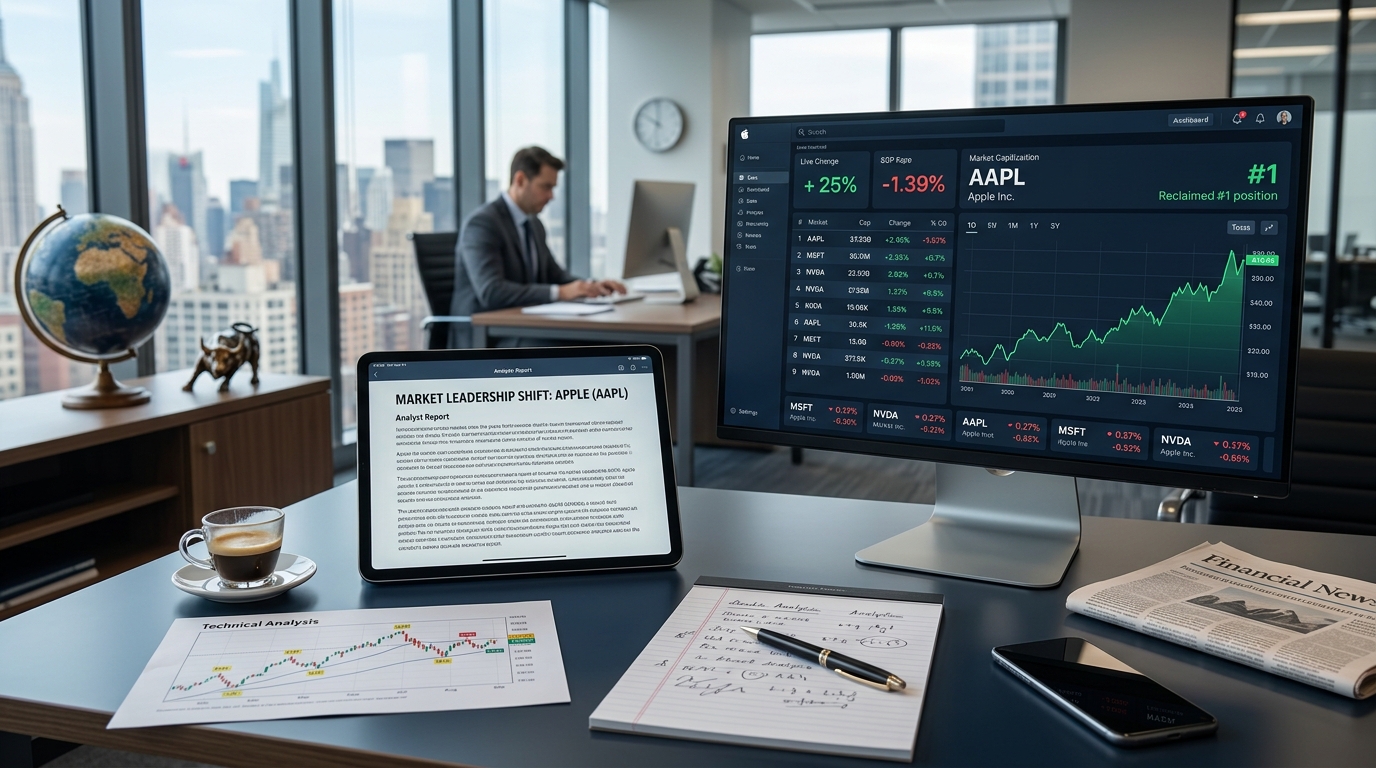
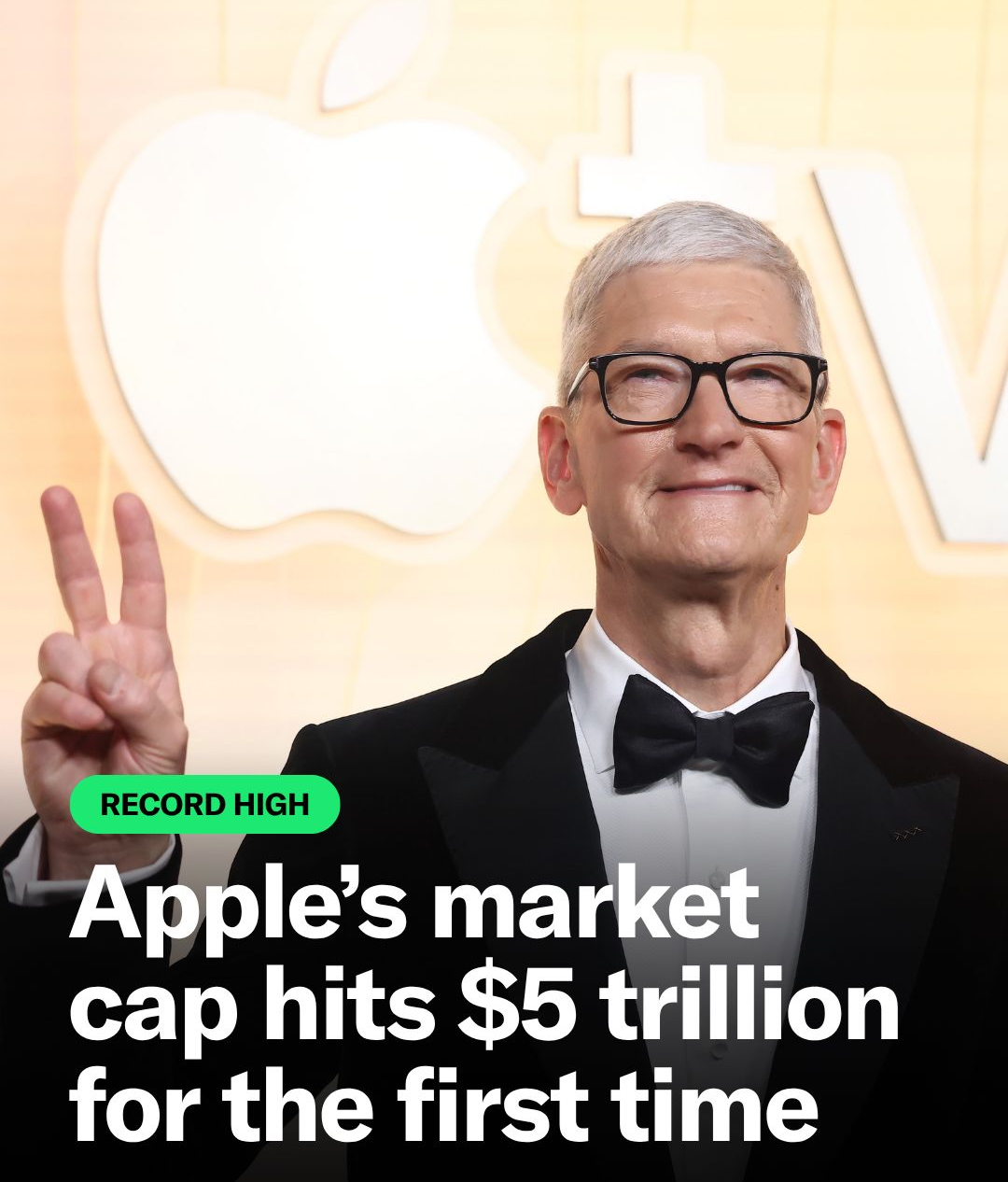
Apple just crossed a historic milestone.
The company reached a $5 trillion market value as shares climbed 25% this year.
New product launches, growing interest in foldable phones, and a leasing program built to drive more frequent upgrades.
One thing is clear:
The smartphone isn’t going anywhere.
It’s becoming even more valuable.
That’s exactly why Mode Mobile has investors paying attention.
Instead of competing with Apple, Mode is building on top of the smartphone ecosystem.
Its EarnOS platform is designed to help users earn from the time they already spend on their phones, creating value from everyday mobile activity.
And unlike many pre-IPO companies, Mode has already built meaningful traction:
- 490M+ users
- $115M+ lifetime revenue
- $1B+ earned and saved by users
- 170+ countries served
- 60,000+ investors
Mode was also ranked North America’s #1 fastest-growing software company in 2023 by Deloitte after posting 32,481% growth.
Investors can still purchase pre-IPO shares for $0.52 per share before the price changes on August 14.
⏰ Details here on how you can invest before the 8/14 deadline.
The Chip Anthropic Doesn’t Have Yet

Anthropic does not have a chip. No name. No tape-out date. No fab under contract. What it does have, as of August 5, is a public confirmation that it is building a team to design one, an early-stage Samsung manufacturing conversation that is already more structured than most headlines suggested, and a Broadcom relationship worth $10 billion that sits on the books regardless of what happens next. The announcement itself is not the catalyst. The multi-year buildout it starts is.
The Numbers That Matter
Anthropic confirmed to TechCrunch on August 5 that it is building a chip design team and plans to co-design hardware and models for speed and efficiency. Business Insider broke the story. It is the first time the company has acknowledged the effort publicly. Everything before this date was inference from hiring patterns and sourced reporting. Now it is company policy.
The surrounding data points:
- $30B+ — Anthropic’s stated annual revenue run-rate, the level at which custom silicon pays for itself
- $485,000 — top of the salary range in Anthropic’s open semiconductor engineer listing
- 2nm — Samsung foundry process node under discussion, per The Information; Samsung’s SF2P generation uses Gate-All-Around transistor architecture
- $10B — custom chip order Broadcom CEO Hock Tan disclosed Anthropic had placed, reported in December 2025, already contracted regardless of Anthropic’s own chip timeline
- $65B — Anthropic’s Series H valuation from May 2026, in which Samsung participated as a named strategic infrastructure partner alongside SK Hynix and Micron
- June 9, 2026 — date Anthropic hired Clive Chan, an early engineer on OpenAI’s custom chip team and a central figure in the Jalapeño design
Why August. Why Now.
The proximate cause is OpenAI’s Jalapeño. Unveiled June 24 with Broadcom as co-design partner, it was the first time a pure-play AI lab delivered a custom inference chip to production. OpenAI said Jalapeño delivered roughly 50% cost savings compared with standard GPU inference in early testing, built from design to tape-out in nine months. That single data point changed the calculation for every other frontier lab with sufficient revenue to run the same model.
At $30 billion in annual revenue run-rate, Anthropic’s compute bill is large enough that a single-digit percentage reduction in cost per token compounds into hundreds of millions of dollars annually. Reuters-cited industry estimates put the cost of designing and validating an advanced AI chip at roughly $500 million. At Anthropic’s current scale, that is a fraction of a year’s compute spend, not a bet-the-company decision.
The broader market context frames the urgency. TrendForce projects that shipments of servers using cloud companies’ custom application-specific integrated circuits will grow 44.6% in 2026, compared with 16.1% for servers using general-purpose GPUs. Anthropic is not entering a speculative category. It is joining the fastest-growing segment in AI infrastructure three years after the leaders started building.
The Samsung Relationship Is More Than a Vendor Call
Most coverage framed the Samsung discussions as a cold manufacturing inquiry. The actual structure is more layered. Samsung participated in Anthropic’s $65 billion Series H round in May 2026 as a strategic infrastructure partner, and that relationship created a natural opening for deeper collaboration. Samsung stands apart from the other two memory investors in that round in one critical way: it is the only one that actually operates a foundry.
Anthropic has begun preliminary work on a proprietary AI chip and is evaluating Samsung’s 2nm fabrication process alongside its advanced semiconductor packaging technologies. The SF2P node uses Gate-All-Around nanosheet transistors, a structural departure from the FinFET architecture that defined the prior decade. Samsung also produces HBM memory in-house, which means Anthropic could theoretically source both compute die and high-speed memory from a single manufacturing partner. That consolidation matters for yield management and supply chain predictability at data-center scale.
There is an opportunistic angle on Samsung’s side as well. Samsung had been developing a custom AI chip for OpenAI before those talks stalled in early June 2026, with Korean media describing strategic differences between the two companies. The key forward-looking question is whether Samsung can convert early conversations with Anthropic into production wins. A confirmed foundry agreement would be a material positive for Samsung’s foundry revenue and increase competition with TSMC’s near-monopoly on leading-edge AI chip manufacturing.
The project remains genuinely early. Anthropic is in discussions with several chip design companies, but has yet to move into detailed design, testing, or manufacturing stages. Sources cited by The Information noted the company could still abandon the effort. That caveat belongs in any model that prices this in.
What Anthropic Is Targeting and Why Inference First
Anthropic makes Claude, deployed across enterprise, consumer, and government contexts. Bloomberg reports that Anthropic said Amazon’s Trainium chips, Google TPUs, and Nvidia GPUs will continue to serve as the foundation of its computing strategy. This is not a vendor exit. It is a cost optimization on top of an existing diversified stack that also includes AMD accelerators.
In April 2026, Anthropic expanded its partnership with AWS, committing over $100 billion in investment over the next decade to secure 5 gigawatts of new compute capacity, including custom chips such as Trainium2, Trainium3, and Trainium4. Anthropic has also entered into long-term agreements with Google and Broadcom to secure approximately 3.5 gigawatts of next-generation TPU compute power starting in 2027, building on earlier agreements covering millions of TPUs and over 1 gigawatt of capacity from 2025.
Inference is the logical first target. Training silicon is harder, costlier, and riskier to design from scratch. Inference workloads are large, repetitive, and predictable, precisely the profile where a purpose-built accelerator earns back its development cost fastest. A chip optimized for Claude’s specific attention and memory access patterns could reduce cost per token without touching the training stack at all.
Inside the SpaceX S-1, Elon’s New AI Disruption Revealed
You will NOT believe what Elon Musk is doing next. Hidden inside the SpaceX S-1 is the master plan for Elon’s next big disruption.
It could transform the world… rewrite the rules of AI… And create the most valuable company EVER. This is the AI story no one’s talking about… yet.
Get the name and ticker here of the No. 1 way to play it, free of charge.
The Broadcom Angle Most Coverage Is Missing
Anthropic is private. The investable read here is which public companies benefit from the multi-year buildout required before Anthropic ships a die. Broadcom is the clearest answer, and the Anthropic relationship is not speculative for AVGO. It is already contracted.
The quarterly AI revenue acceleration has been consistent:
- Q1 FY2026: AI revenue of $8.4 billion grew 106% year-over-year, above forecast, driven by robust demand for custom AI accelerators and AI networking.
- Q2 FY2026: AI semiconductor revenue was $10.8 billion, up 143% year-over-year.
- Q3 FY2026 guidance: Semiconductor revenue forecast at $20.5 billion, up 124% year-over-year; AI semiconductor revenue at $16 billion, up over 200%.
- Full-year 2026: AI semiconductor revenue expected at $56 billion, up roughly 180% from 2025; 2027 AI revenue guidance reiterated at over $100 billion.
- Q2 overall: Q2 FY2026 revenue reached a record $22.2 billion, up 48% year-over-year. Q3 FY2026 guided at approximately $29.4 billion, up 84%.
Broadcom shares tumbled 12.6% following its Q2 2026 results on June 3 after reporting revenue of $22.19 billion and projecting Q3 AI chip revenue of $16 billion. Investor sentiment was further dampened as management maintained the long-term 2027 AI chip sales opportunity at $100 billion despite raising expected AI chip shipments to more than 10 gigawatts, disappointing investors who had anticipated an upward revision. That reaction is the setup for August 29. Analysts expect Broadcom to report EPS of $2.83 for Q3, a 124.6% surge from $1.26 in the year-ago quarter.
The wrinkle specific to Anthropic: even if Anthropic eventually ships its own accelerator die, Broadcom’s role in networking silicon, advanced packaging, and systems integration does not contract. Strategic partnerships and long-term agreements with major AI customers including Google, Anthropic, OpenAI, and Meta underpin Broadcom’s future growth. A custom Anthropic chip still requires all of that surrounding infrastructure. The infrastructure spend may grow as Anthropic’s silicon ambitions scale.
The more pointed read on Nvidia: Anthropic joining Meta and OpenAI in the custom silicon race means the frontier-lab inference customer list keeps quietly shortening for general-purpose GPUs. GPUs remain the near-term default for training, and for any lab that has not yet reached the revenue scale to justify the engineering investment. But the directional trend is not ambiguous.
Bull / Base / Bear
Bull Case
Anthropic ships a functional inference accelerator by 2029. Samsung’s SF2P 2nm node, entering production late 2026, delivers workable yields. Co-design with Claude’s architecture cuts cost per token materially. Broadcom collects its $10 billion contracted order in full, then expands its role in networking and packaging as Anthropic scales the custom die. Samsung wins a marquee foundry customer that displaces the stalled OpenAI chip work and validates its 2nm process for the broader AI market. Memory suppliers, already named Series H partners, benefit from HBM demand growth tied to Anthropic’s data-center expansion.
Base Case
The first Anthropic chip arrives in 2029 to 2030, delayed by yield challenges at Samsung and the inherent complexity of server integration for a team still in the hiring phase. Broadcom’s AI revenue compounds toward $100 billion in FY2027 on Google, Meta, and OpenAI volume alone. Anthropic’s custom chip becomes a marginal cost optimization rather than a wholesale stack replacement. TrendForce’s 44.6% custom ASIC server growth in 2026 plays out almost entirely through existing customers before Anthropic joins the production queue.
Bear Case
If Samsung’s 2nm yields disappoint, as they have at some earlier nodes, TSMC’s competitive moat widens further. Anthropic’s chip team loses key engineers before tape-out, a real risk when competing labs can match a $485,000 salary. The project gets abandoned, which sources cited by The Information explicitly flagged as a possibility. Meanwhile, Broadcom’s Q3 FY2026 report on August 29 becomes the near-term overhang: management maintained the 2027 AI chip opportunity at $100 billion despite raising expected shipments to more than 10 gigawatts. Any further hold on that figure without an upward revision risks another double-digit single-day drop, as in June.
Action Plan
The August 5 announcement is not a near-term trading catalyst. It is confirmation that a structural trend has gained one more major participant. For investors who want exposure to custom AI silicon in public markets:
- AVGO, current range $380 to $400: August 29 is the hard catalyst. Consensus expects $29.4 billion in Q3 revenue and $2.83 in adjusted EPS. The AI semiconductor guidance of $16 billion for the quarter represents over 200% year-over-year growth. If Broadcom delivers and raises the FY2027 target above $100 billion, the consolidation range breaks higher. If it delivers but holds the target flat again, expect the June playbook to repeat: a sharp single-session drop that has historically resolved as a re-entry point, given the underlying trajectory did not break.
- Scale in on post-earnings weakness: The June 12.6% drop on a flat guidance hold was a sentiment reaction, not a business deterioration. The AI revenue line kept accelerating sequentially. A repeat on August 29 is the same trade in a different quarter.
- Samsung (005930 KS) as a secondary position: A formal Anthropic foundry agreement would be a material catalyst for Samsung’s data-center chip revenue. The Series H participation means the financial and operational interests are already structurally aligned. This is a longer-duration, higher-execution-risk position than AVGO, with a specific catalyst to watch: any confirmed manufacturing contract between the two companies.
- Watch Anthropic hiring volume, not announcements: Job postings for semiconductor engineers requiring tape-out experience are the real leading indicator. A material increase in open roles by end of Q3 2026 means the project is advancing from exploratory to committed. That is when to size up.
The Scorecard
Check these before adjusting any position:
- [ ] Broadcom Q3 AI revenue vs. $16B guidance (August 29): A beat confirms acceleration. A miss flags customer concentration risk earlier than expected.
- [ ] Broadcom FY2027 AI target (August 29): Any raise above $100B is the most important single number for AVGO bulls. A hold is noise. A cut changes the thesis.
- [ ] Samsung SF2P 2nm yield reports: Leading-edge yields at initial production almost always disappoint. Watch Korean semiconductor trade press in Q4 2026 for the first real data.
- [ ] Anthropic semiconductor job posting count: More than a handful of posted roles requiring tape-out experience by end of Q3 2026 means the team is scaling beyond exploratory.
- [ ] Formal Samsung foundry agreement: A confirmed manufacturing contract is the next hard catalyst for the Samsung foundry position.
- [ ] Clive Chan team headcount disclosure: Any public acknowledgment of team size from Anthropic starts a clock on plausible tape-out timelines.
- [ ] Nvidia GPU procurement trends at frontier labs: Any disclosed reductions in Nvidia GPU orders from OpenAI, Meta, or Anthropic as custom silicon capacity scales is the directional signal for GPU market share.
- [ ] Broadcom customer concentration in Q3 filing: Any shift in revenue mix away from the top three customers is the principal risk variable to track in every AVGO quarterly report.
Bottom Line
Anthropic’s chip effort is years from a product and further still from meaningful production scale. None of that makes the August 5 confirmation irrelevant. The economics that justified it are already compounding.
A $30 billion revenue run-rate. A $10 billion Broadcom order already on the books. A Samsung investor relationship that opened a foundry conversation. An OpenAI chip running in production at 50% lower inference cost. Each of those facts existed before August 5. The disclosure made them a stated strategy rather than a collection of sourced reports.
If Anthropic succeeds, it captures margin currently flowing to its hardware vendors. If it delays or abandons the effort, Broadcom and the rest of the supply chain collect those dollars in the meantime. The public companies in the stack get paid either way. Google has Ironwood. Meta has MTIA. Amazon has Trainium. OpenAI has Jalapeño. Anthropic is assembling the team that will eventually add a name to that list. The companies already building the scaffolding are reporting triple-digit AI revenue growth right now.
August 29 is the next hard data point. Watch the FY2027 AI revenue target. Everything between now and then is context.