Hey there, bargain hunter.
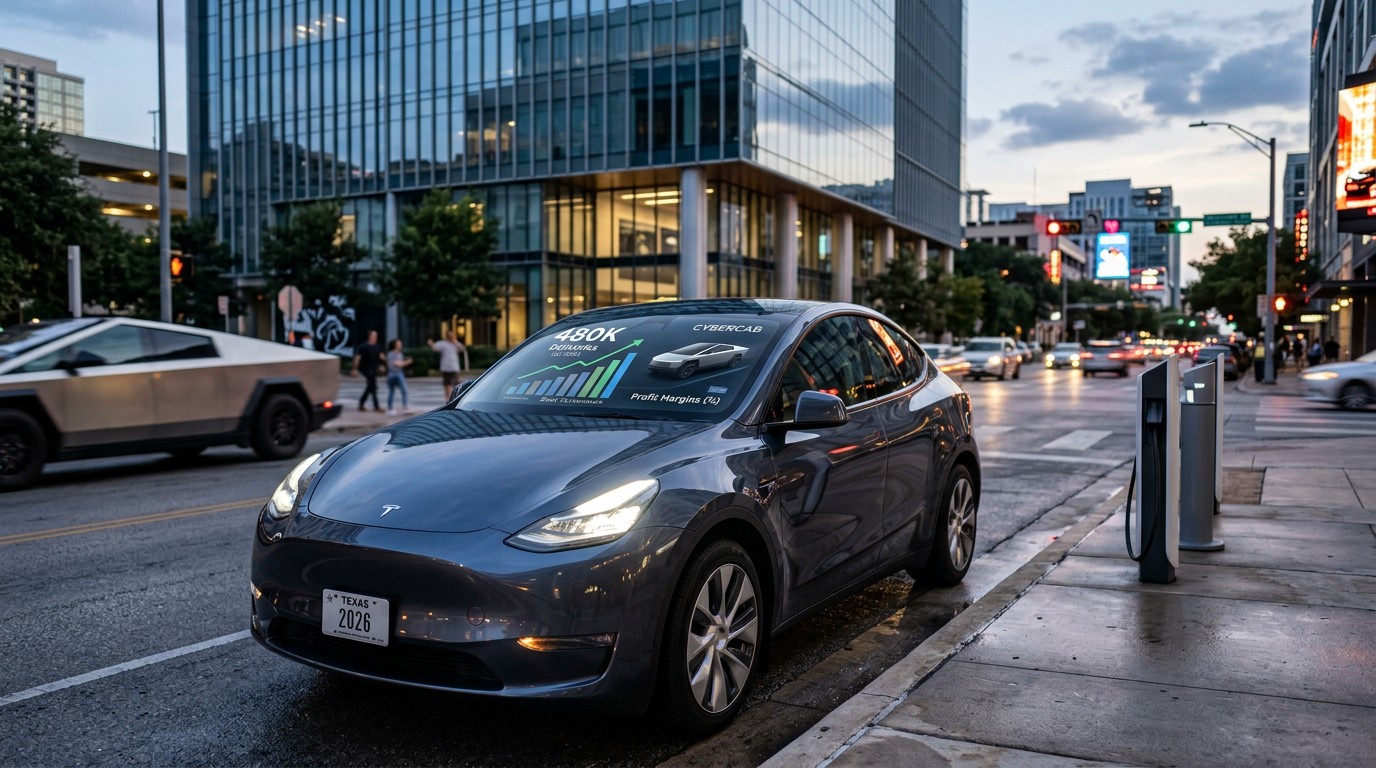
Let’s get something out of the way fast. Tesla already told us the big number. 480,126 vehicles delivered in Q2 2026, which beat the Wall Street consensus of around 406,000 by nearly 19%. That’s done. The market already reacted, and not the way the bulls wanted.
The stock dropped roughly 8% on delivery day. Then clawed back 6%-plus a few days later when the robotaxi story heated up. Right now TSLA is trading around $395 to $406, down close to 10% year-to-date, sitting on a trendline that technicians are watching carefully.
What matters now is July 22. That’s the actual earnings call, and the delivery beat is already priced into whatever expectations analysts carry into that night.
What Investors Are Actually Watching
The delivery count is a sideshow at this point. Analysts at Morgan Stanley, Barclays, and Wells Fargo all raised price targets after the delivery beat, but the upgrades were modest. Morgan Stanley went from $415 to $417 and kept an Equal Weight rating. That tells you something. A 19% delivery beat and you get a $2 target increase? The market wants margin proof, not volume proof.
Consensus estimates for Q2 revenue sit around $25.4 to $25.8 billion, up from $25.5 billion in the same period last year. EPS consensus is around $0.48. The bar is real but not extreme. What could actually move the stock is automotive gross margin. Tesla has been discounting aggressively to move inventory, and Q1 saw pricing pressure eat into profitability. If margins come in weak, the delivery beat becomes meaningless context. If margins hold near 20% or above, the bull case reopens.
Slight tangent, but it matters: Tesla’s energy storage business deployed 13.5 GWh in Q2, up from 9.6 GWh a year earlier. That unit is growing faster than the car business and carries better margins. It rarely gets enough airtime. Worth tracking on the call.
The Robotaxi Layer
Tesla made its robotaxi service available in Miami on July 3, making it a new operating market outside Texas. Cybercab testing is also running in Austin. Tesla has also said it provides Robotaxi service in limited areas of Miami, Florida and Austin, Dallas, and Houston, Texas.
Here is the tension that defines this stock right now. The valuation is not really pricing in a car company. It is pricing in an AI and autonomy platform. A trailing P/E above 350 does not happen for an automaker. It happens when the market believes FSD subscriptions, Cybercab economics, and Optimus robotics will be worth multiples of the current auto business. Any guidance on the July 22 call that quantifies the robotaxi ramp, even loosely, could move the stock more than the financial figures themselves.
But Tesla has a credibility problem on timelines. Autonomous rollout dates have slipped before, more than once. Management will need to show something tangible, not just ambitious language, for the market to assign more premium to the autonomy layer.
The Valuation Problem
This is the hard part for anyone trying to do math here. At around $400 per share and about a $1.5 trillion market cap, Tesla trades at roughly 200 times forward earnings. That compares to the S&P 500 at around 21 times forward. The gap is enormous and has to be justified by AI and autonomy upside, not vehicle sales.
European registrations were up 57.2% year-over-year through the first five months of 2026, which is genuinely impressive in a region packed with Chinese EV competition. That is a real data point. But one strong regional figure does not close a 200x forward multiple.
Bull, Base, Bear
- Bull: Margins hold or expand, Cybercab gets a credible production timeline, FSD revenue line shows up in the financials for the first time. Stock breaks above $428 and targets $450-plus.
- Base: Decent quarter, margin roughly flat, Robotaxi commentary is cautiously optimistic but vague. Stock drifts sideways between $380 and $420 through August.
- Bear: Margins miss on cost pressure from lithium, copper, and chip prices. Capital expenditure of $25 billion weighs on free cash flow guidance. Stock revisits $350.
The Cheap Investor Take
This is not a cheap stock. Full stop. At any conventional valuation metric, TSLA requires a leap of faith that the autonomy business materializes on schedule. That leap has burned investors before.
What makes July 22 interesting is the asymmetry. A margin beat plus any Cybercab revenue guidance could trigger a re-rating that surprises even the bulls. A margin miss at this valuation is punishing. The delivery beat is a floor, not a ceiling. Watch the gross margin line first, FSD revenue second, and Cybercab production timeline third. Those three numbers will tell you more than the headline EPS ever will.
The $25 billion capital spending plan is either the most expensive bet in auto history or the foundation of a trillion-dollar services business. July 22 will not settle that debate. But it will tell us how close or how far Tesla is from making believers out of skeptics.