Nobody talks about power grids when they talk about AI. They talk about chips. They talk about software. They talk about data centers. But at some point — usually right around now — investors start asking: where does all that electricity actually come from?
That’s the question that turned GE Vernova into one of the most talked-about stocks of 2026.
The Numbers First
GE Vernova (NYSE: GEV) has climbed roughly 76% year-to-date. Over the past 52 weeks, shares are up more than 121%. That’s not a momentum trade that slipped through the cracks — that’s a business with real acceleration behind it.
In Q1 2026, the company reported revenue of $9.3 billion, up 16% year-over-year. Orders hit $18.3 billion for the quarter — up 71% organically — with growth across all three segments. Total backlog reached $163 billion, growing $13.0 billion sequentially. Management also raised full-year free cash flow guidance to $6.5–$7.5 billion, up from an earlier range of $5.0–$5.5 billion.
Those aren’t incremental updates. That’s a company running well ahead of its own expectations.
The Part That Gets Overlooked
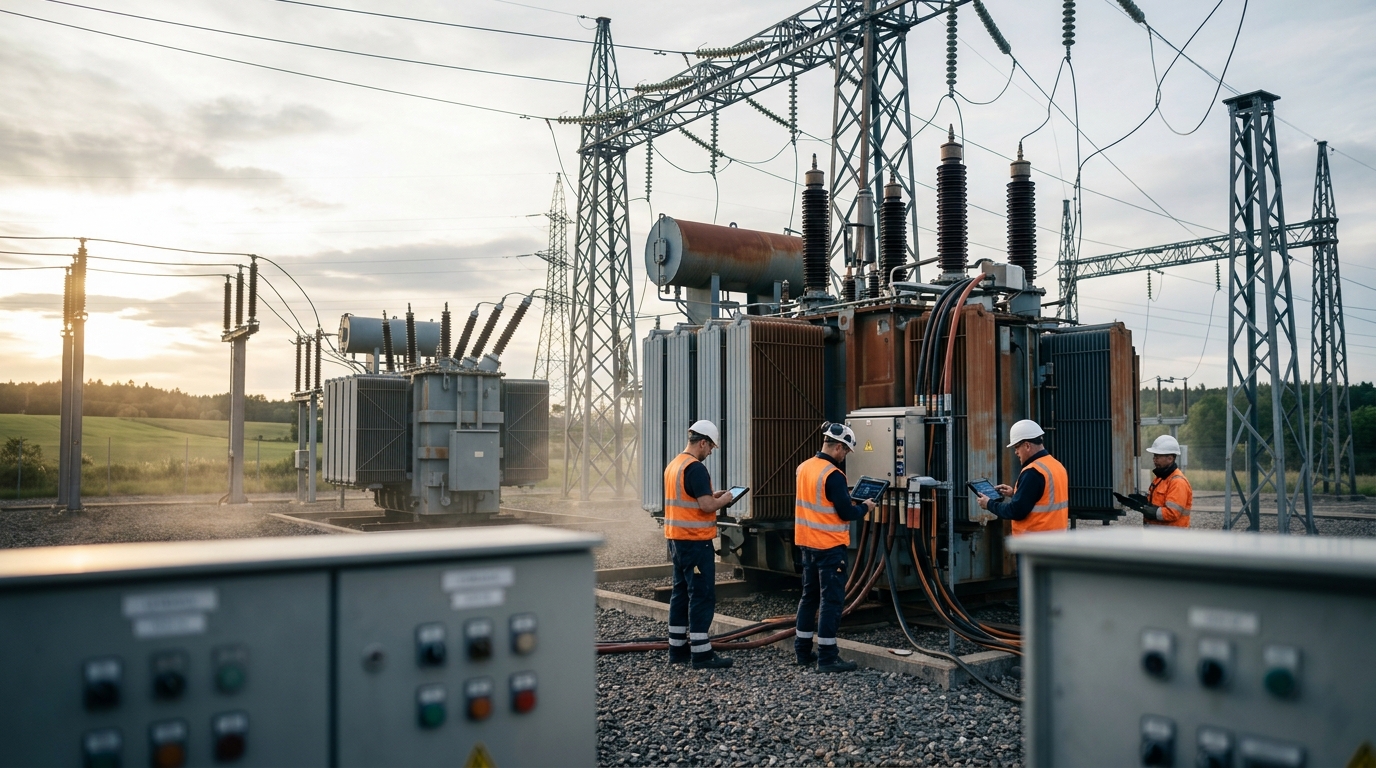
Most investors know GE Vernova makes gas turbines. What fewer appreciate is how much of the growth story now runs through the company’s electrification division — the segment that makes transformers, switchgear, and grid software. It’s the connective tissue between power plants and the data centers that actually consume the electricity.
Electrification 2026 revenue is expected in a range of $14.0–$14.5 billion. And that’s important, because it means the AI power story here isn’t just about turbines. It’s about the entire delivery chain.
What’s interesting is how this business behaves differently than semiconductors. Turbine orders come with multi-year delivery schedules. Grid equipment is bought against decade-long utility planning cycles. Service agreements generate recurring revenue for the life of installed equipment. The result is revenue visibility that most AI-adjacent stocks simply don’t have.
July 22 Is the Next Real Test
GE Vernova has said it will release Q2 2026 financial results on Wednesday, July 22, 2026, before market open, with a webcast scheduled for 7:30 a.m. ET.
Consensus analyst estimates for the quarter vary by data provider, so treat any single EPS figure with caution.
What’s verifiable is that the most recent quarter (Q1 2026) produced an unusually large upside surprise: GE Vernova reported EPS of $17.44 versus a consensus estimate of $1.95.
Analysts hold an overall “Strong Buy”/“Buy”-leaning consensus on the stock, with an average price target around $1,223 (depending on the dataset and analyst count).
Slight tangent, but it matters: GE Vernova also sits at the center of a global conversation about energy security that goes well beyond AI. European governments are rebuilding power infrastructure. Utilities in Asia are upgrading grids. The AI data center buildout is the loudest demand driver right now, but it’s layered on top of a much longer-term infrastructure renewal cycle.
The Risks Are Real
GEV is not cheap. As of July 13, 2026, the stock trades at roughly 32 times trailing earnings (based on reported market data), and it is worth noting that price-to-sales and valuation multiples can move quickly with both price swings and changing forward estimates.
The consensus analyst price target sits close to the stock’s current trading range — meaning the stock has already outrun many formal models.
The offshore wind segment also remains a drag. Permitting hurdles and policy uncertainty have slowed installations, and that part of the business continues to weigh on the broader portfolio. It’s a real offset to what is otherwise a very strong growth story.
The Bigger Picture
Every time a hyperscaler announces another multi-billion-dollar data center commitment, GE Vernova gets a little more relevant. The AI buildout is fundamentally an electricity story, and GE Vernova sits at the exact intersection of power generation and grid modernization that makes this possible. The Q2 report on July 22 will answer the only question that really matters right now: whether AI-driven demand is still translating into real contracts, real backlog growth, and real free cash flow. Worth a close look before that date arrives.
This content is for informational purposes only and does not constitute investment advice. All financial data referenced is sourced from publicly available company reports and analyst estimates. Past performance is not indicative of future results. Always conduct your own research before making investment decisions.