October 25, 2026
Bonus Content: Chevron’s Methane Problem Is Also Its Biggest Opportunity
Fellow Investor,
I’ve never been so excited to share my favorite trading strategy…
Because the way the market is acting right now, plays directly into my hands…
And the investors who follow my lead.
In fact, based on everything I’ve seen over the past few weeks… this perfect storm of factors could help you create massive windfalls.
And you can do it without tying up your money for months on end waiting for an AI stock to take off…
Or getting involved with complex, risky cryptocurrencies.
I’ve put everything you need to know about how I trade the markets in a special guide called “How To Master The Retirement Trade.”
You can reserve a free copy here.
Just be sure to do it now.
Because every day you wait means another potential profit opportunity slipped by you…
To your investing success,
Dave Aquino
Partner, Base Camp Trading
Chevron’s Methane Problem Is Also Its Biggest Opportunity
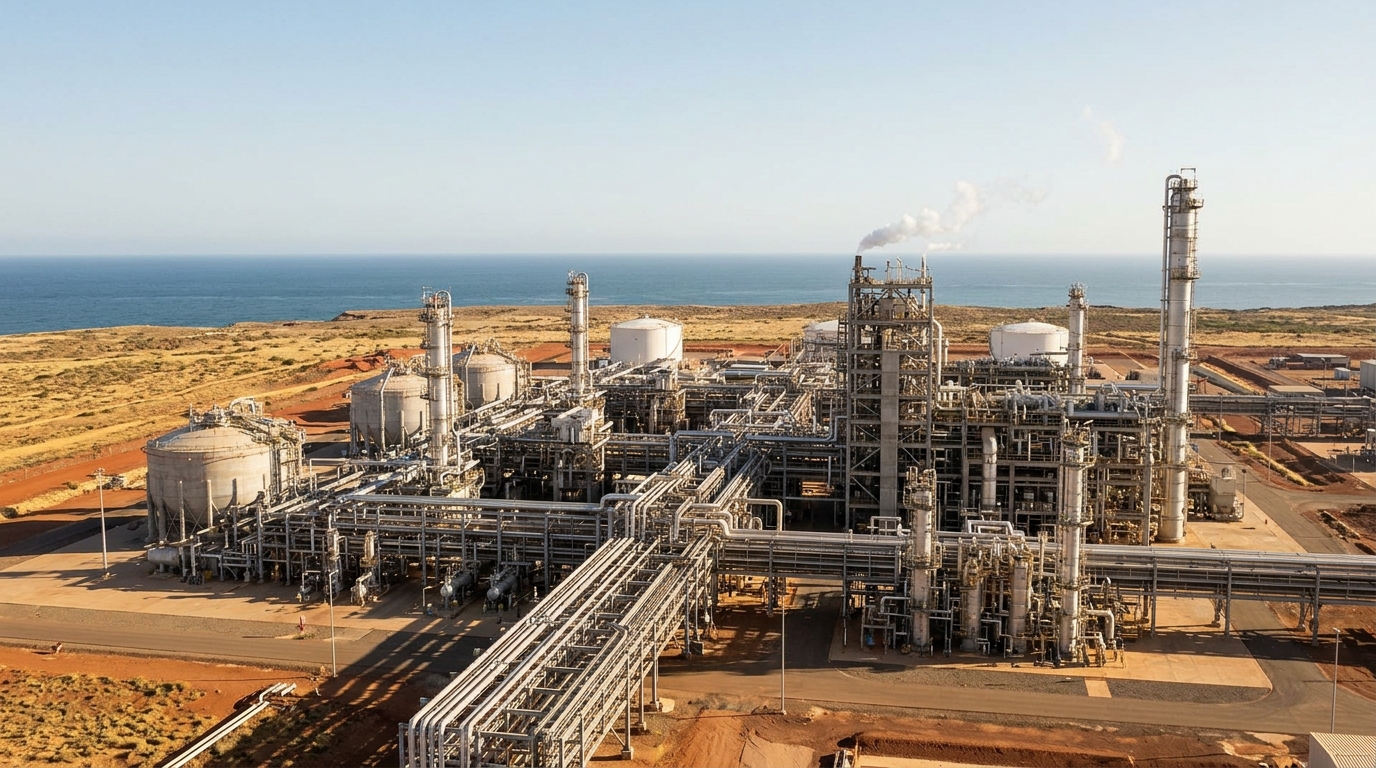
Five days before Chevron reports Q3 earnings on October 30, the United Nations issued a formal warning to the company. Satellite monitoring identified methane plumes above the Gorgon LNG plant on Barrow Island off Western Australia on five consecutive passes since November. The most recent reading, taken in late August, logged about 7.8 tonnes of methane per hour, a rate that would exceed the EPA’s “super-emitter event” threshold. The Western Australian government has opened an investigation to understand what compliance or regulatory measures may be required.
Chevron’s response: satellite data carries “a wide range of uncertainty.” Analysts expect about $4.86 in Q3 earnings per share against $1.85 a year ago, and CVX closed Thursday at $233.21 after a strong run since January. The Gorgon headline is uncomfortable, but it is not moving the stock. What it does do is sharpen the question serious long-term investors should be asking: can Chevron convert its methane liability into a durable revenue line?
The market says yes, and it is moving fast. Some industry research pegs the global liquefied biogas market at about $835.7 million in 2026 and forecasts roughly $1.48 billion by 2031, implying about a 12% compounded annual rate. Agricultural manure and crop residues are often cited as a major share of biogas feedstocks, but precise global splits vary widely by source. The IEA has said only a small fraction of sustainable biogas potential is being captured today, meaning the resource base is not the constraint. The infrastructure to collect, compress, and monetize it is.
That is precisely where Chevron has spent the past three years building quietly. Through its CalBio joint venture, the company completed a central processing facility in Hilmar, California, converting dairy farm waste into pipeline-grade renewable natural gas. Through Brightmark, it has been developing a network of dairy RNG projects across the United States. Its New Energies division now lists renewable fuels alongside carbon capture, hydrogen, and power, and the company has pointed to a $10 billion lower-carbon capital allocation between 2021 and 2028.
The commercial logic for field-scale agricultural methane liquefaction is straightforward. Dairy farms and feedlots are point sources of high-concentration methane, far easier to collect than ambient atmospheric gas. Liquefying that output into bio-LNG unlocks heavy-duty transport markets where road-grade bio-LNG can command a premium over pipeline gas. Estimates of end-use shares differ by report, but heavy-duty transport is widely treated as the core near-term demand driver for liquefied biogas. Chevron’s existing CNG fueling footprint, marketed nationally under the Chevron and Beyond6 brands, provides a distribution channel competitors cannot easily replicate.
Chevron is not the only major building out its LNG book while managing a credibility gap between fossil operations and lower-carbon ambitions. ConocoPhillips has locked in 12.2 million tonnes per annum in LNG offtake agreements and faces its own Q3 earnings test on November 5.
The risk is not technical. It is sequencing. Gorgon’s underperforming carbon capture system has already embarrassed the company once, and the UN warning arrives at a moment when Chevron is asking investors to trust its low-carbon credentials. A credibility gap between stated methane management ambitions and satellite-verified operational performance is not a minor ESG footnote. It affects the company’s social license to site new infrastructure near agricultural communities.
For investors, the practical question is whether Chevron’s agricultural methane investments grow large enough to matter against a roughly $450 billion market capitalization. Today they do not. But they do not need to in year one. They need to demonstrate that the economics work at scale, that regulatory frameworks like the EPA’s Renewable Fuel Standard continue generating compliance credit revenue, and that the Gorgon situation does not expand into a broader regulatory tightening of its upstream operations.
CVX at roughly a 3% dividend yield and a debt-to-equity ratio around 0.19 gives patient investors a stable base while the biogas thesis develops. The Gorgon warning is a reminder that the methane story cuts both ways.