
October 19, 2026
Bonus Content: Philip Morris Earnings Wednesday: Can ZYN and IQOS Carry the Dividend?
When news broke overnight about China’s Moonshot AI unveiling its new model…

The market gapped down 1% before most traders even poured their morning coffee…
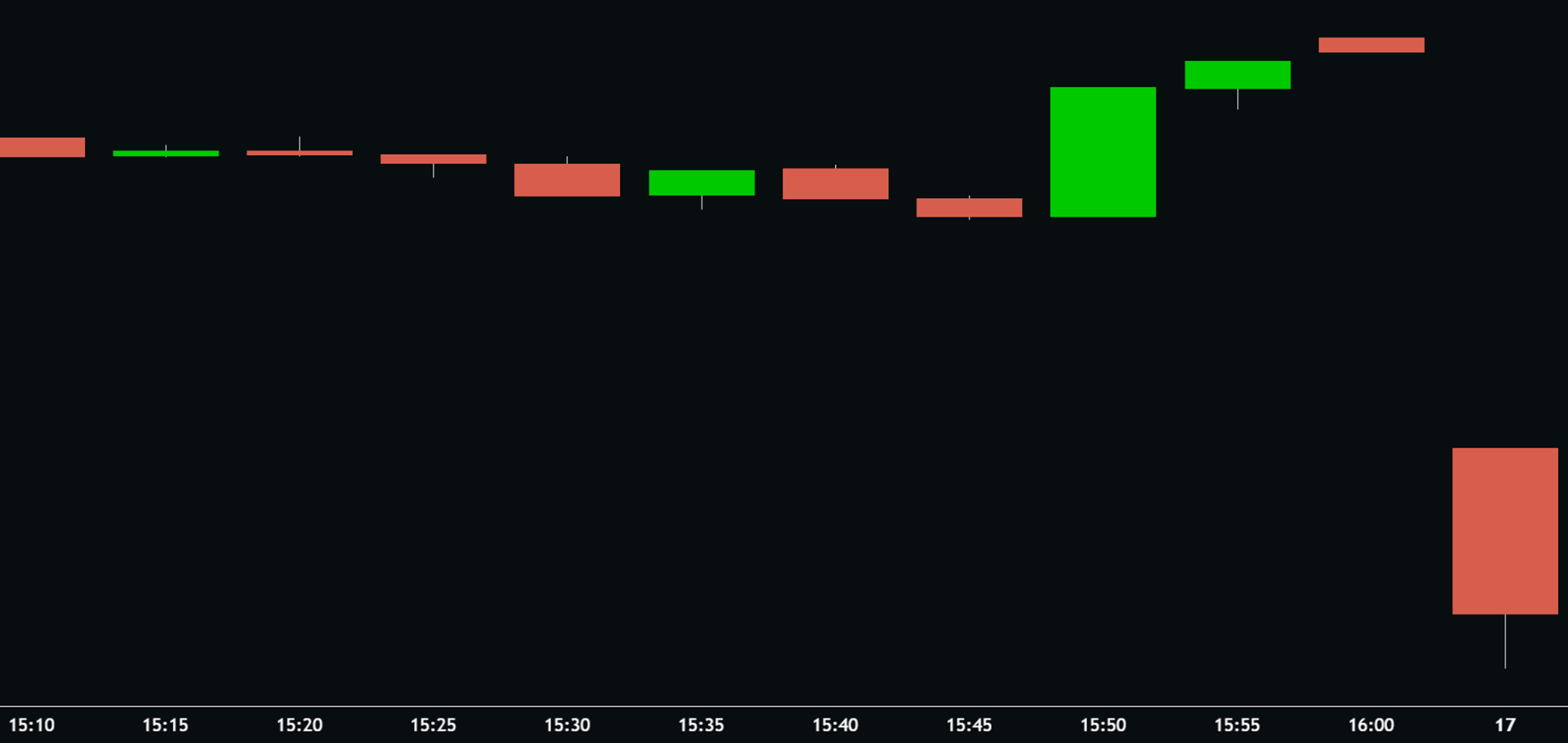
For standard portfolios, it looked like the start of another stressful day…
And over the next two hours, the market barely crawled higher… moving a tiny 0.2%…
To traditional buy-and-hold investors, a 0.2% move is practically useless…
Yet, according to our research, anyone who ignored the overnight headlines and waited until exactly 9:50 AM Eastern could have locked in a $529 payout before lunchtime… on a simple $1,000 starting stake…
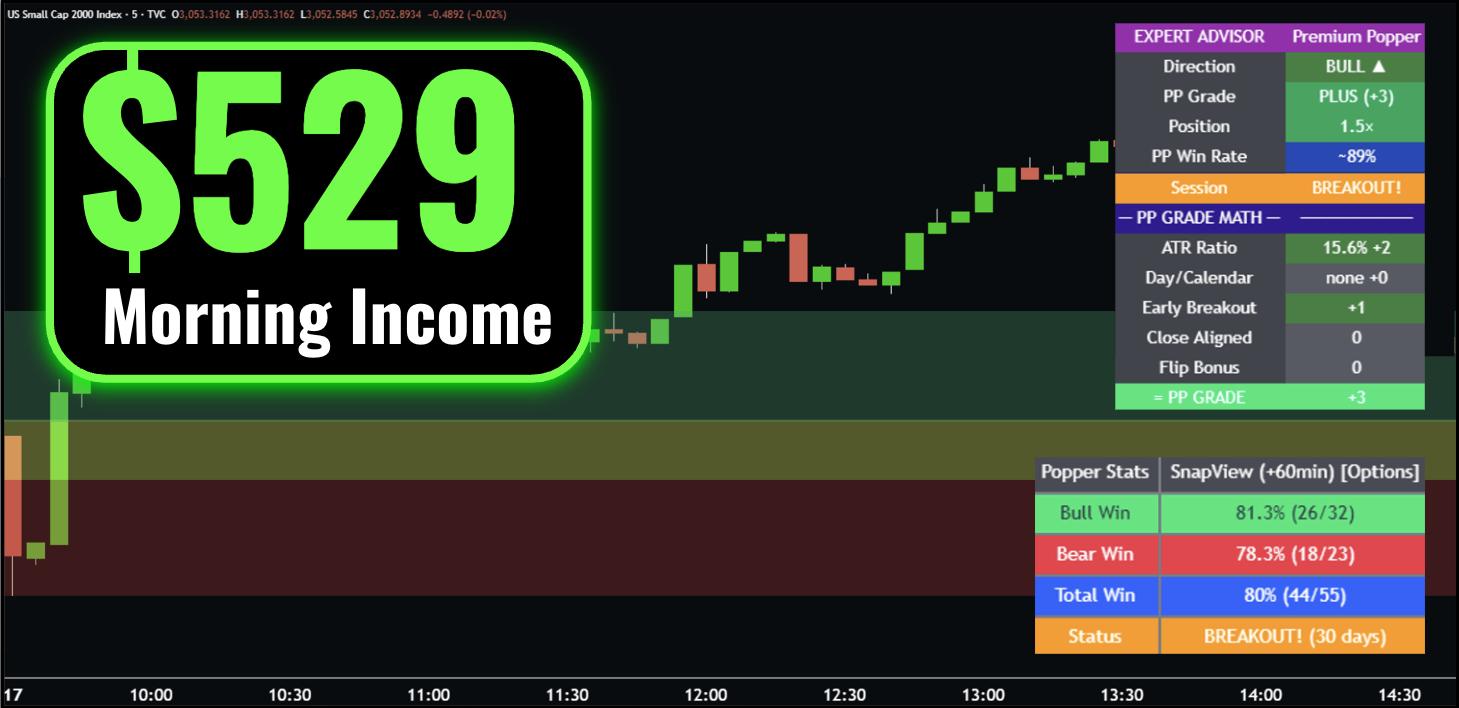
That would not have been an isolated fluke either…
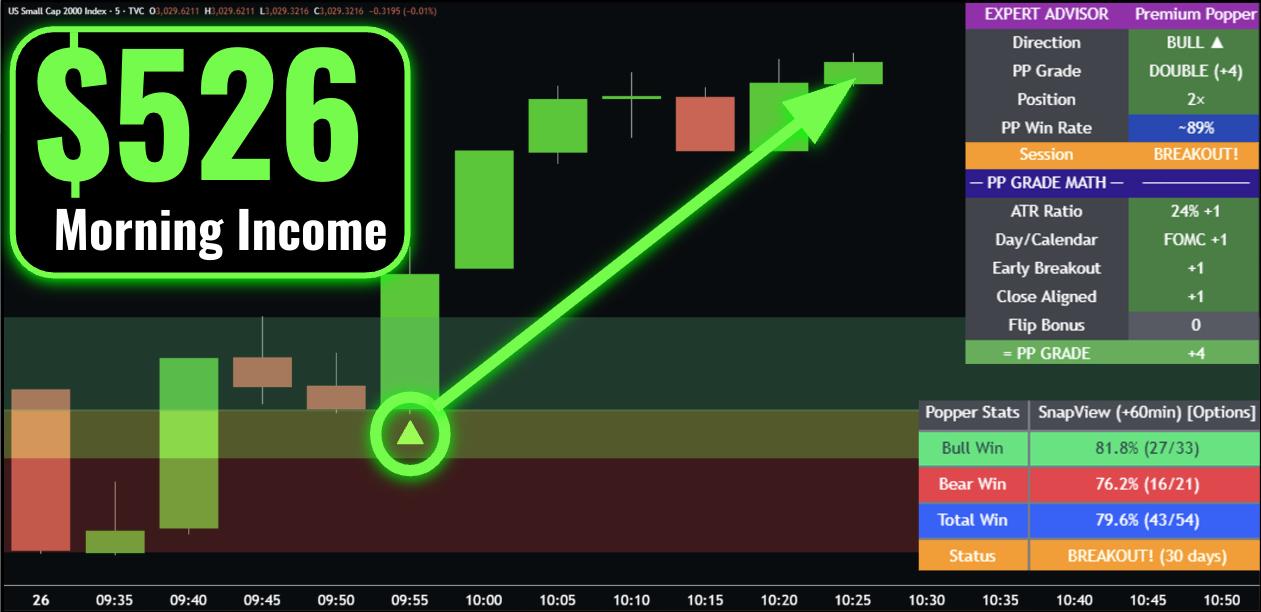
Back on June 25th, when inflation surged past 4%…
And panicked investors expected a massive market beatdown… the market moved just 0.3% after the open… yet that exact same morning setup yielded another $526 payday before lunch…
Of course, there would have been smaller gains and some that did not work out, but…
How would it have been possible to pull $500+ out of the market on a tiny fraction-of-a-percent crawl… while traditional traders are getting chopped to pieces?
It all comes down to an institutional phenomenon that happens during the first 20 minutes of every trading day…
Between 9:30 AM and 9:50 AM, Wall Street heavyweights enter a massive brawl to settle block orders… pushing nearly 25% of the entire day’s volume into a brief 20-minute window…
Right around 9:50 AM, the brawl ends… the dust settles… and the market literally hands us its direction for the rest of the morning…
By placing just one simple trade on one ticker right as that direction becomes clear…
You give yourself a shot to walk away with $500 in hand before lunch, leaving you completely free for the rest of your day…
While I cannot make any guarantees in the market…
Recently, I sat down live on camera with a former money manager to lay out the floor data behind this 9:50 AM morning phenomenon…
And how anyone with a normal brokerage account can take advantage of this step-by-step…
Tap here to watch the complete video breakdown before access is taken down.
See you there,
Silas Peters
Philip Morris Earnings Wednesday: Can ZYN and IQOS Carry the Dividend?

Philip Morris International reports third-quarter results before the open on Wednesday, October 21, and the numbers investors receive will either validate or complicate one of the more compelling income stories in the market today.
Analysts expect the company to announce earnings of $2.29 per share before markets open Wednesday morning. The Zacks consensus on revenue sits at $11.42 billion, implying roughly 5.3% top-line growth over the prior-year quarter. PM itself updated its own Q3 adjusted EPS guidance range to $2.29 to $2.34, now including an estimated one-cent favorable currency impact.
The Macro Headwinds Are Real
Getting there won’t be clean. Brent crude was down on Monday, and spot pricing has been trading around the $107 per barrel area, keeping input and freight costs elevated. Higher energy costs ripple through manufacturing and logistics for a company with operations across more than 100 markets.
The energy cost surge is not isolated to one sector. War-driven fuel inflation has added roughly $770 per U.S. household in extra gasoline and diesel spending since February, a demand-side squeeze that compounds input cost pressure for any global manufacturer.
The dollar presents a separate problem. The DXY index rose to 102.08 on October 19, up about 3.5% over the past year. The dollar fell 9.4% in 2025, then rose 4.3% in 2026 through October 12, a full reversal that compresses reported earnings for a business collecting most of its revenue in euros, yen, and emerging-market currencies. Philip Morris acknowledged as much, raising its full-year EPS guidance for currency reasons rather than any change to its underlying operational outlook.
The Smoke-Free Case
The bull argument is that IQOS and ZYN have become big enough to absorb those pressures. Smoke-free products accounted for approximately 42% of total net revenues in Q2 2026. Net revenues grew 10.4% to $11.2 billion, with both the smoke-free segment (up 11.7%) and combustibles (up 9.5%) contributing.
ZYN’s position in the U.S. is the most closely watched piece. In June, Philip Morris expanded the portfolio with ZYN ULTRA in 9mg and 11mg. The FDA authorized 11 ZYN ULTRA products in August and earlier issued 20 flagship ZYN products modified-risk orders for nicotine pouches, permitting Philip Morris to market them as lower-risk alternatives to cigarettes.
Excise-driven price increases in Japan and flavor restrictions in Europe likely weighed on IQOS volumes in Q3, while heightened U.S. nicotine pouch competition and tough ZYN shipment comparisons may have added further pressure. Wednesday’s report will show how much the ZYN ULTRA launch and accelerated investment spending actually moved the needle.
The Income Foundation
For wealth-builders who own PM as a dividend compounder, the more durable data point arrived last month. Philip Morris raised its quarterly dividend by 8.8% to an annualized rate of $6.40 per share in September. The company has increased its annual dividend every year since going public in 2008, representing a total increase of 248%, or a compound annual growth rate of 7.2%. At a stock price around $205, that yields just over 3.1%.
The 8.8% increase signals management confidence in cash generation, but the main risk remains any slowdown in smoke-free momentum from regulation, competition, or category maturity, alongside the currency and commodity pressures already in place.
What to Watch Wednesday
Three metrics will determine whether the quarterly results extend or undercut the income case. First: the smoke-free share of net revenues. A move above 42% signals the transition is keeping pace with combustible pricing gains rather than lagging behind it. Second: U.S. ZYN shipment growth, which needs to show acceleration from Q2’s modest 1.8% to justify the accelerated commercial investment. Third: any revision to the full-year adjusted EPS range of $8.35 to $8.50, which was last raised on currency alone.
PM carries a beta well below 1. It outperformed the S&P 500 by more than 13 percentage points over the past three months as investors sought defensive positions during the AI-sector unwind. That premium positioning makes Wednesday’s result consequential: the stock is priced for execution, and a second consecutive ZYN disappointment would be difficult to dismiss as noise.