September 4, 2026
ARC Resources is now on Shell’s balance sheet
Shell does not do things small. On September 2, Shell completed its acquisition of ARC Resources, an energy company focused in British Columbia and Alberta, following receipt of all required shareholder, court and regulatory approvals. The deal is done. The barrels are already flowing.
He Doesn’t Buy Gold. He “Skims” It.
A former hedge fund manager ranked in the top 1% by Barron’s has developed a three-step strategy to profit from gold – without buying a single ounce.
His followers have had the chance to collect $2,975… $3,781… and even $6,786 at a time. With a 73% win rate.
He calls it “Gold Skimming.” And he’s just revealed the full strategy for the first time.
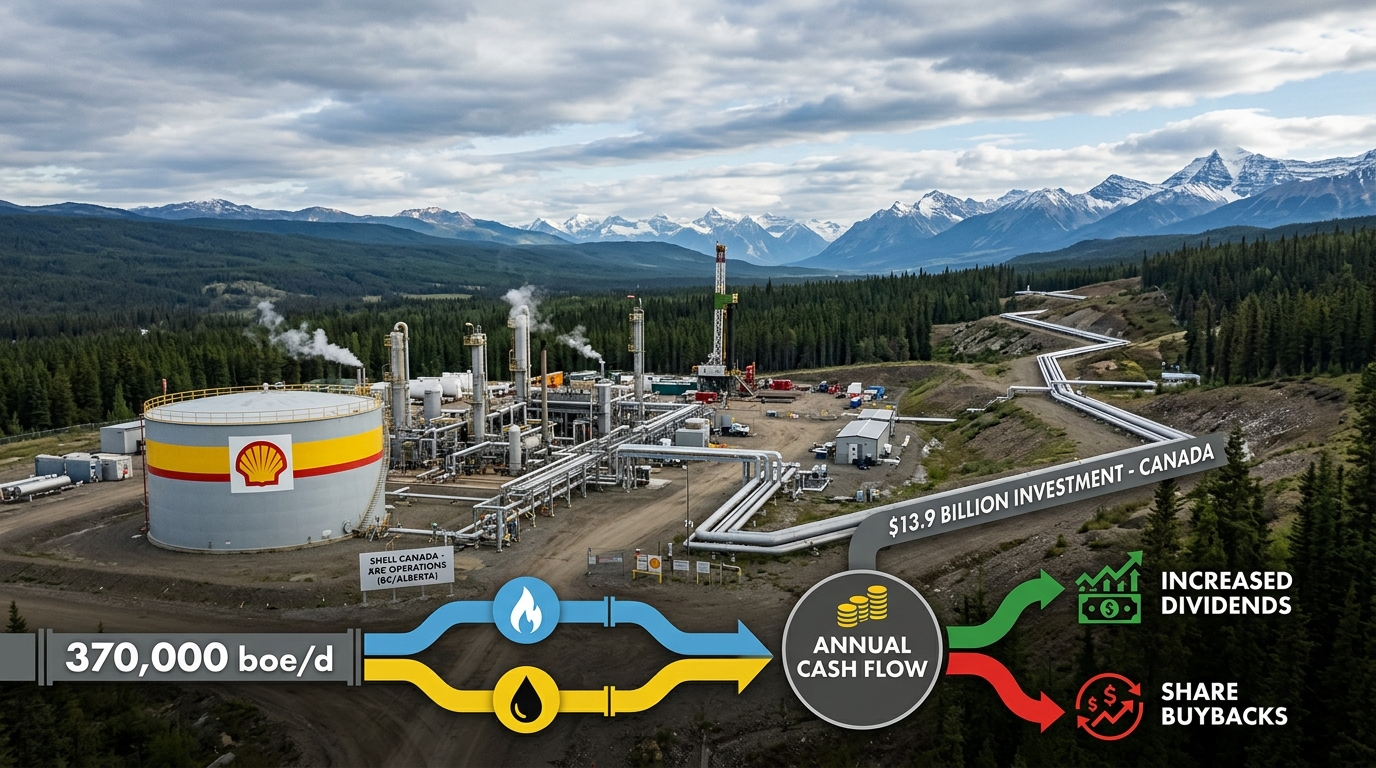
ARC shareholders received C$8.20 in cash and 0.40247 Shell ordinary shares for each ARC share, putting the updated equity value at approximately US$13.9 billion based on Shell’s closing share price of GBP £34.43 on September 2. Shell is also absorbing roughly US$2.5 billion in net debt and leases, bringing the enterprise value to approximately US$16.5 billion, funded via US$3.3 billion in cash and US$10.6 billion in new Shell shares.
What Just Landed on the Balance Sheet
The acquisition accelerates Shell’s strategy by adding approximately 370,000 boe/d immediately across liquids and gas, supporting a production CAGR of around 4% through to 2030 compared with 2025. That production CAGR matters in context: the 2025 Capital Markets Day aim was 1% CAGR production growth in Upstream and Integrated Gas combined from 2024 to 2030. Four times the original growth target, delivered in a single transaction.
Shell says the ARC acquisition significantly scales its contiguous Montney position around Groundbirch and Gold Creek, creating a “new low-cost heartland” with integrated gas-to-liquids optionality and upside if LNG Canada Phase 2 proceeds to a final investment decision. ARC’s substantial natural gas reserves complement Shell’s existing LNG operations in Canada, where Shell already holds a significant position in LNG Canada, with its Groundbirch assets supplying gas to the facility and the domestic market.
On May 21, 2026, the board of a federal bank voted unanimously to lend nearly $3 billion to build a gold mine on American soil. Congress got 25 days notice. Nobody objected.
Final papers are expected in the second half of this year. The day that ink dries, three things happen at once:
One more detail. The company’s own filings cite “substantial support and partnership from the Department of War,” a phrase we’ve never seen on a gold project. The reason: alongside its gold, the deposit holds a metal China formally banned from export to the United States. The only domestic reserve in the country.
The company is about one fiftieth the size of Newmont.
The Dividend Case Is Stronger Than Buybacks Alone
Shell has been a disciplined capital returner. Shell has said it targets returning 40% to 50% of cash flow from operations to shareholders through a 4% progressive dividend and share buybacks, and the buybacks announced with Q1 2026 results on May 7 were the 18th consecutive quarter of buybacks of at least US$3 billion. That is not a company that stops buying back shares lightly.
For income investors weighing Shell against the broader energy sector, the question of dividend durability is not unique to one ticker. The macro backdrop has pushed many investors toward companies with the balance-sheet depth to keep paying and growing distributions regardless of where oil prices settle. an analysis of dividend-resilient companies built to pay through uncertain economic conditions offers useful context for how Shell’s capital-return profile compares with other names built around the same principle.
But the ARC deal argues for a different emphasis going forward. ARC is expected to generate approximately $1.5 billion in average annual free cash flow based on normalized 2026-2030 price assumptions. Shell also expects around $250 million of annualized synergies within a year of closing, while keeping 2027-2028 cash capital expenditure within its existing $20-22 billion range. Synergies on top of $1.5 billion in incremental free cash flow, without blowing out the capital budget, is precisely the kind of acquisition that gives management room to lift the dividend rather than merely defend it.
Shell’s annual dividend currently stands at $3.02 per share, with a yield around 3.3% and a payout ratio around 33%. That payout ratio leaves substantial headroom. Buybacks at $3 billion per quarter reduce share count and lift per-share metrics, but they do nothing for the income investor who holds Shell precisely because of its growing quarterly distribution. The transaction is expected to generate double-digit returns, bolster long-term cash flows, and be accretive to free cash flow per share from 2027 onwards. Accretion to free cash flow per share starting in 2027 is the direct precondition for a dividend increase, not just more repurchases.
IPO Insider Warns: “Avoid OpenAI and Anthropic’s IPOs! Until You See This”
IPO insider, Jason Bodner, reveals how ordinary investors could risk their retirement if they invest in OpenAI and Anthropic’s IPOs the wrong way.
But if you make this one small change, you could potentially set up a six-figure nest egg.
Risks to Watch
Shell issued new ordinary shares to fund the equity portion of this deal. That dilution is real before the ARC cash flows fully offset it, which is why the accretion does not arrive until 2027. Energy prices remain the dominant variable. Price fluctuations in crude oil and natural gas, changes in demand for Shell’s products, and currency fluctuations all sit between today’s production numbers and the dividend growth that long-term holders are counting on. Integration risk in the Montney is lower than it would be for a bolt-on in unfamiliar territory, given how directly ARC’s acreage abuts Shell’s existing position, but execution still requires discipline.
The Wealth Takeaway
The ARC close confirms something worth remembering across every energy major: production growth built on low-cost, long-duration assets compounds in ways that buybacks cannot. A buyback reduces shares outstanding. A Montney basin producing 370,000 boe/d every day generates cash that supports dividends, funds the next development well, and keeps the balance sheet stable when oil pulls back. For Shell holders, the question is no longer whether this deal gets done. It is whether management uses the incoming free cash flow to grow the dividend at a rate that reflects what just landed on the balance sheet.