May 21, 2026
Walmart’s Quarter Was Fine. That’s the Problem.
A $3B revenue beat, a guidance miss, and a consumer that’s quietly pulling back
The revenue beat was real. $177.8 billion against a consensus sitting near $174.8 billion – that’s not a rounding error, that’s a $3 billion gap. Adjusted EPS matched at $0.66. Gross margins ticked up. Global eCommerce grew 26%. On almost any scorecard you want to use, Q1 FY27 was a clean quarter for Walmart.
And then guidance came out.
Q2 adjusted EPS of $0.72 to $0.74. Street was at $0.75. Full-year FY27 EPS of $2.75 to $2.85 against a consensus of $2.92. Those aren’t catastrophic misses – but at 49x trailing earnings, the market isn’t paying for good. It’s paying for better-than-good, every quarter, reliably. A modest guidance miss at this multiple isn’t a footnote. It’s the whole conversation.
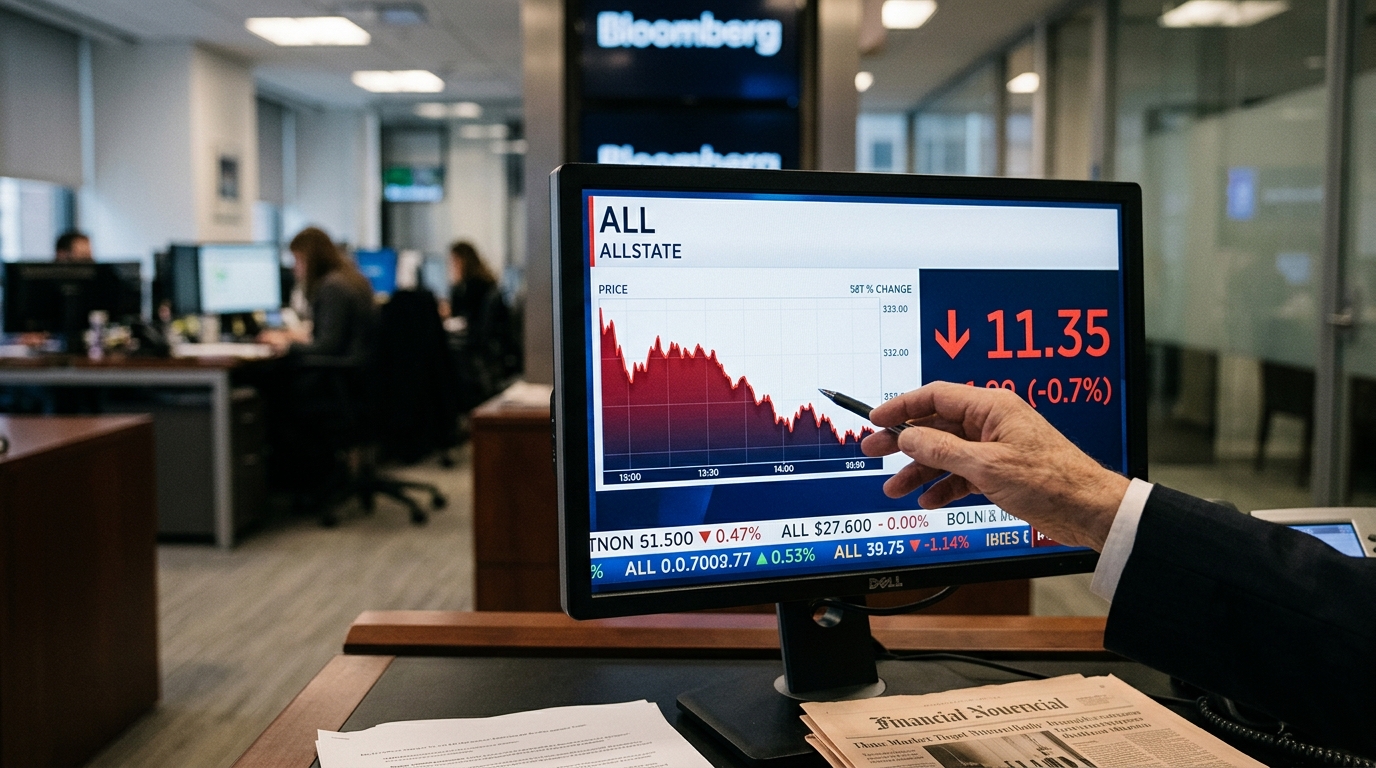
Shares slipped roughly 2% premarket. That’s the market doing the math in real time.
What’s interesting is how much the consumer picture has quietly shifted under the surface. Consumer confidence recently hit its lowest reading since 1952. That’s not a typo. Gas prices have been moving higher since March, and Walmart has historically noted that shopper behavior gets noticeably more defensive once pump prices cross $3.50 to $4 a gallon. Tax refunds this quarter were meaningful in size – but the early read is that a significant portion got saved, not spent. Particularly by the middle and upper-income households Walmart has been working hard to attract. That cohort now represents a larger slice of Walmart’s traffic than it did five years ago. Which is great when uncertainty drives them to trade down toward value. Less great when they decide the smarter move is to sit tight and spend nothing.
Slight tangent, but it matters: whatever language management uses on the call today about tariff pass-through ripples directly into Dollar General and Dollar Tree. Those two import a higher share of general merchandise and carry less supplier leverage than Walmart. If Walmart is absorbing tariff pressure and still guiding cautiously, the math at dollar stores is worse. Today isn’t a single-stock story.
Iran War Shock: What I Was Told In That Private Meeting
On January 7th… just outside Washington, D.C… I sat across from a man whose family has been tied to global power for decades.
Oil deals. Intelligence circles. Government insiders.
He leaned in and told me something that changed everything I thought I knew about the Iran war.
What you’re seeing on the news? It’s not the real story.
The strikes… the chaos… the escalation…It’s all part of something much bigger.
And the only reason I know this is because of him – an anonymous contact who risked everything to pass this information along.
Here’s the part people tend to skip when they look at Walmart’s income statement. The actual growth engine isn’t the store. It’s what’s running beside the store. Global advertising revenue grew 37% in Q1 – Walmart Connect, the U.S. ad business, was up 36% alone. Membership fee revenue grew 17.4% globally, with total memberships near 30.7 million heading into 2026. These segments carry operating margins that dwarf anything the core retail business produces. Advertising and membership are why Walmart can absorb price pressure on groceries, keep shelves competitive, and still show operating income growing faster than sales. FY26 full-year revenue was $713 billion across more than 10,900 stores in 19 countries, serving roughly 280 million customers weekly. Grocery is about two-thirds of U.S. revenue, which gives the business a structural floor. But advertising and membership are the margin story. And that story is still intact.
That’s what makes the guidance miss confusing, honestly.
The flywheel is working. eCommerce up 26%. Ads up 37%. Memberships growing. Higher-income households coming through the door in bigger numbers. And yet management is guiding Q2 EPS below what analysts expected, keeping the full-year sales range unchanged at 3.5% to 4.5% in constant currency, and flagging enough macro uncertainty that the forward EPS range of $2.75 to $2.85 came in a full dime below Street consensus. That gap tells you something about what management is actually seeing in the data – not what they’re willing to say out loud yet.
- Q1 Revenue: $177.8B vs. $174.8B est. — beat by ~$3B
- Adjusted EPS: $0.66 vs. $0.66 est. — in-line
- Adjusted operating income: $7.5B, +5.1% constant currency
- Q2 EPS guidance: $0.72–$0.74 vs. $0.75 Street est. — miss
- FY27 EPS guidance: $2.75–$2.85 vs. $2.92 consensus — miss
- FY27 net sales growth: 3.5%–4.5% constant currency — unchanged
- Global eCommerce growth: +26%
- Global ad revenue: +37% | Walmart Connect U.S.: +36%
- Membership fee revenue: +17.4% globally
- Trailing P/E: ~49x | Forward P/E: ~45x | 5-yr avg: ~36x
Modern Defense Has a Redundancy Problem
Modern military defense strategy is built around one key idea: redundancy. Instead of relying on a few large, vulnerable systems, the U.S. is shifting toward distributed networks – constellations of satellites, layered communications, and backup capabilities that keep working even if one piece fails.
Redundancy only works if replacement and testing can happen quickly. A satellite that takes a year to replace isn’t real redundancy. A system that can’t be validated fast enough doesn’t stay reliable.
That’s where logistics – not just technology – become strategic. A small aerospace company is building its model around speed, flexibility, and rapid access – helping reduce the time between need and deployment.
In a world where resilience defines readiness, that capability is gaining attention.
See why investors are watching this overlooked layer of defense and space infrastructure
The valuation is the context that makes all of this matter more than it otherwise would. WMT was trading near $131 heading into this morning, up roughly 18% year-to-date. Forward P/E around 45x against a five-year average closer to 36x. That premium exists because investors believe the advertising flywheel, the membership growth, and the eCommerce trajectory justify a re-rating. And they might be right. But premium multiples require premium execution – and a guidance miss, even a small one, creates friction with that thesis. Not a thesis-breaker. Friction.
What I’m watching on the call: tariff language. Specifically, whether management talks about absorbing cost increases or passing them through. That one distinction changes the margin math meaningfully. Also watching how they characterize the low-income shopper – that cohort has been under pressure from reduced government support, and any traffic softness there bleeds downstream into the dollar store sector fast.
The numbers today were fine. Maybe better than fine on the top line.
But Walmart doesn’t move on what already happened. It moves on what management thinks is coming next. And right now, what’s coming next sounds like a consumer who’s still spending – just more carefully, more selectively, and with a lot less confidence than they had six months ago. Whether that stabilizes by Q3 or gets worse is the question nobody on the call will answer directly.
Worth a look before the open.
– The Cheap Investor