May 19, 2026
The Trade Running While You Watch AI
Heavy assets, low obsolescence. Already working.
☰
Something has been running since February. Quietly. No CNBC segment leading with it, no Reddit thread going viral about it, no earnings call buzz driving it. Just price action doing what price action does when money moves with conviction.
It’s called HALO. Heavy Assets, Low Obsolescence.
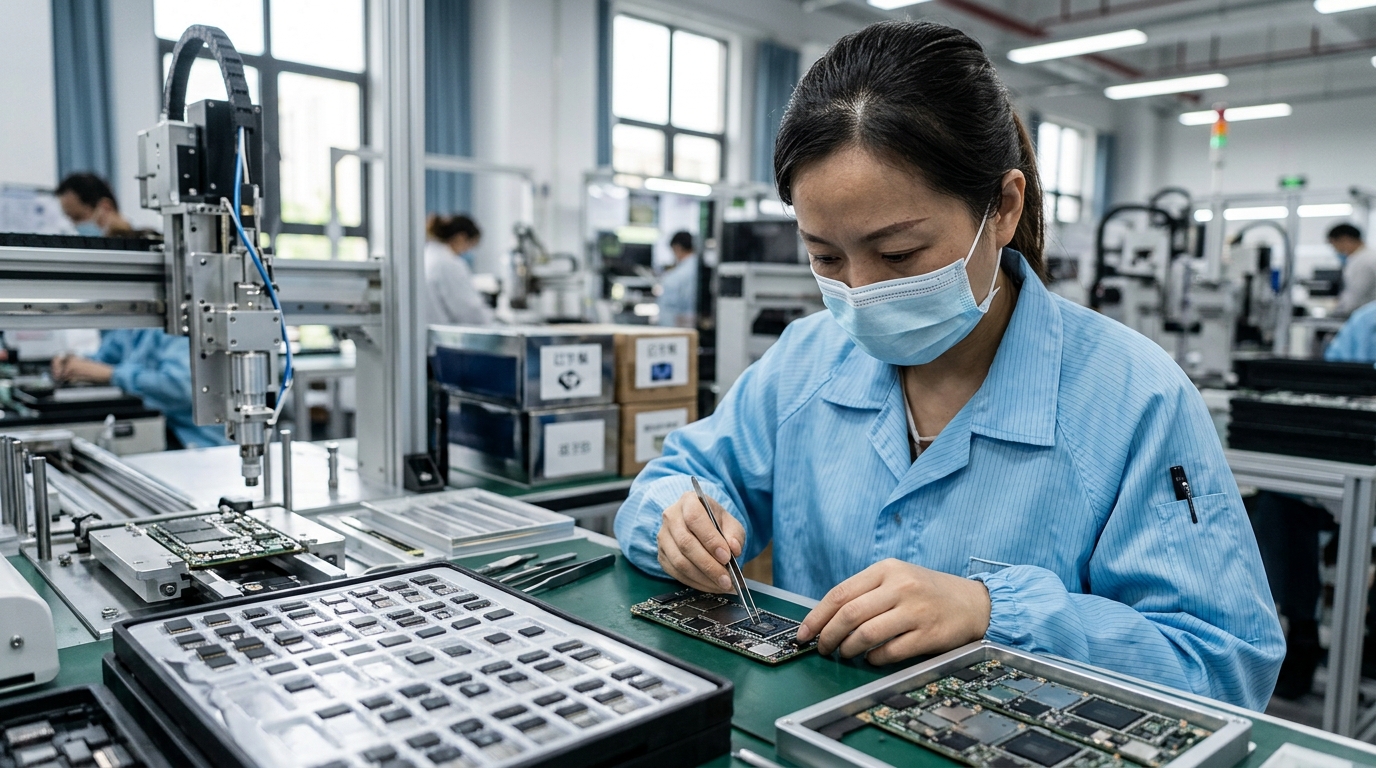
Josh Brown, CEO of Ritholtz Wealth Management, coined the term in early 2026. The core idea is almost aggressively simple: in a world getting reshaped by AI, the most interesting opportunity might not be picking the AI winners. It might be owning the companies that AI cannot displace. Pipelines. Freight networks. Mining operations. The bulldozer doesn’t get replaced by a language model. The refinery doesn’t get disrupted by a chatbot. You still need the physical stuff – probably more of it, not less, as AI-driven demand for power and infrastructure accelerates.
Goldman Sachs and Morgan Stanley have both worked HALO-style framing into their research this year. That shift matters. When two of the largest institutional research desks start organizing their thinking around a concept, it usually means the money was already moving and the language just caught up.
“Top Gun” Energy Is Entering the Space Economy
In Top Gun, Maverick’s need for speed wasn’t about thrills – it was about survival.
That same dynamic is emerging in the space economy.
As satellites and hypersonic systems move from research into real-world use, speed is starting to determine who stays relevant.
Testing delays, launch bottlenecks, and crowded schedules are slowing everything down.
The next advantage isn’t just bigger rockets. It’s faster access and faster validation.
A small, operational aerospace company is positioning right at that pressure point – where speed, testing, and access come together.
Here’s where I’m at on the numbers. Caterpillar is up roughly 50% year to date. Deere is up about 20%. FedEx approximately 22%. ExxonMobil close to 28-30%. Coca-Cola roughly 15-16%. The S&P 500, by comparison, is up around 6%. The Roundhill Magnificent Seven ETF is down on the year. Energy, materials, and consumer staples are some of the stronger corners of the market in 2026. Capital-light software has been one of the worst.
That divergence is not noise.
Slight tangent, but it matters: Goldman Sachs estimated that roughly 45% of the S&P 500 is now tied to AI-related companies. What that implies – and this is the part that gets skipped in most coverage – is that the other 55% has been sitting there with less crowding, less multiple expansion, and more room to move on improving fundamentals. HALO isn’t contrarian for the sake of it. It’s just looking at where the earnings growth is actually coming from right now versus where the consensus assumed it would come from a year ago.
On May 14, 2026, Roundhill Investments launched the Roundhill HALO ETF, ticker LOHA. Roundhill is the same firm whose Memory ETF (DRAM) reached $9.8 billion in assets in 43 days – the fastest ramp ever for an ETF, according to TMX VettaFi. Brown joined Roundhill on a limited advisory basis after learning they were building the product. LOHA tracks the Akros US Heavy Assets Low Obsolescence Index, holds 100 equally weighted names, rebalances quarterly, and charges 0.35%. Top holdings include Cummins (CMI), AutoZone (AZO), TFI International (TFII), CSX, and JB Hunt.
Worth being clear: this is not an anti-AI position. Some of the names inside the HALO framework – Caterpillar is the obvious one – are actively deploying AI to improve margins and efficiency. The distinction is that they use AI as a tool. They are not threatened by it as a replacement. That difference is doing a lot of work right now in how institutional money is being allocated.
At Any Given Moment, Only 8% of Stocks Are Worth Owning
The other 92%? They’ll waste your time, your money, or both. Louis Navellier has spent 47 years building a system that separates the 8% from everything else – and he’s offering 3 FREE searches so you can see where your stocks fall. A? B? C? F? Find out in seconds. No credit card required.
The risks here are real and worth sitting with. McDonald’s fits the HALO profile on paper – physical real estate, franchise infrastructure, a durable brand – and it’s down on the year. Consumer sentiment is soft, food costs are elevated, and that combination hits McDonald’s core customer harder than most. Heavy assets don’t insulate you from a spending slowdown. That’s not a small caveat.
Caterpillar is the more complicated case. Q1 was strong – $17.4 billion in revenue, $5.54 adjusted EPS against a $4.65 consensus. But the company also flagged roughly $2.6 billion in expected tariff costs for 2026. And the stock is trading at an NTM P/E around 34x, well above its historical average closer to 25x. A lot of good news is already reflected in that price. The question isn’t whether the business is good. It is. The question is what happens to that valuation premium if tariff costs accelerate or end demand softens. That’s not a reason to dismiss the position – it’s a reason to size it with some humility.
AI’s NEXT Magnificent Seven
The Original Magnificent Seven Produced 16,894% Average Returns Over 20 Years.
But the Man Who Called Nvidia at $1.10 Says “AI’s Next Magnificent Seven Could Do It Even Faster.”
What’s interesting is that the move out of capital-light software and into physical asset durability doesn’t look like a short-term rotation. The earnings growth expectations for capital-intensive companies have been revised upward this year, while forecasts for capital-light software names have gone roughly flat. That’s a fundamental shift in the underlying story – and those shifts tend to have more runway than they get credit for early on.
I’m not saying HALO is the only thing worth owning. I’m saying it’s the thing worth understanding right now – before it shows up at the dinner table.