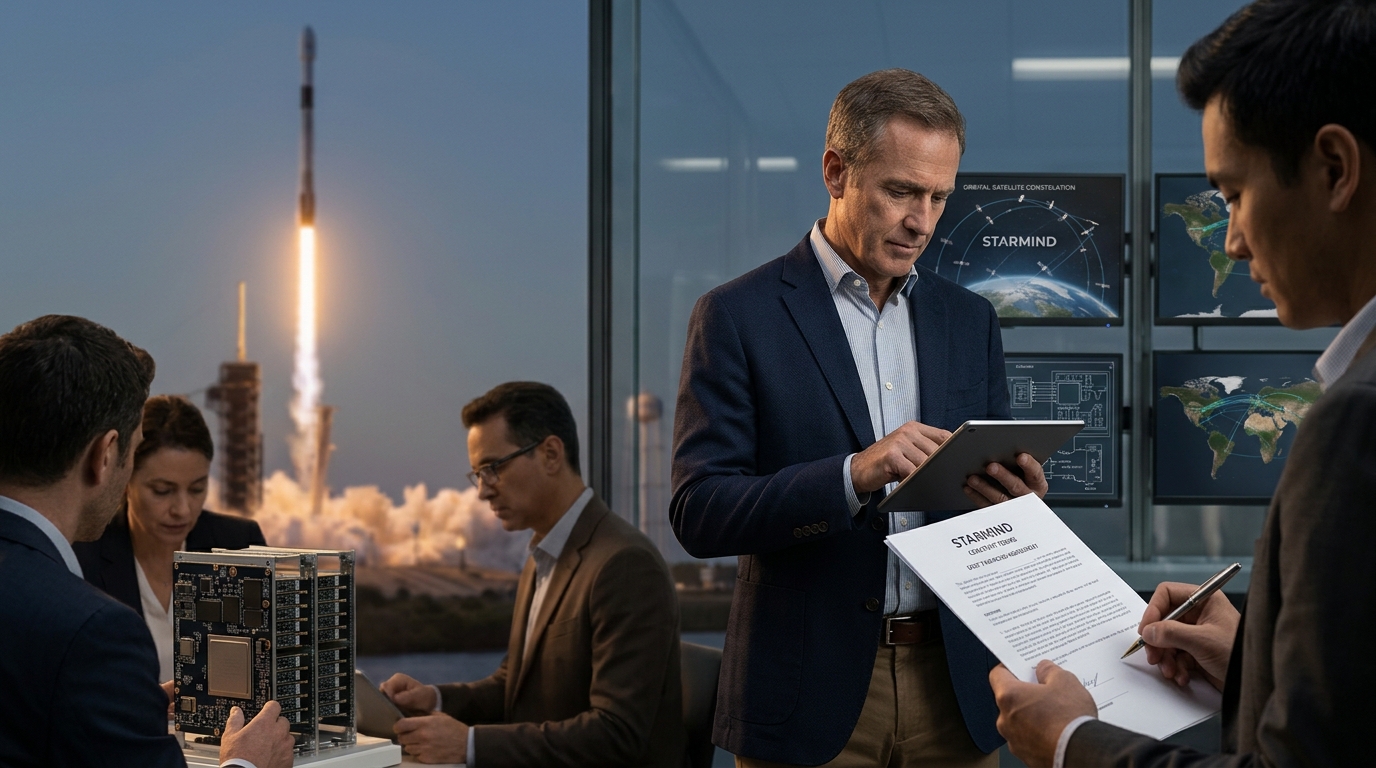
SpaceX now holds the first FCC authorization in US history for an orbital data-center satellite constellation. Whether that authorization is worth anything depends on a question the FCC cannot answer: will lenders allow the chips to leave the ground?
The FCC granted SpaceX approval for up to one million satellites to form an orbital data-center constellation, saying the authorization enables the Starmind constellation to operate “at unprecedented scale.” The authorization covers an optically linked satellite network at altitudes between 500 and 1,002 kilometres. It is the first time the FCC has approved an orbital data-centre constellation. The approval arrived Wednesday, November 25, over formal objections from Amazon’s Kuiper Systems and Viasat, and over the American Astronomical Society’s warnings about light pollution and orbital congestion.
SPCX shares pared losses on Wednesday and closed higher after falling as much as 9% intraday, eventually finishing 1.30% higher. That rebound should not obscure the deeper problem the stock faces. SpaceX shares still sit roughly 43% below their 52-week high of $225.64. The FCC approval did not address the constraint that actually drove that selloff.
The Lender Problem
Lenders backing SpaceX’s $43 billion debt package sought safeguards to prevent Elon Musk from sending the advanced Nvidia chips securing the financing into space. The lenders were concerned that deploying the semiconductors in orbital data centres could make them difficult to repossess and sell in the event of a default. The financing arrangement, known as Project Saturn, comprises a debt package that includes a $25 billion bond and separate chip-backed financing tied to Nvidia GPUs.
The largest tranche of SpaceX’s chip-backed notes paid a yield well above the average for US investment-grade corporate bonds, as bond buyers charged SpaceX extra because of the deal’s unusual structure and the risks tied to AI infrastructure. That premium tells you something the FCC approval does not: capital markets remain unconvinced. The license expands what SpaceX is permitted to do. It does not change what creditors will finance.
What the License Actually Covers
Nothing may fly above 600 kilometres until SpaceX files a modification with a final orbital-debris plan, and milestones run from one working satellite by November 25, 2033 to full deployment by November 25, 2040, with the license voiding if any milestone is missed. SpaceX has warned investors that orbital compute technology “has not yet been proven at commercial scale, or at all.”
Musk has promised a first launch into orbit in the fourth quarter of 2027, with a ramp-up in 2028, and Nvidia is to supply the chips for operating in space, specifically its Vera Rubin platform. A July 2026 Bain policy brief estimated that data-centre launches need to cost between $50 and $100 per kilogram to be economical. Starship changes that calculus eventually, but Starship is not yet flying at commercial cadence.
Bull vs. Bear
The bull case rests on sequence. The FCC moved from application to approval in under ten months. In October 2026, SpaceX reported net income of $4.4 billion on revenue of $14.6 billion for the quarter ended September 30, 2026. A company generating that kind of cash has more options than its lender disputes imply.
The bear case is structural. A hypothetical one-gigawatt orbital data centre could cost roughly $170 billion, and analysts note that launch costs would need to fall by about 70% for the project to be economically viable. The approval clears the regulatory hurdle but does not show that orbital data centres work technically or economically.
What Investors Should Watch
Three things will determine whether the FCC license translates into shareholder value. First, the final Project Saturn loan documents: if lenders locked in restrictions preventing SpaceX from launching the collateral chips, the orbital business loses its near-term chip supply. Second, Starship’s commercial launch cadence: industry analysts suggest the project will require an unprecedented launch cadence from Starship to meet the FCC’s mid-term deployment targets. Third, the debris-mitigation filing above 600 kilometres, which remains open and will determine whether the upper orbital shells are genuinely accessible.
The FCC said yes. The harder conversation is still happening in debt markets, where the people putting up $43 billion are deciding whether Musk’s chips belong on Earth or in orbit. That answer, not Wednesday’s license, is what moves SPCX.