Dear Investor,
Here’s a crypto stat that tells you everything about small coins…
Over the past 30 days, eight altcoins gained three times more than Bitcoin.
Then, in the very next week, six of those eight fell.
That’s micro coin investing in a nutshell. The moves are huge. In both directions. Fast.
Most people only think about the first half: finding the coin before it runs. And that matters.
But the investors who actually come out ahead are the ones who know the second half too.
When to take profits. How much to sell. How to avoid riding a 200% gain all the way back down to zero.
Because in micro coins, the difference between a life-changing win and a painful story is usually not the buy. It’s the exit.
That’s why Micro Coin Revolution doesn’t stop at telling you how to buy…
You’ll get the process we use to find small coins early. And, most importantly, you’ll see how we decide when to get out.
Altcoin momentum is building. Make sure you have a plan for both halves of the trade.
See the Micro Coin Revolution Presentation now.
To your massive success,
Bryce Paul
Crypto 101
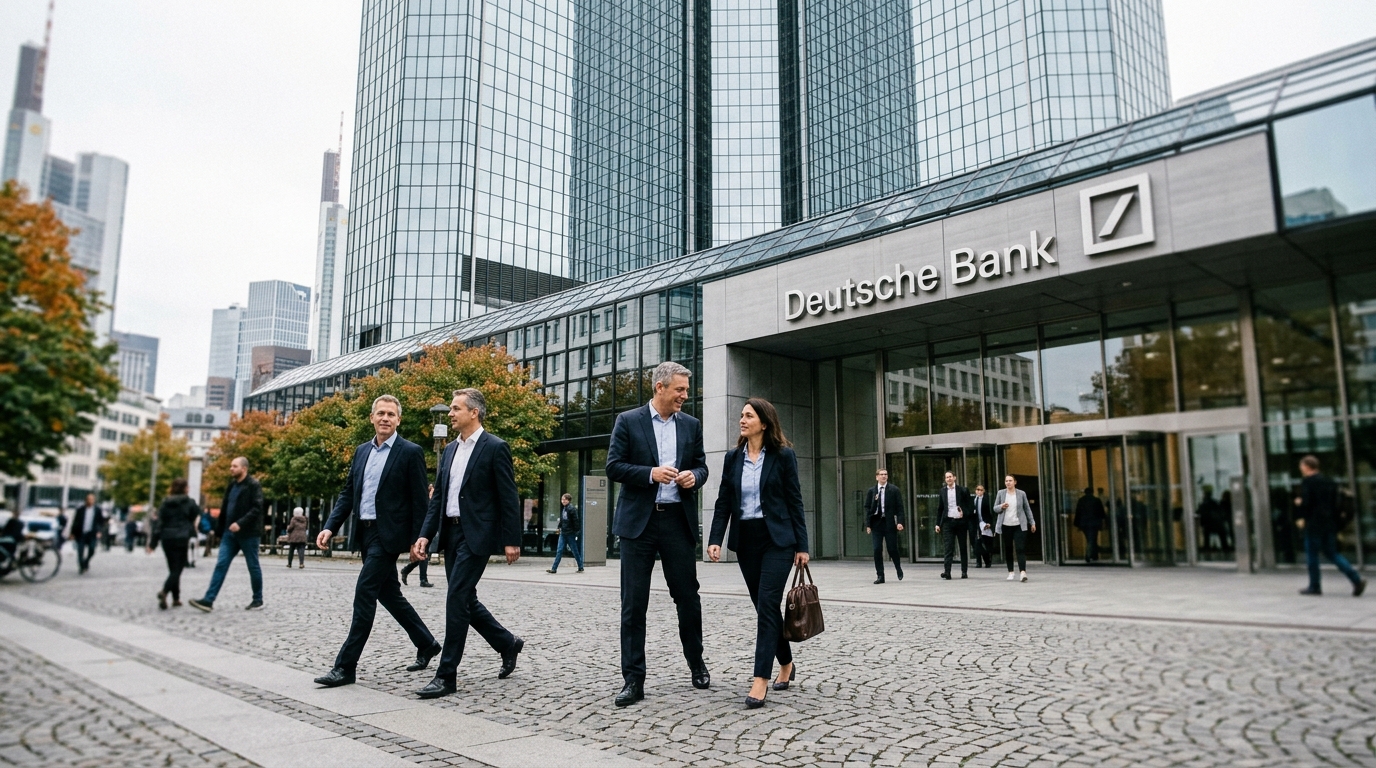
Deutsche Bank Is Buying Back Its Own Stock. It May Be Time to Follow.
Deutsche Bank posted post-tax profit of €1.9 billion in the third quarter, its third consecutive quarterly record. That alone would be a headline. But the number that actually matters for long-term investors sits elsewhere: return on tangible equity came in at 10.6%. The bank also beat on revenue, earnings per share, and costs. Pre-tax profit of €2.63 billion beat market expectations of €2.39 billion by roughly 10%.
The bank completed its second share buyback of 2026, bringing total repurchases for the year to €1.5 billion. Management is not returning capital because they have nothing better to do with it. They are doing it while the core businesses are producing double-digit returns and the group is generating record profits. That combination, growing earnings and shrinking the share count, compounds the per-share math in a way that dividend-only investors often underestimate.
The Bigger Trend
European bank stocks have outpaced the Stoxx Europe 50 Index since early 2024, and today’s European banks are doing what US banks did from 2013 to 2019: rebuilding capital, restructuring cost bases, and returning to double-digit returns on equity. Yet the valuation gap has not fully closed.
UBS, reporting alongside Deutsche Bank this morning, added its own data point. UBS reported Q3 net profit of $2.7 billion and underlying pre-tax profit of $4.1 billion. UBS also said it intends to complete its current $3 billion share buyback program by the time it reports fourth-quarter 2026 results.
BNP Paribas, also reporting today, posted a 14% year-on-year increase in Q3 net profit to €3.46 billion, exceeding analyst expectations, and announced a €1.3 billion share buyback. Three of Europe’s largest banks, all in one morning, all returning capital, all beating forecasts.
The ECB decides tomorrow, on October 29, 2026. Traders have been pricing in an overwhelming likelihood of no change in ECB interest rates at the October meeting. A hold is the expected outcome. What matters more for bank investors is the longer trajectory: economists in a Reuters poll expected a quarter-point rate rise at the ECB’s December 2026 meeting, and the same poll pointed to a possible move to 2.75% in December if the ECB does hike. Higher rates, all else equal, support net interest margins.
The ECB decision does not sit in isolation. Five major central banks are announcing policy within the same 60-hour window, making Lagarde’s press conference the one investors should watch most closely.
The Investment Case
The sector still trades at a discount to US peers, even after a strong run. That is the core of the opportunity: in many cases you are still paying a single-digit multiple for banks that are returning meaningful capital through dividends and buybacks.
Deutsche Bank is the clearest expression of the thesis. Chief Executive Christian Sewing said the bank was seeing encouraging momentum in Germany and had scope to exceed its 2028 target for return on tangible equity of more than 13%. A 10.6% RoTE today, with a credible path toward 13%-plus, is not a bank in crisis mode. It is a bank that has finished the restructuring chapter and is now writing an earnings-growth one. The CET1 capital ratio stood at 14.0%, at the top of the bank’s 13.5% to 14.0% operating range, providing capacity for continued shareholder distributions.
Building Wealth Around This Idea
Today’s European banks are rebuilding capital, restructuring cost bases, and returning to double-digit returns on equity, mirroring the US banking sector’s re-rating cycle from 2013 to 2019. That cycle, for US investors who held through it, was lucrative. Owning Deutsche Bank now means accepting currency exposure, ECB policy risk, and a slower-moving European economy. Position sizing should reflect that. For a long-term income-oriented portfolio, a 3% to 5% allocation to European financials, split across Deutsche Bank (DB), UBS, and a diversified vehicle like the iShares MSCI Europe Financials ETF, gives exposure to the compounding without concentration risk in any single institution.
The buyback and capital-return dynamic is not unique to European banks. US peers cleared stress tests and immediately authorized tens of billions in repurchases, showing how far the global banking sector’s capital rebuild has come.
Risks to Monitor
Provisions for credit losses rose 20% year on year to €501 million, including further commercial real estate de-risking. That is manageable today but worth watching if the eurozone economy softens further. French yields remain elevated, adding sovereign risk to BNP’s domestic book. And the ECB’s December meeting, where a Reuters poll found most economists expected a quarter-point rate rise, could tighten conditions faster than the cycle currently assumes. At 10.6% RoTE, Deutsche Bank has buffer. But neither profitability nor valuation support is infinite.
Daily Wealth Takeaway
When a company buys back its own stock aggressively, it is making a statement about where it sees value. Deutsche Bank returning €1.5 billion to shareholders in a single year is management saying clearly that the shares are worth more than the market is paying. Long-term investors who agree with that math, and can hold through the inevitable volatility of European policy uncertainty, may find that following the buyback is the most useful thing they do with this morning’s results.