
September 12, 2026
Bonus Content: China’s Consumers Are Barely Growing. What Tuesday’s Data Means for BABA, PDD, and Copper Before Xi Meets Trump
Most traders have never noticed the weird market anomaly that happens at 9:35 AM every morning.
They’re too busy with lagging indicators trying to predict the next move… when the market makers have already set the tone for the trading day.
It’s this weird anomaly that points us to the market maker’s key levels above and below.
And by playing the move within that range…
Regular folks like you have been able to reach for $100 or more (on a $1K stake) over 600 times in the last 2 years.
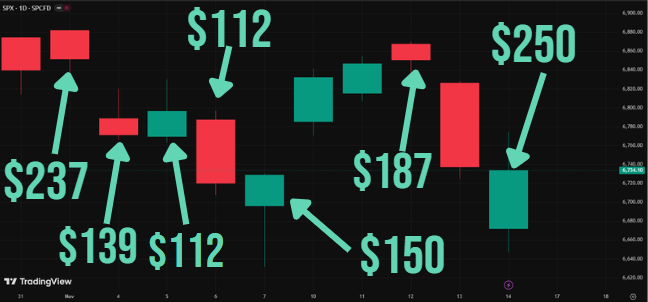
We’ve seen this straightforward approach play out whether the market broke out… broke down… or stayed choppy.
Granted, I can’t make trading guarantees here.
But I’ve opened up the data behind those trades, as well as how you can get in on the very next morning opportunity.
You’ll find the full details right here.
See you in the market.
Chris Pulver
China’s Consumers Are Barely Growing. What Tuesday’s Data Means for BABA, PDD, and Copper Before Xi Meets Trump

Tuesday, September 15 is a date investors in Chinese stocks, global consumer brands, and copper should mark on their calendars. China’s National Bureau of Statistics releases August data on retail sales, industrial production, and fixed-asset investment, and the numbers will arrive with unusual market weight: Trump and Xi Jinping are expected to meet in Washington on September 24, making this the last major read on China’s domestic economy before that summit.
What July Already Told Us
July’s data was not encouraging. Retail sales grew 0.6% in July from a year earlier, missing estimates of a 1.5% jump. Inside that number, the weakness was concentrated and severe. Auto-related sales dropped 17.0% year-on-year; building and decoration materials and gold and jewelry fell 14.2% and 10.1%. Government stimulus was supposed to cushion the blow. It didn’t. Citi analysts estimated that the pace of subsidy disbursement weakened again in July, with average daily sales supported by the subsidies falling to about 6.3 billion yuan ($934.8 million) from about 9 billion yuan the prior month.
Fixed-asset investment contracted 6.7% in the January to July period, while industrial output rose only 4.5%, undershooting estimated 4.8% growth. The picture that emerged: China’s export machine is outrunning its domestic economy by a wide margin, and consumers are not picking up the slack.
Tuesday’s Consensus and Why It Matters
August economic activity data are in focus next week, with retail sales and fixed-asset investment numbers likely to underline the continued divergence between resilient services demand and weak momentum for goods. The consensus call is for retail sales growth of 0.6% year-on-year, exactly matching July’s weak reading.
Persistent weakness in goods demand is likely to keep overall retail sales growth subdued, though services consumption offered a more constructive signal, with leisure, entertainment, and tourism activity relatively firm. That services-versus-goods split matters for how investors should position: a tourism rebound doesn’t help copper demand or BABA’s transaction volumes.
The Portfolio Stakes: BABA, PDD, FXI, and Copper
For holders of Chinese consumer internet names, the August figure is a direct fundamental input. China’s middle class has become more price-sensitive, forcing Alibaba to compete on price more aggressively than in prior years. This matters because even China’s flagship shopping events have shown slower momentum. Data provider Syntun reported that traditional e-commerce sales during the 618 shopping festival grew only about 0.9% year-on-year, versus roughly 15% growth the year before. Another retail miss adds pressure to already strained revenue expectations for both BABA and PDD ahead of their next earnings reports.
FXI, the iShares China Large-Cap ETF, carries its own specific vulnerability. Its holdings skew toward large, often state-linked firms in the Hong Kong market, which can make the fund more sensitive to shifts in Beijing’s policy stance, property-sector signals, and the commodity cycle than to a pure platform-company re-rating. A soft retail reading strips away the hope that stimulus is gaining traction.
Copper is the most globally visible pressure point. Weak household spending in China signals less construction activity, fewer appliances sold, and reduced manufacturing of consumer goods, all of which translate directly to softer copper demand. With copper prices elevated and miners priced for a strong cycle, the rally may have less margin for error if China’s consumer side fails to stabilize.
The Summit Dimension
Here is what makes Tuesday’s release more than a routine data point. Ahead of the Sept. 24 meeting, China has said it hopes to agree with the U.S. on tariff reductions at an early date. A weak domestic demand reading strengthens Beijing’s incentive to lock in a truce extension quickly, because Chinese exporters need the U.S. market more when their home consumers are not spending.
That dynamic cuts two ways for investors. A truce extension would be a short-term positive for Chinese equities broadly. But the deeper question, the one Tuesday’s data speaks to directly, is whether any trade deal addresses the structural domestic demand problem. It does not.
How to Think About Position Sizing
For investors already holding FXI or individual China consumer names, Tuesday’s release is a check on thesis, not a reason to act before the data arrives. If August retail sales come in at or below 0.6%, the summit-driven sentiment rally in Chinese assets is likely to be short-lived without a credible domestic stimulus announcement alongside it. If the number surprises to the upside, well above 1%, the case for BABA and copper broadens meaningfully ahead of September 24.
The wealth-building lesson here is not specific to China. Political summits create sentiment, but economic fundamentals determine whether that sentiment survives contact with the next earnings season. Watch the 0.6% number Tuesday. It will tell you more about the summit’s market impact than any statement either leader makes on September 24.