September 1, 2026
Foreign Investors Sold Korea for Months. The KOSPI Still Doubled.
Relentless foreign selling is opening measured access to one of the world’s strongest markets.
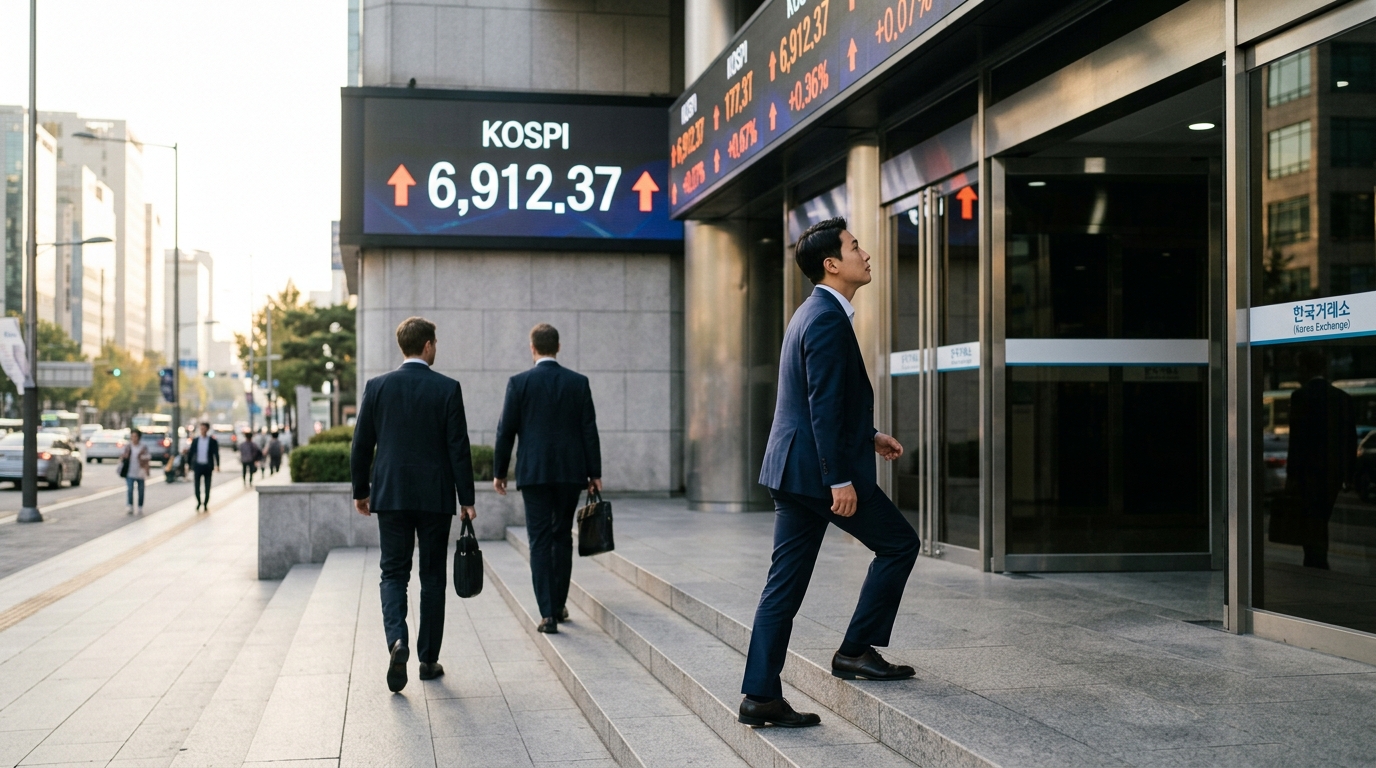
When a stock market doubles in a year and the people selling into it are still losing market share, that is worth pausing on. South Korea’s KOSPI closed at 6,912.37 on August 27, 2026, up 1.53% on the session. This is not a single-sector squeeze. It is a broad rally with growing support underneath it.
The macro case hardened further Thursday. The Bank of Korea raised its 2026 growth forecast to 3.3% from 2.6%, citing stronger momentum led by semiconductor exports. The central bank also raised its benchmark rate by 25 basis points to 3%, marking a second consecutive hike. A central bank hiking into a stronger growth forecast is a very different animal from one hiking into weakness.
The Selling That Wasn’t a Verdict
Foreign investors offloaded a record net KRW 148.316 trillion, about $96.7 billion, of Korean equities in the first half of 2026. The KOSPI went up anyway. That divergence demands an explanation, and the explanation matters for how a U.S. investor should think about Korea right now.
In their Bloomberg interview, Bank of America said the digital dollar was inevitable. The infrastructure is being built as you read this.
Once the digital dollar launches, every transaction you make can be tracked. Your spending could be controlled. Your accounts could be frozen.
China already did this. Nigeria already did this.
But there’s still a way to preserve your privacy. Tan Gera, CFA© Charterholder and ex-Wall Street banker, reveals how you hold assets the government can’t freeze and generate yields the Federal Reserve can’t touch.
As Korean stocks surged, their weightings in global and emerging-market benchmarks increased sharply, forcing many active fund managers to trim positions to stay within portfolio and risk limits. Nomura’s Asia-Pacific equity strategist Chetan Seth called it “essentially forced selling.” The Korea Exchange’s CEO made the same point to CNBC in June: rebalancing in foreign portfolios was inevitable after Korea’s surge.
Sales by foreign investors were also driven by profit-taking on major semiconductor producers and the depreciation of the won against the dollar. The won’s slide directly reduces returns for unhedged dollar-based investors, which means the currency discount that hurt foreign sellers is the same mechanism that can work in your favor if the won stabilizes or recovers as the growth cycle matures.
What SK Hynix Just Signaled
The most important corporate development in this story arrived August 19, 2026. SK Hynix said it will buy back and cancel KRW 40 trillion, about $28.6 billion, of its own shares, sharply stepping up a shareholder return policy. The company called it the largest treasury share cancellation by a South Korean listed company. SK Hynix also raised its shareholder return target for 2025 through 2027 to over 50% of cumulative free cash flow.
Elon Musk’s New Patent Could Rewrite the Future of Wealth Forever
Elon Musk’s new patent protects a new invention that could rewrite the future of wealth forever.
It’s a radical new form of AI Jeff Brown calls “M.A.G.I…”
One so revolutionary that Elon called it an “infinite money glitch.”
Management does not authorize a program of that scale unless it believes the shares are trading well below their worth. The company said the decision reflects its view that intrinsic value, underpinned by business competitiveness, robust cash generation, and long-term growth potential, is not fully reflected in the current stock price.
How a U.S. Wealth Builder Gets Exposure
Direct access to Samsung Electronics, SK Hynix, or Hanwha Aerospace requires navigating foreign brokerage accounts or ADRs with varying liquidity. The simpler path is EWY, the iShares MSCI South Korea ETF. EWY tracks the MSCI Korea 25/50 Index (Net) and carries a 0.59% expense ratio.
Because EWY is priced in dollars, it captures both the equity return and the currency move. A strengthening won would add to total return for U.S. holders; a weaker won subtracts. That is the honest risk. Position sizing matters here: Korea is a satellite allocation, not a core one. A 3% to 5% position gives meaningful participation without letting a volatile single-country bet distort a diversified portfolio.
Your Power Bill Is Funding the AI Boom
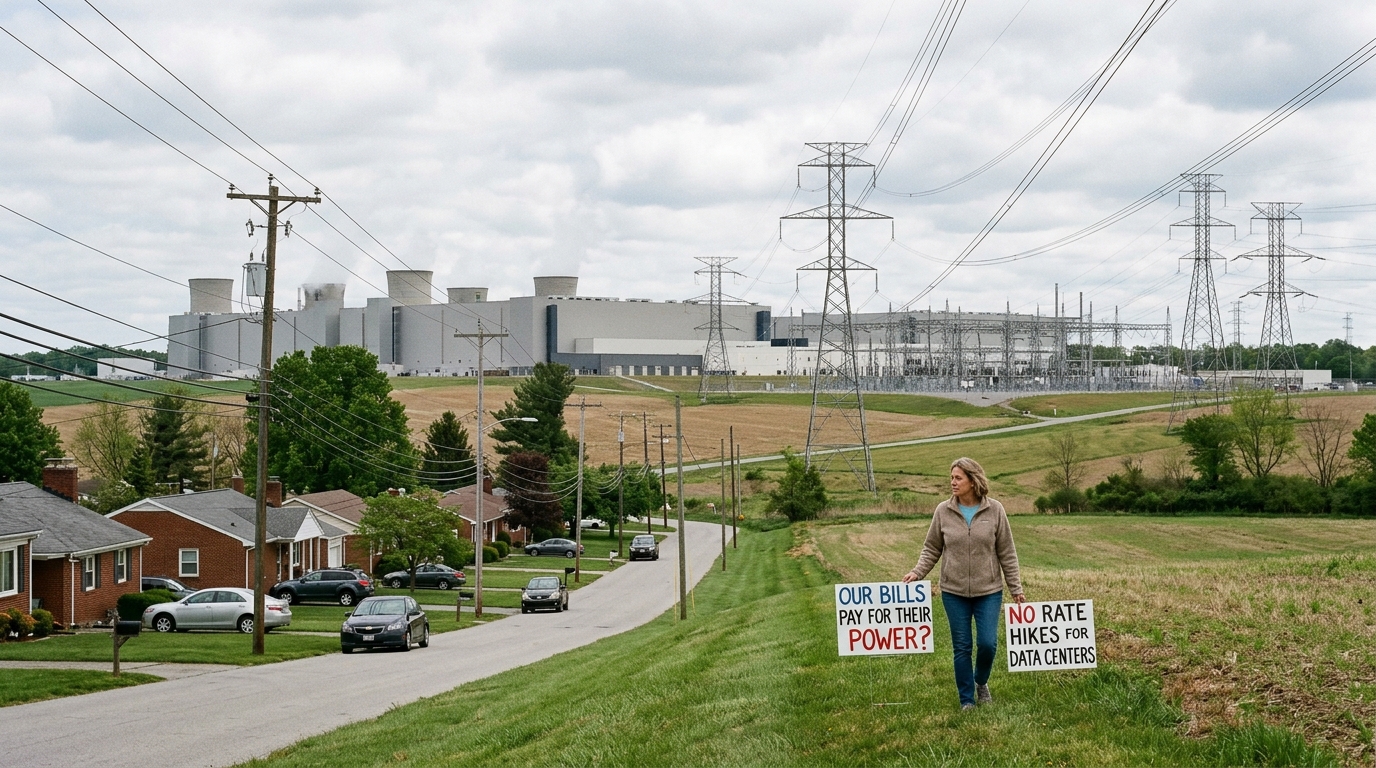
The bulk order that keeps the lights on across 13 states just jumped from $2.2 billion to $14.7 billion – nearly 7x in one year – because data centers are draining the grid. There’s one energy source that runs 24/7 with no fuel, and Washington just preserved its tax credits through 2033 while terminating everyone else’s. Google signed for 15 years. Bill Gates invested $100 million. One company has spent sixty years building it.
Risks to Monitor
The KOSPI has pulled back sharply before, including an intraday circuit breaker in June 2026 when the index tumbled more than 8% in a single session. Foreign ownership of the KOSPI has historically ranged between 29% and 45%, and one analyst estimated that a fall to 35% from current levels could imply roughly 260 trillion won in additional selling pressure. Semiconductor demand concentrated in AI could reverse quickly if capital spending slows. The Bank of Korea’s rate path deserves watching as well.
The wealth-building lesson in all of this is straightforward. The loudest voices in any market are rarely the ones setting price. Foreign institutions have sold Korea for months. Domestic investors, the Korean central bank’s revised growth forecast, and SK Hynix’s roughly $28.6 billion buyback all pushed in the other direction. The market closed at 6,912.37 on August 27, 2026. Disagreement at the margin, not consensus, is where durable entry points are found.