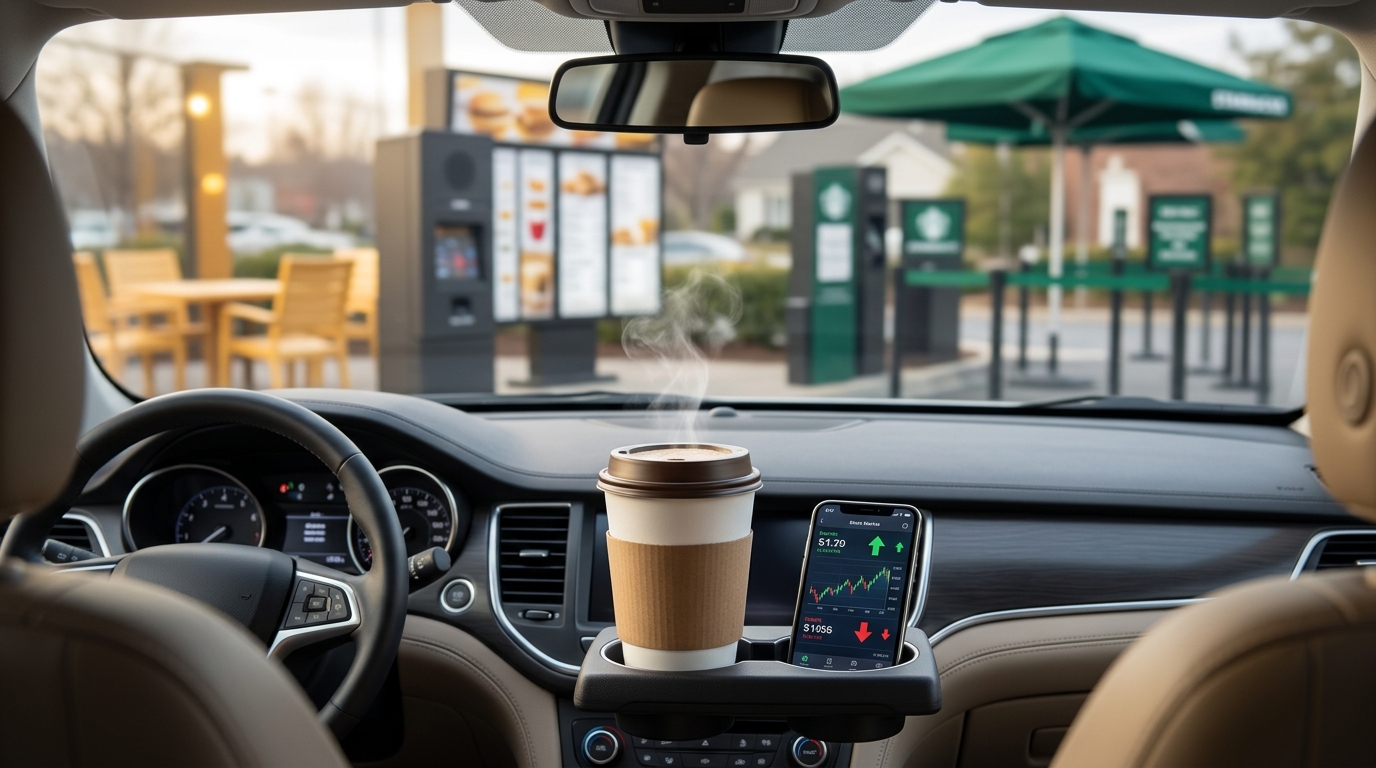
Forget the chip wars. Forget rate debates. The most interesting competitive story in consumer markets right now is playing out inside your local drive-through line — and it involves two of the most widely owned stocks in the world.
McDonald’s just launched a full-scale assault on the specialty beverage market.
And Starbucks, still mid-turnaround, is the one in the crosshairs.
How We Got Here
McDonald’s spent two years testing a beverage-first concept called CosMc’s. It didn’t work as a standalone chain. So they shut it down in 2025 and did something smarter — they folded all the learnings directly into their core McCafé platform and launched nationally on May 6, 2026.
Six new specialty drinks. Permanent menu additions. Refreshers, crafted sodas, Red Bull energy collaborations, and iced coffees. Tested at 500 locations. Results that, in management’s own words, “exceeded expectations for the entirety of the program.”
This isn’t a limited-time promotion. McDonald’s is treating beverages as a structural growth pillar — and they’ve been explicit about why. CEO Chris Kempczinski has identified specialty beverages as a $100 billion global opportunity, one where margins run higher than food and where McDonald’s omnipresence gives it a distribution advantage no pure-play coffee chain can match.
There are roughly 14,000 McDonald’s locations in the U.S. Starbucks has about 17,000. The difference? McDonald’s already has 100 million loyalty app users and a franchise model that keeps unit economics lean.
Meanwhile, at Starbucks
Brian Niccol’s turnaround is real. It would be unfair to pretend otherwise. The “Back to Starbucks” strategy produced a Q2 FY2026 revenue beat — $9.5 billion in quarterly revenue, up 9% year over year, with U.S. comparable sales climbing 7.1%, driven by a 4.3% rise in customer transactions. Shares jumped almost 6% the day that report dropped. Niccol called it “the turn in our turnaround.”
That’s not nothing. Two quarters ago, Starbucks was posting negative traffic in the U.S. for the first time in years. Now transactions are positive again for the second straight quarter. Niccol even raised guidance — full-year comparable sales growth of at least 5%, up from the prior floor of 3% — and bumped non-GAAP EPS guidance to a range of $2.25 to $2.45.
But here’s where it gets complicated.
The sales recovery is happening at a cost. Operating margins are under pressure. Analysts at Bernstein and Citigroup have both flagged that the top-line improvement hasn’t been matched by an equally strong improvement in earnings quality. The investment in staffing, labor, and store upgrades is working — it’s just expensive. And Starbucks’ management has admitted that margins won’t recover to their long-term 13.5%–15% target until fiscal 2028 at the earliest.
Slight tangent, but it matters: Starbucks’ share of U.S. coffee shop spending has already slipped from 52% in 2023 to 48% in 2025. That erosion didn’t happen because of a global recession. It happened in a relatively stable consumer environment. What happens when McDonald’s, Dutch Bros, and others add even more pressure?
The Valuation Gap Is the Story
Here’s the part that should get investors’ attention.
Starbucks is currently trading around $104, with a trailing GAAP P/E near 78x and a forward P/E of roughly 40x. That’s a valuation that prices in a complete and successful turnaround — higher margins, sustained transaction growth, and a global expansion story that Niccol has sketched out at 10,000 additional U.S. stores over time.
McDonald’s, trading near $271, carries a trailing P/E of just 23x — roughly 11% below its own 10-year median. GuruFocus pegs MCD’s GF Value at $326, implying the stock is meaningfully undervalued at current prices. The average analyst price target sits near $344, suggesting over 25% upside from here. Q2 earnings are confirmed for July 29.
Think about that for a second. Starbucks — a company still proving its margin recovery — trades at nearly three and a half times the earnings multiple of McDonald’s. One of those stocks is pricing in a story. The other is pricing in a concern.
Comparing the Two Positions
Both companies face real risks. McDonald’s warned on its Q1 call that the consumer environment may be “getting a little bit worse” — and Q2 is expected to show a meaningful deceleration in comparable sales as the chain laps a tough Minecraft movie promotion from last year. That’s a known headwind, not a structural break. Analysts are expecting EPS of around $3.35 for the quarter.
Starbucks’ risk is different. The turnaround math requires everything to go right simultaneously: transactions stay positive, margins expand, China business stabilizes under its new joint venture structure, and the cost savings from Niccol’s $2 billion efficiency program flow through. Any one of those moving parts slipping will punish a stock trading at 40x forward earnings.
McDonald’s next earnings report on July 29 gives investors a clear near-term catalyst. Whether the beverage launch is showing up in average check data and afternoon traffic will be the number to watch — not just the headline comp.
Starbucks has its own report due around the same time, estimated July 28–29. The number that matters there is not revenue. It’s operating margin. Analysts want to see proof that the cost-saving plan is beginning to show up in profitability, not just in sales.
Which One Looks More Interesting Today
The beverage war framing actually clarifies the investment question rather than complicating it.
Starbucks is the incumbent defender with a premium brand, a 35-million-member loyalty program, and a CEO who has genuinely moved the needle on traffic. But the stock reflects all of that optimism and then some. At nearly 80x trailing earnings, there is almost no room for disappointment. And McDonald’s, armed with scale, lower prices, and a national beverage launch that has already exceeded internal expectations, is now a direct competitive threat in Starbucks’ highest-margin daypart — the afternoon.
McDonald’s, by contrast, is trading below its own historical average, below analyst fair value estimates, and is entering the second half with a new growth lever that hasn’t been fully priced into Wall Street models yet. The dividend yield sits near 2.7%. The franchise model generates steady cash regardless of comp sales fluctuations. And the beverage expansion is a multi-year tailwind, not a one-quarter event.
The cleaner risk/reward heading into Q3 sits with McDonald’s — not because Starbucks is broken, but because the Golden Arches is both the aggressor in this fight and the cheaper stock. That combination doesn’t come along often.
The July 29 earnings report will be the next moment of truth for both. One thing is almost certain: the specialty beverage category will never look the same again after McDonald’s goes all-in at 40,000 locations worldwide.
This editorial is for informational purposes only and does not constitute financial advice. All data sourced from publicly available company filings, analyst reports, and market data as of July 7, 2026. Past performance is not indicative of future results. Always consult a qualified financial advisor before making investment decisions.