
May 13, 2026
One Vote Away From a New Fed
Warsh is in. Powell isn’t gone. And the June 16 meeting just got a lot more interesting.
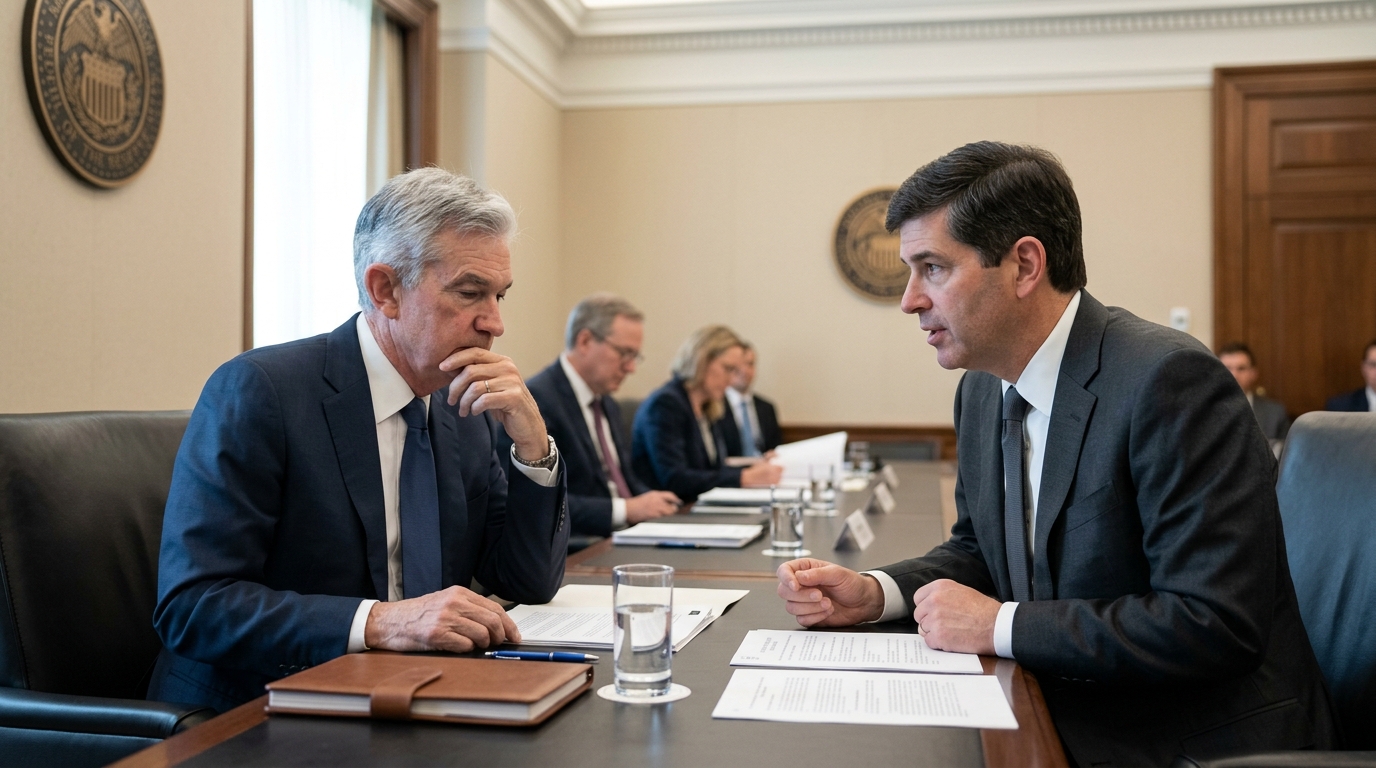
Monday, 51-45. That was the vote count when the Senate confirmed Kevin Warsh to the Federal Reserve’s Board of Governors. Sen. John Fetterman was the lone Democrat to cross over. The chair confirmation – a separate vote – is expected tonight or tomorrow, which matters because Jerome Powell’s term as chair expires Friday, May 15.
I want to be honest about something before going further. A lot of the coverage on this has been either breathlessly bullish or reflexively alarmed, and neither reaction is particularly useful right now. The actual picture is messier, more conditional, and more dependent on things that won’t resolve for months.
So here’s where I’m at on all of it.
Nature Is Winning the War on Pests
The global biopesticide market is projected to hit $17.6B by 2030 as traditional chemical solutions lose effectiveness against resistant pests.
Med-X (NASDAQ ticker reserved: MXRX) is scaling a plant-based alternative powered by essential oils like clove and cedarwood that disrupt insects on contact. With $6.4M in sales and distribution through Amazon, Walmart, and Kroger, the company is gaining traction before its planned Nasdaq move.
Become a shareholder before the market catches on.
Disclosures: This is a paid advertisement for Med-X’s Regulation A+ Offering. Please read the offering circular at invest.medx-rx.com.
Warsh is 55. He’s been here before. He served on the Fed’s Board of Governors from 2006 to 2011, which means he was in the room during the financial crisis, the emergency rate cuts, the first rounds of quantitative easing. He came out of that experience skeptical of the Fed’s expanding footprint – skeptical of the balance sheet, skeptical of mission creep, skeptical of the communication frameworks that turned every press conference into a market-moving event.
His background before the Fed: Stanford, Harvard Law, M&A at Morgan Stanley, then the Bush White House as a special assistant for economic policy. After he left the Board in 2011 he spent time at the Hoover Institution and advising Stanley Druckenmiller. That last detail gets mentioned a lot, mostly because Druckenmiller has been one of the more vocal critics of Fed policy over the past several years.
Trump nominated him in late January. What happened next was less straightforward than the eventual 51-45 outcome suggests.
Sen. Thom Tillis (R-NC) held up the nomination for weeks. He wouldn’t move until the DOJ wrapped up a criminal investigation into Powell – an investigation stemming from testimony Powell gave to the Senate about the Fed’s $2.5 billion headquarters renovation. The DOJ closed that investigation late last month. Tillis said he was ready to vote yes. The Banking Committee advanced Warsh on a party-line vote. The full Senate confirmed him Monday.
Slight tangent, but it matters: Powell isn’t leaving. He confirmed he’ll stay on the Board as a rank-and-file governor after his chair term ends Friday – which would make him the first outgoing Fed chair to remain as a governor in more than 75 years. His governor term runs through January 2028. He’s been explicit that his reason for staying is to act as a counterweight against what he called “legal attacks” on the institution’s ability to set monetary policy independently. That’s an unusual situation. A new chair walking in with his predecessor still at the table, still with a vote, still with a platform. Warsh will have to manage that from day one.
A New Fed Network Is Already Spreading to Banks Nationwide
A new Federal Reserve network called FedNow is already spreading to banks nationwide.
It promises instant payments.
But it could also route transactions through a centralized Fed-run hub.
At his confirmation hearing on April 21, Warsh sounded more open to rate cuts than his earlier hawkish positioning would have predicted. His argument – and this is the part worth thinking through carefully – is that a smaller Fed balance sheet, combined with productivity gains from AI, could create disinflationary conditions that allow rates to come down over time. He wrote in a November 2025 Wall Street Journal op-ed that AI would be a “significant disinflationary force.” Senators pushed him on whether that still held given the current energy shock. He didn’t give a clean answer.
Deutsche Bank’s analysts have been pretty direct about not reading him as structurally dovish. His views, in their words, have historically “skewed hawkish relative to others.” The balance-sheet-to-rate-cuts logic is a long-term thesis – not a June 2026 thesis.
He also floated the possibility of fewer than eight FOMC meetings per year. He wouldn’t commit to a specific number, but said four is too few and something more than four is appropriate. That sounds procedural. It isn’t. The number of scheduled meetings shapes how markets price forward rate expectations, how the Fed signals policy shifts, how much time investors have between decision points. Fewer meetings means longer windows of uncertainty. That’s a bigger mechanical change than most of the commentary has treated it.
He also told the Senate that Trump never asked him to predetermine any rate decision. Sen. Elizabeth Warren called him a “sock puppet” for the administration. He denied it and pledged independence. He said he’d divest the majority of his roughly $100 million in personal assets before taking the chair role, with the rest within 90 days of confirmation.
Here’s what I think gets underweighted in most of the Warsh coverage.
The Fed chair has one vote on the FOMC. One out of twelve. Warsh can set the agenda, run the press conferences, frame the public communication, and advocate for whatever policy direction he wants – but he cannot move rates unilaterally. Any real shift requires building a coalition. Several of the current governor seats are filled by Biden nominees. Regional Fed presidents are not aligned politically. The April 2026 FOMC vote – which held rates steady at the current target range of 3.50%–3.75% – produced an 8-4 dissent, the most fractured single decision since October 1992. That kind of internal friction doesn’t disappear because the chair changes.
Warsh is walking into a board that is already divided, in an environment where inflation hasn’t cooperated, with a predecessor who is literally still in the room.
On rates: the Fed cut 75 basis points total across the last three meetings of 2025, bringing the federal funds rate to 3.50%–3.75%. Since then, three consecutive holds – January, March, April 2026. The inflation picture is the reason. An energy price surge tied to the U.S.-Israel conflict over Iran has pushed input costs higher and complicated the path back toward the Fed’s 2% target. Markets are currently pricing roughly a one-in-three probability of a rate hike before December. That’s not consensus – it’s a tail risk. But a tail risk that’s big enough to take seriously.
The FOMC minutes from March showed that most participants believed upside inflation risks had increased, and that a prolonged Middle East conflict could push energy costs into core inflation in a more durable way. That view didn’t change in April. It hardened.
Wall Street is calling it the “Warsh Shock.” Here’s how to profit from it…
Larry Benedict isn’t scrambling. He’s seen this before.
He says the Warsh Shock is setting up the most predictable wealth-building window he’s seen in 20 years… and there’s one ticker right at the center of it.
What matters now is June 16–17. That’s the next scheduled FOMC meeting and almost certainly Warsh’s first as chair. No rate move is expected. But the statement language, the tone of the press conference, and any early signals about the balance sheet path will move markets. Warsh’s communication style is different from Powell’s. Powell built a reputation for deliberate, incremental messaging. Warsh has historically been more direct and sometimes more contrarian in how he frames things publicly. That alone will generate volatility in interest rate markets, even if the actual policy outcome is unchanged.
There’s also the Supreme Court case sitting in the background. The administration has attempted to remove at least one Biden-era Fed governor. If the Court rules that the president has the authority to do that, the board composition changes – which changes the vote count on contested decisions. That case has no resolution date yet. But it is a live variable affecting the credibility of Fed independence in a way that has no real modern precedent.
The market’s reaction to Warsh’s April 21 confirmation hearing was telling. The S&P 500 and Nasdaq each fell roughly 0.4% on that day, pausing what had been a run toward record highs. That’s not a dramatic move. But it wasn’t enthusiasm either. Investors looked at what Warsh said and landed somewhere between cautious and uncertain.
Which is probably the right place to be.
The confirmation tonight or tomorrow is a formality at this point. What’s not a formality is what comes after it. Warsh has talked about a Treasury-Fed accord, fewer scheduled meetings, a smaller balance sheet, and a different relationship between the central bank and fiscal policy. Those are multi-year projects under the best conditions. Under the current conditions – fractured board, elevated inflation, active Supreme Court litigation, and an energy-driven macro shock that nobody has a clean answer for – they’re even harder to execute.
The thing I keep coming back to: Powell’s inflation fight wasn’t just about rate levels. It was about credibility. The Fed spent two years convincing markets that it was willing to stay restrictive for as long as necessary. Warsh inherits that credibility, but he also inherits the pressure to spend it. How fast he moves, and in which direction, will tell you a lot more than anything said in a confirmation hearing.
June 16 is five weeks away. Watch the first press conference closely.
– Investing Wealth Daily