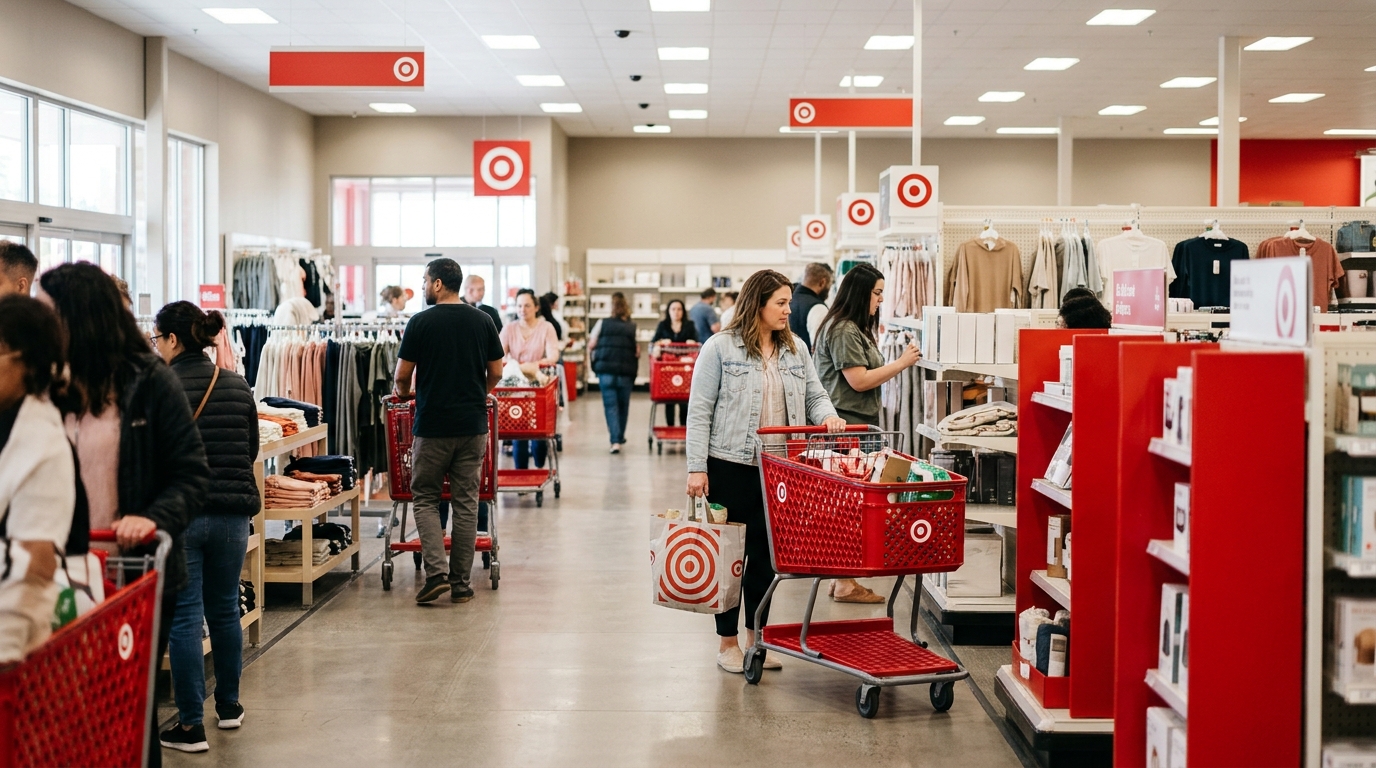
Here is the question that cuts through Target’s Q3 report: did those 4–5% comparable sales the Street expects come from more people walking in the door, or from the same shoppers paying a bit more? The answer separates a durable turnaround from a discounting-driven recovery with a short shelf life.
The heading into this morning is as follows. Target is expected to post earnings of $2.08 per share on revenue of about $26.5 billion. Market expectations centre on comparable sales growth of around 5% in the quarter, while investors will also scrutinise the profitability generated from that performance. The conference call begins at 8:00 a.m. ET.
Why Traffic Is the Line That Matters
Last quarter gave investors their most encouraging data point in two years. Comparable sales increased 3.8 percent, driven by a 3.6 percent increase in traffic, with average transaction amount about flat. That split is important. Traffic up 3.6% and basket flat means Target is recovering because more people want to shop there, not because it is extracting more dollars from an unchanged crowd. CEO Michael Fiddelke has said as much: “When I think about healthy indicators of sustainable long-term growth, traffic is at the top of that list.”
Comparable sales rose 5.6% in Q1 and 3.8% in Q2. The deceleration matters as much as the absolute level today. If Q3 traffic accelerates back toward Q1’s pace, the bull case firms up. If it slips below 3%, the story becomes more complicated, regardless of the comp headline.
Where BofA and UBS Disagree
Ahead of Target’s fiscal third-quarter results, BofA Securities raised its comparable-sales forecast to 4% but lowered its earnings-per-share estimate to $2.08, expecting profits to get squeezed even if sales hold up. It pointed to a lower gross margin and higher spending on SG&A, warning that Target has “limited SG&A flexibility” compared with rivals.
UBS frames the question differently. The bank argues the results could strengthen the investment case for a sustained turnaround, and it expects the report to demonstrate whether recent sales momentum can continue as comparisons become more demanding next year. UBS believes the consensus forecast of $9.64 in earnings per share for 2027, based on an operating margin of 5.3%, leaves room for upside, with shares trading at approximately 16 times its FY27 estimates, below historical valuations when comparable sales growth exceeds 3%.
The divergence is the whole debate in one sentence: BofA sees a sales recovery that cannot yet pay for itself; UBS sees a multiple that hasn’t caught up with earnings power.
The Category Problem That Won’t Go Away
The two categories with ground left to recover are home and apparel, and Target already has the shoppers to sell them to: traffic rose 3.6% last quarter, while comparable sales rose 3.8%. The gap between traffic and sales growth in those two segments is essentially the gap between a good quarter and a great one.
BofA highlighted execution risk in Target’s apparel refresh, even as beauty holds up better, which matters because apparel is a higher-margin category when it’s working. Any Q3 guidance language around apparel or home momentum will carry more weight than the revenue number itself.
Bull Case, Bear Case
The bull case rests on a simple progression: HSBC said further sales recovery could support operating leverage, with margins potentially reaching around 6% or higher depending on the scale of recovery. At 16 times forward earnings, TGT does not need a perfect quarter to work. It needs evidence the trajectory is intact.
The bear case is margin compression dressed up as growth. Target’s stock can handle a small miss on sales if investors believe profitability is improving, but strong traffic bought with heavier discounts can still leave earnings underwhelming. Higher labor, marketing, and depreciation expenses could absorb much of the gross-margin improvement if traffic momentum weakens.
What to Watch
Three numbers define whether the thesis is playing out: traffic growth (did it hold above 3%?), apparel and home comparable sales (any sign of inflection?), and Q4 guidance (does management signal confidence going into the holiday quarter?). Fourth-quarter guidance and whether tariff refunds are flattering earnings could decide whether CEO Michael Fiddelke’s turnaround rally holds.
Target lands between Home Depot yesterday and Walmart tomorrow. This morning’s report is the one that tells you whether the traffic recovery is broad-based enough to fund the margin expansion the stock is starting to price in. If the answer is yes, TGT at 16 times earnings looks attractive. If the comp came mostly from price, the rally needs a rethink.