Back in the 1860s, settlers from France, Italy, and Germany built grand Parisian boulevards…
…neoclassical facades…

… and cobblestone Bavarian villages halfway across the globe.
Then the rest of the world largely forgot about them.
Today, expats are uncovering a European standard of living…
… Lakefront rental homes for $721 a month…
… private chauffeur service…
… and elite healthcare – completely free from tourist crowds and inflated European price tags.
Toast’s AI Agents Are Doing Restaurant Work, Not Just Software
Most vertical software companies win by embedding deeply enough that switching becomes painful. Toast has done that across about 189,000 locations as of September 30, 2026, up 21% from a year earlier. But the more interesting development from its November 3 earnings report is not the location count. It is what Toast is now selling those locations.
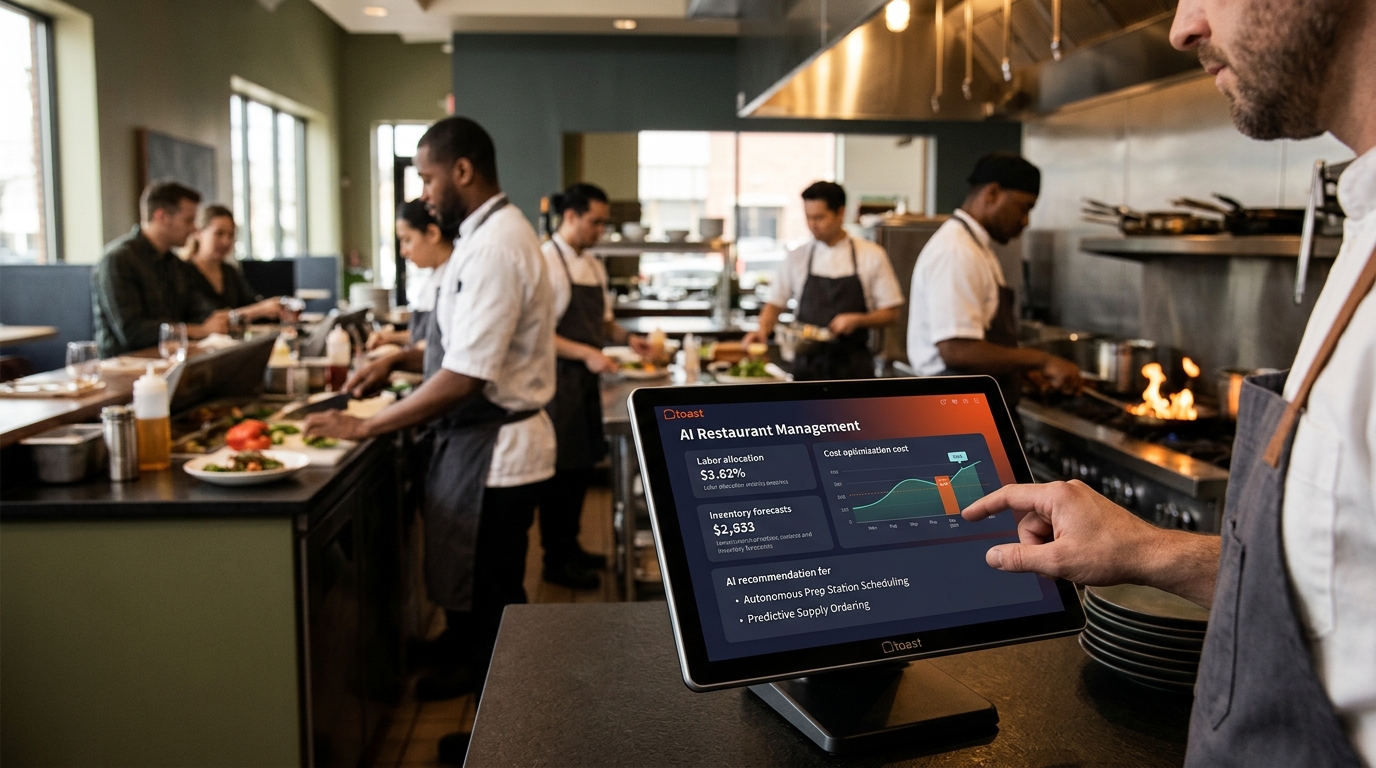
Management said on the Q3 2026 earnings call that the company is moving from a tools-based platform toward an agentic platform, using AI to automate restaurant workflows such as marketing and labor scheduling. That is a meaningful shift. Selling software that helps a manager do a job is one margin profile. Selling an agent that does the job instead is another one entirely.
Toast IQ Grow includes a Digital Growth (SEO) Agent, a Reviews Agent and an Offers Agent intended to help restaurants increase visibility and deploy targeted offers. Management said it remains Toast’s fastest-growing product and is on track to reach $10 million in ARR by the end of 2026. Toast IQ Team, launched this quarter, targets scheduling and staffing. AI tools are handling a growing share of support tickets and management tied that to the 320-basis-point expansion in SaaS gross margin.
The payments engine underpinning all of this keeps compounding. Gross Payment Volume increased 20% to $61.8 billion. Toast’s total take rate, measured as recurring gross profit as a percentage of gross payment volume, reached 104 basis points in the quarter, six basis points above the prior-year period. Every incremental basis point extracted from roughly $62 billion in quarterly volume drops almost entirely to margin.
For the full year, management raised its outlook to 26% recurring gross profit growth and adjusted EBITDA of $840 million to $850 million. GAAP operating income margin reached 26%, nearly doubling from 14% in the prior-year period. That is the structural story: a payments-volume flywheel funding a software margin expansion that is still in the middle innings.
The risk worth watching is execution on new markets. At an investor conference in September, management said expansion TAMs across retail, international, and enterprise were expected to roughly double in 2026 to around $200 million in ARR, which is real but still modest against an ARR base of about $2.5 billion as of September 30, 2026. Hardware cost pressure remains a drag on free cash flow conversion. And the restaurant management software market, valued at roughly $7.5 billion in 2026, is projected to grow toward $14.7 billion by 2031, which guarantees competition will intensify before it eases.
Still, the core thesis is tightening rather than fraying. Toast is not simply processing more payments. It is using those payment relationships to sell AI agents that reduce the two costs restaurant owners hate most: labor inefficiency and empty tables. That combination, sticky payments plus expanding software margin plus a captive base of nearly 190,000 locations, is what long-term wealth in vertical software actually looks like.
The stock sold off after the EPS miss on November 3. That reaction focused on the wrong line. Watch the take rate and SaaS margin over the next two quarters. Those are the numbers that will tell you whether Toast’s agentic ambitions are pricing the business differently or just adding noise to the pitch deck.