Everyone expects TSMC to beat on revenue when it reports Q2 2026 results on July 16. The stock is up over 45% year-to-date. Analysts have been raising targets. The AI infrastructure spending cycle is intact. The obvious read is: strong demand, strong numbers, stock keeps going.
That framing is mostly right and mostly useless. The more interesting question entering this earnings report is not whether TSMC beats $39-40 billion in revenue. It’s whether the margin structure holds at 66% gross margins while a $52-56 billion capital expenditure program ramps simultaneously, and whether management can credibly guide H2 without spooking the market on 2-nanometer dilution.
That tension is where the real trade lives.
What Q1 Actually Showed
TSMC’s Q1 2026 results were extraordinary by any reasonable standard. Revenue reached $35.9 billion, up 40.6% year-over-year and slightly above the company’s own guidance range of $34.6-35.8 billion. Gross margin came in at 66.2%, operating margin at 58.1%, net margin at 50.5%. These are numbers that would be remarkable for a software company. For a capital-intensive foundry operating at the frontier of sub-3nm physics, they are almost implausible.
The 3-nanometer process accounted for 25% of wafer revenue in Q1, and management guided that 3nm gross margins would cross over to corporate average levels in the second half of 2026. If that crossover materializes on schedule, it removes one of the more persistent bear arguments about N3 being a margin drag.
For Q2, TSMC guided revenue between $39.0 and $40.2 billion with gross margins of 65.5-67.5%. Both numbers came in above analyst consensus. The company also revised its full-year AI accelerator revenue CAGR guidance upward from 50% to 56-59%, explicitly citing Agentic AI demand as the driver of incremental capacity investment.
The Capex Question Nobody Is Asking Cleanly
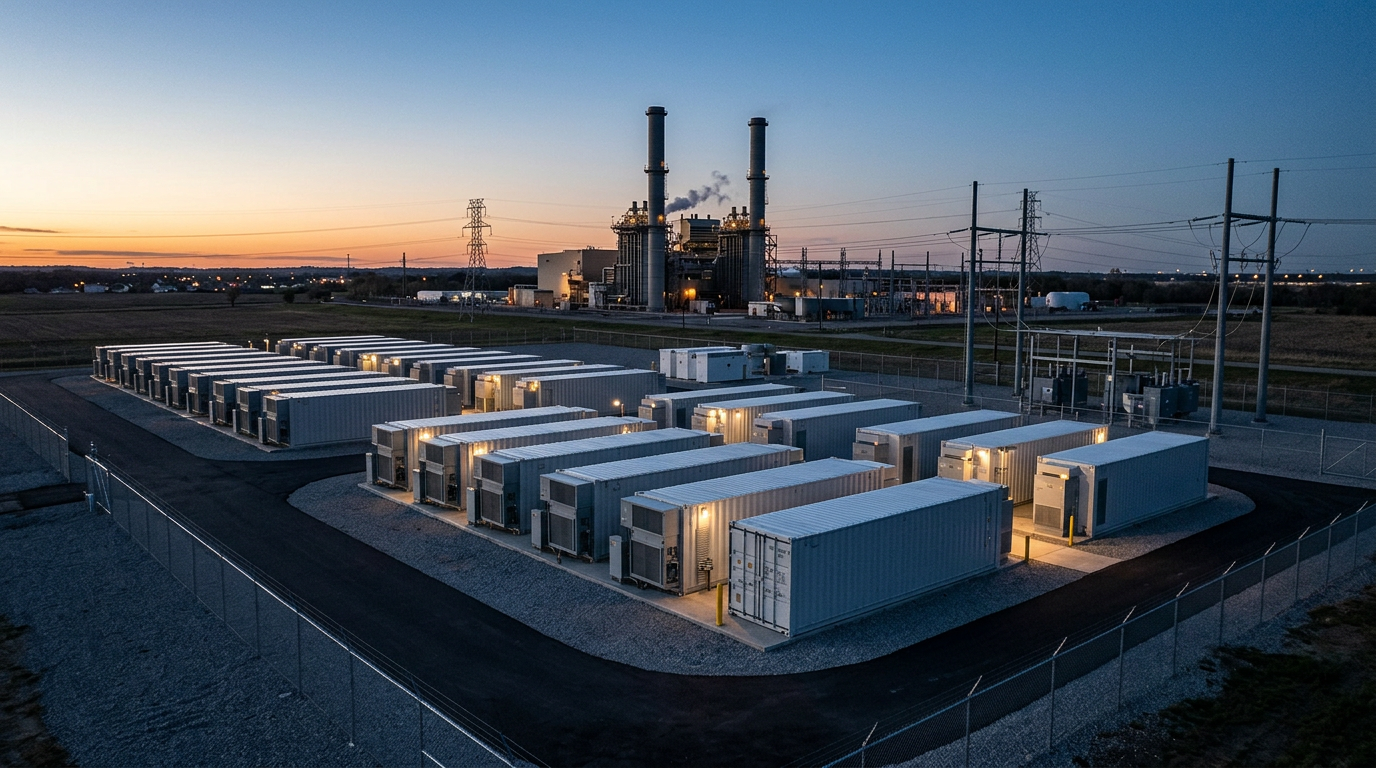
Here’s where it gets more complicated. TSMC’s 2026 capital expenditure guidance sits at $52-56 billion, with 70-80% directed toward advanced process technologies. Management guided toward the high end of that range on the Q1 call. The Arizona fab build-out is accelerating. A new 3nm fab is being added to the Tainan Science Park cluster. President Trump publicly stated the company is doubling the size of its Arizona chipmaking facilities under construction.
That capex scale creates two legitimate risks entering July 16. First, management flagged 2-3% gross margin dilution expected from the 2-nanometer ramp and overseas expansion in 2026. CFO Jen-Chua Huang acknowledged H2 headwinds explicitly on the Q1 call. The market accepted that commentary in April when gross margins were printing above guidance. The question is whether the same tolerance holds if Q2 gross margins come in at the low end of the 65.5-67.5% guidance range.
Second, fixed-cost underutilization risk is real at this capex level. TSMC’s entire bull case rests on AI infrastructure spending remaining elevated through 2027. If hyperscaler capex guidance shows any softness in the coming weeks, the $56 billion in committed spending becomes a liability rather than a moat signal. The company explicitly acknowledged this: if global AI hardware spending experiences any cyclical deceleration, TSMC is highly exposed to fixed-cost underutilization.
The Valuation Anomaly Worth Noting
At a current price around $434 and annual revenue of $122 billion, TSMC’s P/E ratio sits near 32.7x. The semiconductor industry average is roughly 75.5x and the peer group average is approximately 77.4x. One valuation framework puts a fair P/E multiple at around 61.8x based on TSMC’s growth profile, margins, size, and risk factors. That is nearly double the current P/E.
The discount reflects the geopolitical risk premium that every investor in this stock has to underwrite. Taiwan Strait tensions, U.S.-China export control escalation, customer concentration (Nvidia and Apple together representing approximately 40% of revenue), and the complexity of a simultaneous global manufacturing buildout. Those are real risks. But the valuation gap between where TSMC trades and where comparable businesses trade is harder to justify the more the Arizona footprint grows.
Goldman Sachs removed TSM from its APAC Conviction List on July 1, citing tactical reassessment of near-term upside. That was accompanied by roughly $14 million in insider share sales over the prior three months. The combined signal is worth noting as a short-term caution, not a thesis-level concern.
What July 16 Actually Decides
The high-performance computing segment is approaching 60% of TSMC revenue as AI demand pushes past smartphones as the dominant mix driver. Samsung’s persistent yield challenges on 3nm GAA continue to push TSMC’s advanced-node market share above 90%. The Arizona fabs are beginning to produce. The 28% dividend increase for 2026 signals management confidence in free cash flow generation.
The April-May combined revenue growth of 24% year-over-year trailed Wall Street’s elevated 35% quarterly expectations. That gap fed the July 1 pullback. If Q2 comes in at or above $39.5 billion with gross margins holding at 66%, the H1 growth deceleration narrative gets quietly abandoned and the H2 setup becomes the conversation. If margins disappoint or H2 guidance is cautious on 2nm dilution, the stock faces a more uncomfortable re-rating.
The question isn’t whether TSMC is the dominant AI infrastructure foundry. It clearly is, with roughly 70% global foundry market share and no credible alternative for sub-3nm production at volume. The question is whether the margin story at $56 billion in annual capex is as clean as Q1 made it look. July 16 answers that.