By Howard Schneider
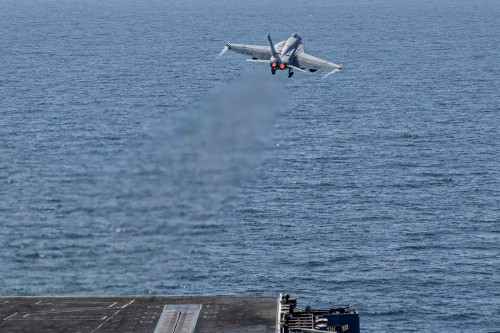
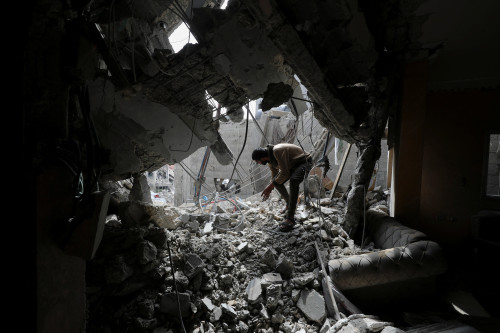
WASHINGTON, March 2 (Reuters) – A U.S. economy that has weathered a year of trade, immigration and other shocks now faces a new test likely to ratchet up uncertainty after President Donald Trump’s decision to launch open-ended attacks against Iran with the stated goal of toppling the Middle Eastern country’s long-ruling Islamist government.
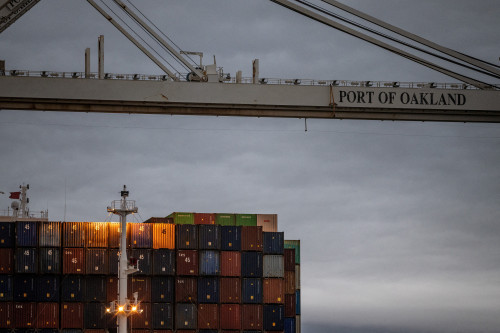
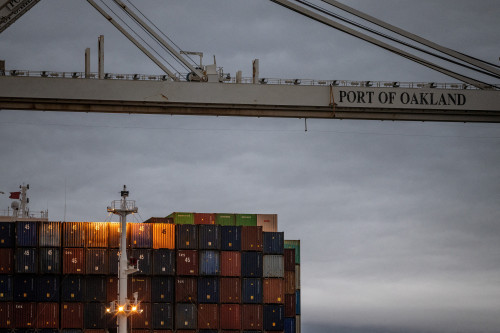
With counter-strikes underway throughout the region and Trump saying the conflict could go on for weeks at least, analysts focused on a long list of imponderables as oil prices jumped over the weekend from $70 to nearly $80 a barrel and shipping through the strategic oil lanes in the Strait of Hormuz began grinding down.
Though the U.S. is more buffered from energy shocks than many of its allies because of domestic oil and gas production, the global impact on trade, prices and investment could spill back and undermine what had been a developing bullish growth outlook for this year.
A recent Conference Board survey showed CEOs’ confidence in the outlook for the U.S. economy and their particular industries had jumped, but nearly 60% said there was a high risk geopolitical tensions could be a disrupting force. The World Bank in its most recent review of the U.S. economy described the outlook as “buoyant,” an assessment that will now have to survive the tumult of an unpredictable conflict in a key oil-producing region, with implications for global shipping, supply chains, and commodity prices.
“A pillar of our 2026 outlook was the observed ‘fading of caution’ regarding U.S. policy. Early-year data suggested that businesses were moving past the paralysis in hiring and non-tech capex (capital expenditure) and beginning to deploy their resilient profits and capital,” Joseph Lupton, an economist at JPMorgan, wrote in a note over the weekend after the U.S. bombardment of Iran had begun. “This nascent recovery is now at risk. A military war, layered on top of the ongoing U.S, ‘war on trade,’ could reignite concerns over global stability.”
The extent of that impact, and whether, for example, it influences the Federal Reserve’s monetary policy, depends on how much the conflict raises global oil prices, and whether it threatens to intensify and broaden over time or evolve into a more internal Iranian power struggle following the killing of Iranian Supreme Leader Ali Khamenei in an air strike.
Russia’s invasion of Ukraine in 2022 posed similar global risks. The U.S. central bank’s initial reaction to that conflict was dovish, as officials scaled back plans for a large initial interest rate hike that spring.
The Fed’s concerns quickly reverted to a sharp rise in inflation, however, and rate hikes were accelerated.
“The conflict with Iran is a wild card, though markets may quickly lose interest if the situation looks likely to devolve from a regional to an internal conflict,” Tim Duy, chief U.S. economist at SGH Macro Advisors, wrote on Monday.
In a separate note, SGH President and CEO Sassan Ghahramani, a Tehran native whose father was an Iranian diplomat before the 1979 Islamic revolution, pointed to the uncertainty of the current moment, with the possibility of an Iranian civil war as well as “a ‘scorched-earth’ tactic of escalation from Tehran to (other) civilian centers … to hit the global economy, and pressure an end to the war.”
RISK OF PROTRACTED ASYMMETRIC CAMPAIGN
The initial market impact seems contained. Interest rate futures showed little change in expectations that the Fed would cut rates at its July 28-29 and September 15-16 meetings. The yield on the 2-year U.S. Treasury note fell over the weekend, a common reaction in moments of global crisis as investors seek out safe-haven assets, but yields on Treasuries were rising on Monday in a possible sign of concern about rising inflation, at least globally. The dollar, another safe-haven outlet, rose against a basket of major currencies. Major U.S. stock indexes were mixed in late-morning trading.
“We do not expect geopolitical developments to significantly affect Fed policy rate plans, with modest upside risk to inflation offset by less supportive financial conditions” and a focus on domestic data, Citi analysts wrote in a note on Monday. “We expect 55,000 new jobs and 4.4% unemployment Friday, a reading that should keep Fed officials optimistic that labor markets are stabilizing.”
The U.S. Labor Department is due to release its employment report for February on Friday.
Jason Thomas, head of global research and investment strategy at Carlyle, however, noted the difficulty of predicting where the Middle East conflict will lead.
He put only a 30% chance on Trump succeeding in replacing the current Iranian regime, with the Islamic Revolutionary Guard Corps likely able to pursue an “asymmetric” response that may extend beyond obvious chokepoints like the Strait of Hormuz.
Iranian drones did hit natural gas facilities in Qatar, causing it to shut down LNG production from facilities that use the Strait.
But Thomas said he was focused on “a base case probability of 70% or higher for a protracted asymmetric campaign, including cyber activity, terrorism, and proxy forces that could engulf Iraq, the second-largest producer in OPEC.” Though U.S. power is focused around Iran, “who is protecting Mozambique’s LNG?” he asked.
(Reporting by Howard Schneider; Editing by Paul Simao)